Most flooring buyers picture cork as that orangey honey color from 1970s kitchens. The modern reality is different. Grey cork flooring has become the fastest-growing color segment in the cork category, driven by homeowners who want sustainable materials without the dated look. At $5 to $10 per square foot installed, it’s competitive with mid-range LVP while offering benefits no synthetic floor can match: genuine warmth underfoot, sound absorption, and a renewable harvest cycle. Here’s what you actually need to know before ordering.
How Cork Gets Grey
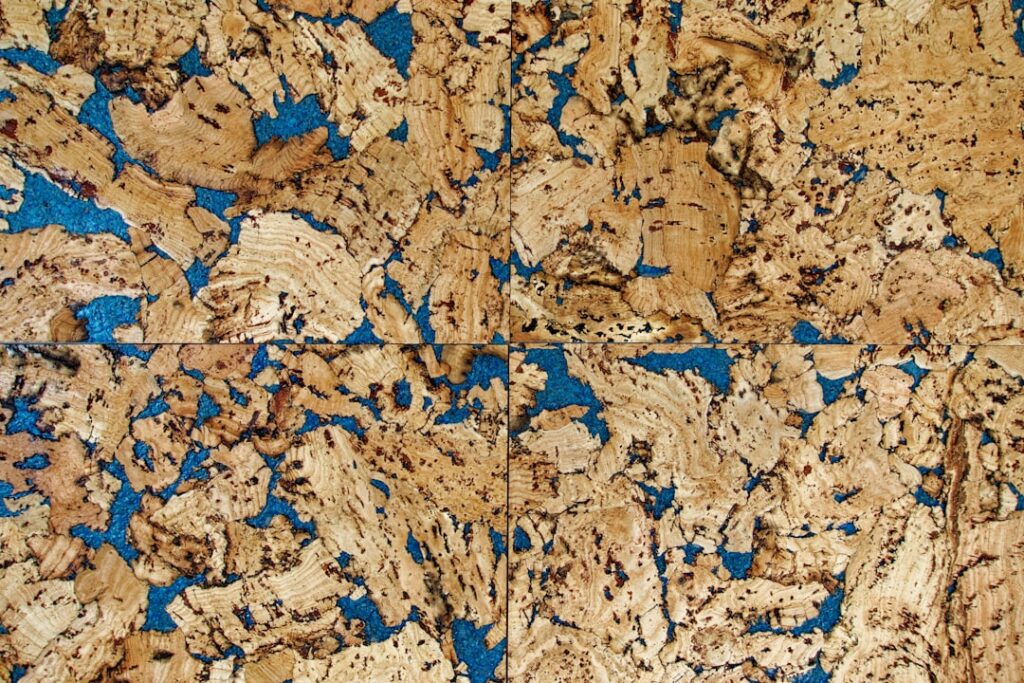
Natural cork is a warm tan color. Grey cork is produced through one of three processes. Pigmented surface coatings apply a UV-cured gray tint over natural cork, preserving the visible texture. Through-color stain penetrates 1 to 2 mm into the cork bark before pressing. Carbonized cork uses heat treatment to darken the natural material toward charcoal.
Each method affects durability differently. Surface coatings can wear through to natural color in 10 to 15 years of heavy traffic. Through-color and carbonized cork hide wear because the color goes all the way through.
Top Brands Offering Grey Cork
Four manufacturers dominate the grey cork market in the US. Wicanders (made by Amorim) offers the widest color selection through their Cork Pure and Wood Essence collections. US Floors Natural Cork sells the Almada line in stone-look grays. Globus Cork in Brooklyn manufactures custom-color cork tiles to order. ICork Floor offers click-lock grey planks at competitive prices.
- Wicanders Cork Pure Personality Silver: $6 to $9 per sq ft
- US Floors Almada Marmol Cinza: $5 to $7 per sq ft
- Globus Cork custom colors: $8 to $14 per sq ft
- ICork Floor Forna Greystone: $4 to $6 per sq ft
The Real Benefits of Cork Flooring
Cork delivers four properties no other floor matches at this price point. R-value runs 1.1 to 1.5 per inch, making it the warmest hard floor underfoot. Sound transmission drops 12 to 18 decibels versus laminate or LVP, which matters in condos and second-story rooms. Cushioning reduces leg fatigue—standing on cork is genuinely easier than standing on tile or hardwood.
Cork is also naturally antimicrobial. Suberin, the waxy substance in cork bark, resists mold, mildew, and dust mites. Asthma and allergy sufferers consistently report improvement after switching from carpet.
Drawbacks and Limitations
Cork isn’t perfect. Heavy furniture leaves permanent compression marks unless you use wide floor protectors—standard felt pads concentrate weight too much. Direct sunlight fades grey cork toward purple-gray over 5 to 8 years in high-UV rooms. Sharp objects like high heels or dropped knives leave visible dents.
Water resistance varies by product. Surface-finished cork handles spills wiped within 20 minutes. Standing water for an hour or more causes swelling and edge lift. For bathrooms and laundry rooms, choose only products explicitly rated for wet areas.
Installation Methods
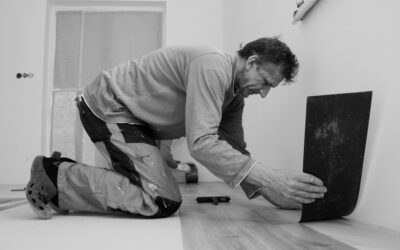
Cork installs three ways. Glue-down tiles measure 12 by 12 or 12 by 24 inches and adhere with contact cement or water-based cork adhesive at $40 to $60 per gallon. Click-lock floating planks install over underlayment like laminate, with no glue required. Self-stick tiles peel-and-stick over clean primed subfloors.
Glue-down is the most durable and best for kitchens and high-traffic areas. Floating planks are the easiest DIY option. Self-stick is the cheapest but typically only lasts 5 to 8 years before edges lift.
Acclimation and Subfloor Prep
Cork must acclimate to your home’s temperature and humidity for 72 hours minimum, flat in the unopened box at 65 to 75°F and 30 to 60% relative humidity. Skipping this step is the number one cause of cupping, gapping, and lifted seams within the first year.
The subfloor must be flat to within 3/16 inch over 10 feet. Use self-leveling compound on concrete or sand high spots on plywood. Cork is unforgiving of subfloor imperfections because of its thinness (4 to 11 mm).
Cost Breakdown
For a 300-square-foot living room, expect $1,200 to $3,000 for grey cork materials. Add $600 to $1,500 for professional glue-down installation or $300 to $600 for floating DIY. Underlayment for floating installations runs another $0.50 to $1 per square foot. Total finished cost lands between $5.50 and $13.50 per square foot.
That’s competitive with mid-range LVP ($6 to $10 installed) and 30 to 40% cheaper than engineered hardwood ($9 to $15 installed) for materially better acoustic and thermal performance.
Maintenance to Keep It Looking Right
Sweep daily with a soft-bristle broom or microfiber dust mop. Damp mop weekly with a pH-neutral cleaner like Bona Hardwood Cleaner ($18) or AFM Safecoat ($14). Avoid steam mops, ammonia, and pine-based products—they damage the surface finish.
Re-coat with water-based polyurethane every 5 to 7 years to refresh the wear layer. The job costs $1 to $2 per square foot DIY or $2.50 to $4 professionally. Done on schedule, cork flooring lasts 25 to 40 years. Grey cork flooring offers a unique mix of sustainability, comfort, and modern aesthetics that no synthetic flooring can quite replicate.
Prefer to explore on your own?
See how new flooring looks in your actual room in seconds — free, no signup.
Try the free Floor Studio →