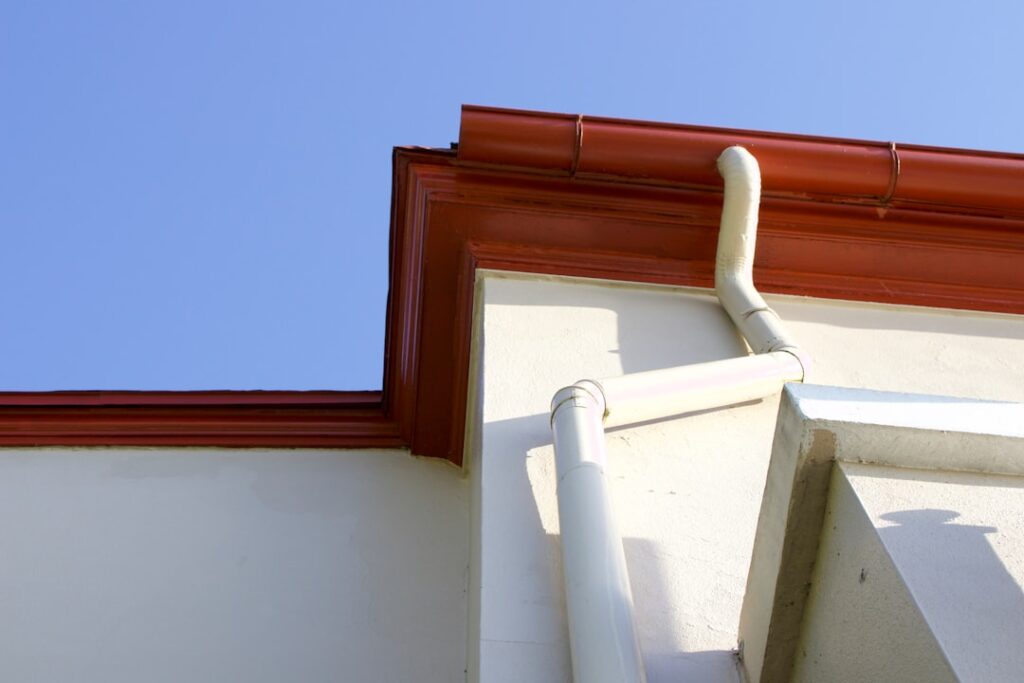
A dripping gutter seam wastes more foundations than most homeowners realize, and the fix usually costs less than $10 in gutter caulk — if you use the right product and prep the metal properly. The reason so many gutter repairs fail by the next spring isn’t the sealant’s fault. It’s that generic tubes get squeezed over wet, oxidized, dirty aluminum and asked to flex through freeze-thaw cycles they were never designed for. Gutters are a uniquely hostile joint: constantly wet, loaded with grit, baked by sun on one side and iced on the other, and moving every time the temperature swings. Seal them like a pro and a seam repair lasts 10 years or more.
What Makes a Sealant Gutter-Rated
Three demands separate gutter work from ordinary exterior caulking. First, permanent water immersion: the inside of a gutter trough can hold standing water for days, and most acrylic and painter’s caulks re-emulsify or lose bond under those conditions. Second, thermal movement: a 30-foot run of aluminum gutter expands and contracts about 1/4 inch across a 100°F seasonal swing, and every seam, end cap, and downspout outlet has to absorb its share of that. Third, difficult adhesion: aluminum oxidizes within hours of exposure, galvanized steel carries a passivating zinc layer, and older gutters are coated with chalking paint, tannin stains, and asphalt washdown from the shingles above. A gutter-rated sealant is formulated to grab those surfaces and stay elastic underwater. A kitchen-and-bath tube is not.
The Products Worth Buying
Ask a seamless-gutter installer what’s in their van and you’ll hear the same names over and over. Geocel 2300 Tripolymer Sealant (about $9-$12 per 10.3-ounce tube) is the industry standard — it’s what most gutter companies use to factory-seal end caps and miters. It bonds to damp surfaces, stays flexible from -20°F to 180°F, can be applied down to around 20°F, and even adheres to itself, so recaulking an old Geocel joint doesn’t require stripping to bare metal. Geocel also sells a small squeeze-tube version branded Gutter Seal in gutter-brown and white for about $7, handy when you have two seams to fix and no caulk gun on the ladder.
Butyl rubber sealants, such as OSI Butyl-Flex or generic gutter-and-flashing butyl at $5-$7 a tube, are the traditional choice and still excellent inside the trough. Butyl never fully hardens, tolerates constant wetness, and forgives imperfect prep better than any other chemistry. Its drawbacks are slow skinning (it can stay tacky for days and catch every leaf and pine needle), poor paintability, and a tendency to string and smear during application.
Polyurethane and hybrid sealants — Loctite PL Roof & Flashing (about $9) or a polyether hybrid like OSI Quad Max — cure into a tough rubber with outstanding tear strength, ideal for downspout outlets and joints that see mechanical stress from ladders and ice. They need a drier surface at application than Geocel or butyl and most want temperatures above 40°F, but once cured they’re the most durable film in the lineup. Skip pure silicone inside gutters: it won’t bond to oxidized aluminum or any asphalt residue, and when it eventually peels, nothing — including more silicone — will stick to the ghost layer it leaves behind.
Prepping Wet, Oxidized Aluminum
Every gutter reseal lives or dies at this stage, so give it two-thirds of your total effort. Start by scooping out debris and flushing the run with a hose, then let it drain. Scrape the failed sealant out of the seam with a stiff putty knife or a 5-in-1 tool — old, hardened butyl usually peels in strips once you get an edge started. Chase the joint with a wire brush to pull out the crumbs.
Now deal with oxidation. Weathered aluminum wears a dull gray oxide film plus chalked paint, and sealant bonded to chalk peels off with the chalk. Scuff 2 inches on each side of the seam with a maroon Scotch-Brite pad or 120-grit sandpaper until the metal brightens, then wipe with a rag wetted in mineral spirits or rubbing alcohol to lift the residue and any asphalt oils. Let the solvent flash off completely.
Moisture is the last variable. Geocel 2300 and butyl will bond to a damp — not wet — surface, but drier is always stronger. Towel the seam, then hit it for 60 seconds with a heat gun on low or simply wait for a dry afternoon. If water is actively weeping through the seam from trapped debris behind an end cap, fix the drainage first; no sealant cures properly with water migrating through it from behind.
Sealing a Leaky Seam, Step by Step
Work from inside the trough — always. Caulk applied to the outside of a seam is a cosmetic patch that water pressure pushes off within a season; sealant on the inside gets pressed tighter into the joint every time it rains.
- Snug up the joint first. If a slip-joint seam or end cap has spread, re-crimp it with pliers or add a pop rivet or two (use aluminum rivets on aluminum gutters to avoid galvanic corrosion), sealing each rivet head afterward.
- Cut the nozzle for a 1/4-inch bead and run it along the inside of the seam, pushing the gun so sealant packs into the lap rather than bridging over it.
- Tool the bead with a gloved finger or plastic spoon, feathering it 1 inch onto the metal on both sides. Inside a trough, wider and flatter beats tall and proud — a feathered patch won’t snag debris.
- Coat end caps across their entire inside face, not just the visible crack. Caps leak through pinholes in the factory crimp as often as through the obvious gap.
- At downspout outlets, seal the flange where it meets the gutter floor from above, and check the drop tube’s crimp for splits while you’re there.
Give the repair its full cure before the next storm — roughly 24 to 72 hours for Geocel and urethanes, and note that butyl stays soft essentially forever, which is normal, not failure. Then test with a hose at the far end of the run and watch the seam from below for five minutes.
Cold-Weather and Emergency Repairs
Gutter leaks have a habit of announcing themselves in November. Geocel 2300’s low application floor — around 20°F — makes it the best cold-season option; warm the tube indoors overnight so it guns smoothly. Butyl also stays workable in the cold, though it gets stiff and strings badly below 40°F. Urethanes are effectively a three-season product. For a genuine emergency with water running through the seam, press a strip of butyl gutter tape (Trex RainEscape tape or generic 2-inch butyl flashing tape, about $12 a roll) over the dried-as-best-you-can joint as a winter bandage, then do the proper scrape-and-seal in spring. Avoid caulking over ice or frost entirely; nothing bonds to it, and the repair fails on the first melt.
When Caulk Won’t Save the Gutter
Sealant fixes joints; it doesn’t fix metal. If a steel gutter has rusted through the floor, if an aluminum trough is cracked mid-span from ice loading, or if the seams re-open every year because the hangers have sagged and water pools 2 inches deep at a low spot, you’re treating symptoms. Re-pitch the run first — gutters want roughly 1/4 inch of fall per 10 feet toward the downspout — because standing water stresses every seam in the system and will find the next weakest joint after you seal this one. Persistent leaks at mitered corners on an older sectional system sometimes justify replacing the miter with a new pre-formed piece ($8-$15) rather than a third resealing.
Keep the math in perspective. A tube of Geocel 2300, an abrasive pad, and an hour on the ladder costs under $15 per seam. A gutter company charges $75-$150 to reseal a few joints, and replacing a 150-foot seamless system runs $1,200-$2,500. Every seam you seal correctly — inside the trough, on bright clean metal, with a gutter-rated product — is a repair you likely won’t revisit for a decade.