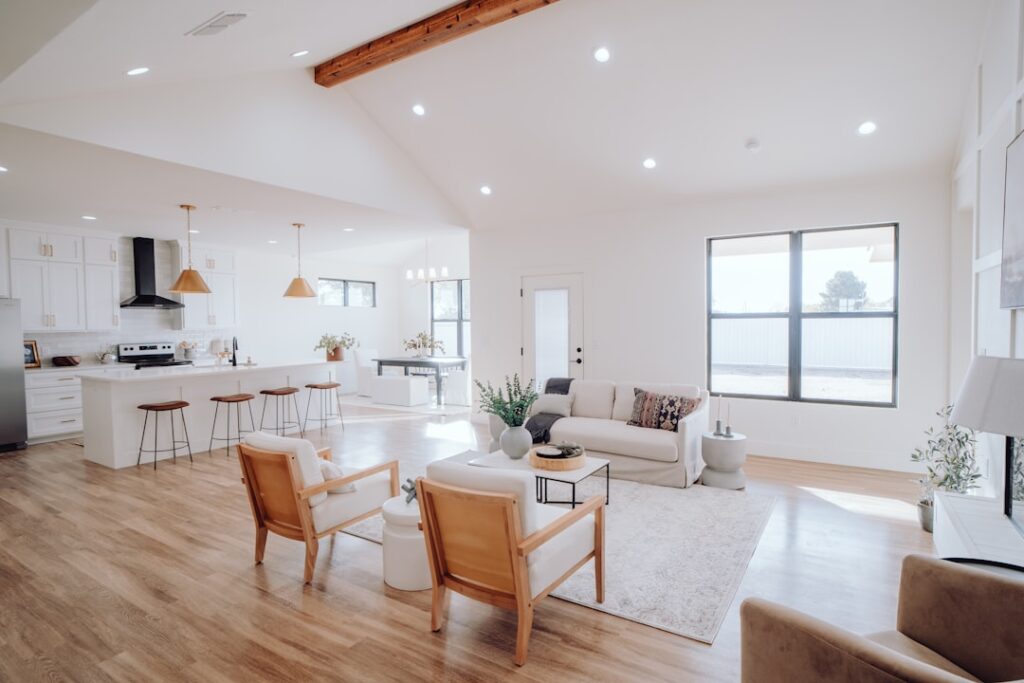
When a floor needs to survive dropped tools, spilled oil, and rolling jack stands, traditional materials fail and rigid plastic takes over. Hard plastic flooring covers a family of durable products, from interlocking polypropylene garage tiles to rigid-core PVC vinyl planks, all built to handle abuse that would ruin wood or carpet. These floors resist chemicals, shrug off moisture, and install fast over concrete. This guide breaks down the main types, their durability and chemical resistance, and how to install them in garages, workshops, basements, and utility spaces.
What Counts as Hard Plastic Flooring
The term covers any rigid plastic-based flooring designed for durability rather than a soft, residential feel. The main categories are interlocking polypropylene or PVC tiles for garages and utility areas, rigid-core vinyl planks and tiles built on a stone or PVC composite core, and solid PVC sheet or tile for industrial and wet environments. All share waterproofing and chemical resistance, but they differ in feel, appearance, and ideal use.
What unites them is a hard, non-porous polymer surface that resists water, stains, and impact far better than wood, laminate, or carpet. That makes hard plastic the default for spaces where function beats finish.
Interlocking Garage and Utility Tiles
The most recognizable hard plastic flooring is the interlocking tile used in garages and workshops. Made from rigid polypropylene or flexible PVC, these tiles snap together edge to edge and float directly over concrete with no adhesive. Polypropylene tiles are rigid and ventilated, allowing air and moisture to flow beneath, while PVC tiles are more flexible and quieter underfoot.
Garage tiles typically run $2 to $5 per square foot and install in a weekend with no special tools. They resist automotive fluids, hide minor slab cracks and imperfections, and can be lifted and replaced individually if one gets damaged. Look for tiles rated for vehicle weight, generally able to support several thousand pounds per tile, and choose hidden-peg interlocks for a cleaner look. The main downsides are a utilitarian appearance and the fact that solvents like gasoline can degrade some PVC formulations over time.
Rigid-Core Vinyl Planks and Tiles
For living spaces, basements, and anywhere you want a wood or stone look with plastic-grade durability, rigid-core vinyl is the answer. SPC, stone plastic composite, packs a dense limestone-and-PVC core that is rock-hard, dimensionally stable, and dent-resistant, while WPC uses a softer foamed core for a warmer feel. Both are 100 percent waterproof and click together as a floating floor.
Rigid-core vinyl runs $2.50 to $7 per square foot and looks far more refined than garage tile, with realistic printed wood and stone surfaces. It handles basements, kitchens, and utility rooms beautifully, combining the toughness of plastic with the appearance of natural materials. Choose a wear layer of at least 12 mil, or 20 mil for heavy use, for the best scratch resistance.
Durability and Chemical Resistance
Hard plastic flooring’s biggest strength is its resilience. The non-porous surface resists water completely, so it never swells, rots, or harbors mold the way wood can. It stands up to impact from dropped tools, and rigid cores resist denting from heavy furniture and equipment.
Chemical resistance varies by polymer. Polypropylene resists most household and many automotive chemicals well, while PVC resists water and mild chemicals but can be attacked by strong solvents, gasoline, and some hydraulic fluids over prolonged contact. For a garage that sees heavy solvent exposure, confirm the manufacturer’s chemical resistance chart, and wipe spills promptly regardless of material.
Installation Over Concrete
One of the biggest advantages of hard plastic flooring is how easily it installs over a concrete slab. Most interlocking tiles and rigid-core planks float, requiring no glue, so the process is straightforward:
- Clean and dry the slab: Remove debris, oil, and dust so tiles sit flat.
- Check for moisture: Do a simple plastic-sheet moisture test; rigid plastic is waterproof but trapped vapor can still cause issues in some systems.
- Leave an expansion gap: Plastic expands and contracts with temperature, so leave about 1/4 inch at walls, especially in unheated garages.
- Snap tiles together: Work from one corner, interlocking edges, and cut perimeter pieces with a circular saw or jigsaw.
Because the floor floats, you can lift and reconfigure it later, and individual damaged tiles pop out for replacement.
Best Use Cases
Hard plastic flooring excels in garages, workshops, home gyms, basements, laundry rooms, mudrooms, and utility spaces. It is the right choice anywhere you need a waterproof, chemical-resistant, impact-tough surface that installs fast over concrete. Interlocking tiles suit garages and gyms; rigid-core vinyl suits basements and living areas where appearance matters more.
Maintenance and Cleaning
One of the perks of hard plastic flooring is how little upkeep it demands. For garage tiles, sweep or blow out debris and hose or mop them as needed; most ventilated polypropylene tiles let water drain through to the slab. Wipe automotive fluid spills promptly so they do not pool, and avoid harsh solvents on PVC products that can degrade the polymer. A mild detergent and water handle routine cleaning.
Rigid-core vinyl in living spaces cleans like any quality vinyl floor: sweep up grit, then mop with a pH-neutral cleaner and a well-wrung mop. Steam cleaners are generally fine on the surface but check the manufacturer’s guidance. Felt pads under furniture and mats at entries keep the wear layer looking new for years.
Pros and Cons at a Glance
Hard plastic flooring’s advantages are clear: it is waterproof, impact-resistant, chemical-tolerant, fast to install, and low-maintenance, and it floats over concrete so individual pieces can be replaced. Garage tiles handle vehicle traffic and hide slab imperfections, while rigid-core vinyl brings refined wood and stone looks to living areas.
The trade-offs depend on the product. Utility tiles look industrial and are not meant for formal living spaces. Some PVC formulations can be damaged by strong solvents or, in the case of hot-tire pickup, by certain tire compounds, so check ratings for your use. And while rigid-core vinyl is durable, the cheapest versions feel hollow and scratch more easily, so a wear layer of 12 mil or higher is worth the small upcharge.
The Bottom Line
Hard plastic flooring covers everything from interlocking garage tiles to rigid-core vinyl planks, all sharing waterproofing, chemical resistance, and easy install over concrete. Choose polypropylene or PVC tiles for garages and workshops, rigid-core SPC or WPC vinyl for basements and living spaces, and always check the chemical resistance chart for solvent-heavy environments. Prep the slab, leave an expansion gap, and you will have a tough, low-maintenance floor that handles whatever you throw at it.
Prefer to explore on your own?
See how new flooring looks in your actual room in seconds — free, no signup.
Try the free Floor Studio →