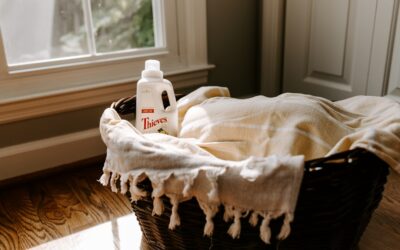
You bought a new front-loader, opened the manual, and found a warning to use only HE detergent — without much explanation of why. The HE detergent meaning is straightforward once you understand how high-efficiency washers actually work. The “HE” stands for high efficiency, and it refers to a low-sudsing formula designed for washers that use less water than traditional top-load machines. Get the wrong type and you will eventually pay for it in oversudsing, leaks, mold, and shortened machine life.
What HE Detergent Actually Is
HE detergent is a concentrated, low-foaming laundry detergent engineered for washers that use 30 to 80 percent less water per cycle than older machines. Conventional detergents create heavy suds because they were formulated for tubs filled with 35 to 45 gallons of water. A modern front-loader uses 15 to 20 gallons; an HE top-loader uses 20 to 28 gallons. With less water, the same amount of suds becomes a foam volcano that overflows the drum, coats the door seal, and triggers oversuds error codes that pause the cycle.
The HE symbol on the bottle — a stylized “he” inside a circle — is your only quick visual confirmation. If the bottle does not display the symbol, treat it as conventional detergent regardless of what the marketing copy claims.
Why High-Efficiency Washers Demand It
HE machines tumble clothes through a small pool of water rather than submerging them. They rely on mechanical action — the falling and rolling of fabric against itself — to clean. Excess suds cushion the fabric, prevent that tumbling action, and leave clothes with detergent residue. Worse, foam can leak past the door gasket and damage electronics or drip onto your laundry room floor.
Front-loaders also have sensitive bearings, pumps, and rubber boots that suds residue gradually degrades. Most manufacturers — Whirlpool, LG, Samsung, Bosch, GE — explicitly void warranty coverage for damage caused by non-HE detergent.
How Much to Use
The single biggest mistake people make with HE detergent is pouring too much. Modern formulas are concentrated 2x to 10x compared to old-school detergent. Read the cap markings, not the bottle copy.
- Standard load, lightly soiled — about 1 tablespoon (15 ml) of 2x concentrated HE detergent.
- Heavy load, normal soil — about 2 tablespoons (30 ml).
- Bulky load like comforters or work clothes — up to 3 tablespoons (45 ml).
- Pods — exactly one for normal loads, two for oversized only.
If your clothes feel stiff, smell musty after washing, or come out with white streaks, you are using too much detergent — not too little.
What Happens If You Use Regular Detergent
Pouring conventional detergent into a high-efficiency washer creates immediate and long-term problems. In the short term, you will see thick foam against the door window, a paused or extended cycle, and possibly water on the floor. In the long term, residual suds harbor bacteria and mildew in the gasket, breeding the rotten-laundry smell that plagues so many front-loaders.
If you accidentally used regular detergent, run an empty hot water cycle with a cup of distilled white vinegar in the drum. Wipe the gasket fold with a microfiber cloth and a 50/50 vinegar solution. Run a second empty cycle with washer cleaner like Affresh or Tide Washing Machine Cleaner ($1 to $2 per tablet) to flush remaining residue.
Best HE Detergents Worth Buying
Most major laundry brands sell HE versions at no real premium. Concentration and ingredients matter more than brand loyalty.
- Tide HE Original — $14 to $24 for 92 oz (64 loads). Strong enzyme blend for everyday soil.
- Persil ProClean Power-Liquid — $18 to $26 for 100 oz. Outperforms most rivals on heavily soiled work clothes in independent testing.
- Seventh Generation Free and Clear — $13 to $19 for 100 oz. Plant-based with no fragrance or dyes for sensitive skin.
- Method 4x Concentrated — $13 to $17 for 53 oz. Smaller bottle, less plastic, biodegradable formula.
- All Free Clear — $11 to $16 for 88 oz. Dermatologist-tested, ideal for kids and adults with eczema.
Powder, Liquid, or Pods
All three forms come in HE variants. Liquid is the most flexible — easy to dose, dissolves in cold water, works in the dispenser drawer. Powder is cheaper per load and excels at lifting clay and ground-in dirt; just make sure your dispenser drawer is dry before adding it. Pods are foolproof for dosing but cost 30 to 50 percent more per load and may not fully dissolve in short cold-water cycles. For under 65°F wash water, stick with liquid or pre-dissolved powder.
Common HE Detergent Mistakes
Even people who buy the right detergent often make small errors that hurt performance. The most common is filling the cap to the top — most caps have multiple fill lines and the bottom one is for an average load. Another is ignoring the dispenser drawer markings; the main wash compartment, prewash, and softener wells are not interchangeable. Putting liquid detergent directly on top of a small load also leaves blue stains, especially on synthetics. Always pour into the dispenser, not the drum, unless your manual says otherwise.
Will HE Detergent Work in Older Washers
Yes, with one caveat. HE detergent works in conventional top-loaders, you just may need slightly more to compensate for the larger water volume. The reverse — using regular detergent in an HE washer — does not work and damages the machine over time. If you mix households or move appliances, standardize on HE detergent and you will be safe in any washer made in the last 30 years.
Bottom Line
The HE detergent meaning boils down to one practical rule: low-suds formulas for low-water machines. If you own a front-loader or any washer made after 2010, look for the HE logo, dose with the cap line for your load size, and resist the temptation to pour more for “extra clean.” Your clothes, your machine, and your warranty will thank you.