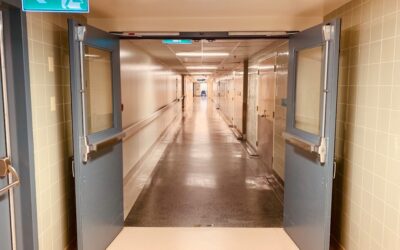
Healthcare flooring must meet demands that no other commercial sector requires. It needs to resist aggressive chemical disinfectants, support rigorous infection control protocols, provide slip resistance for patients and staff, withstand heavy rolling loads from equipment and beds, dampen noise for patient recovery, and still look professional and welcoming. Getting the flooring decision wrong in a healthcare environment has consequences that go beyond aesthetics — it affects patient safety, infection rates, staff health, and operational costs.
This guide covers the leading flooring materials for healthcare facilities, the critical performance requirements they must meet, and how to match the right product to each area of a healthcare building.
- Healthcare Flooring Requirements
- Sheet Vinyl
- Rubber Flooring
- Luxury Vinyl Tile (LVT)
- Linoleum
- Ceramic and Porcelain Tile
- Epoxy and Resin Flooring
- Flooring by Healthcare Area
- Infection Control Considerations
- Maintenance and Lifecycle
- Cost Comparison
- Frequently Asked Questions
- What is the best flooring for hospitals?
- What flooring is best for care homes?
- How long does healthcare flooring last?
- Is carpet ever appropriate in healthcare?
- What is DCOF and why does it matter in healthcare?
- What is the best flooring for a medical office or clinic?
- What flooring works best in a dental office?
- Is VCT a good choice for healthcare facilities?
Healthcare Flooring Requirements
Before evaluating specific materials, it is essential to understand the performance requirements that healthcare flooring must satisfy.
Infection Control
Healthcare-associated infections (HAIs) affect millions of patients annually, and flooring plays a role in transmission. Healthcare floors must be impervious to bodily fluids, resist bacterial and fungal growth, and withstand repeated exposure to hospital-grade disinfectants including bleach, quaternary ammonium compounds, hydrogen peroxide, and peracetic acid. Seamless installations (heat-welded sheet vinyl, poured epoxy) eliminate joints where pathogens harbor.
Slip Resistance
Patient falls are among the most common adverse events in hospitals and care homes. Healthcare flooring must maintain adequate traction when wet, contaminated with bodily fluids, or cleaned with chemical solutions. The minimum DCOF (Dynamic Coefficient of Friction) is 0.42 per ADA standards, but most healthcare specifications require 0.50 or higher. Critically, the surface must maintain slip resistance throughout its service life — not just when new.
Rolling Load Resistance
Hospital beds, medical equipment, food carts, laundry carts, and wheelchairs create sustained rolling loads that destroy flooring not designed for them. Rolling load testing (ASTM F2753 or EN 425) measures a floor’s ability to withstand wheeled traffic without permanent indentation, delamination, or surface damage.
Acoustic Performance
Noise in healthcare facilities directly affects patient recovery, staff concentration, and overall care quality. Research shows that excessive noise increases patient stress hormones, delays healing, and disrupts sleep. Impact sound (footsteps, equipment rolling) is the primary flooring-related noise source. Resilient flooring materials with acoustic backing reduce impact sound by 10 to 25 dB compared to hard surfaces.
Chemical Resistance
Healthcare floors are exposed to a wider and more aggressive range of chemicals than any other commercial environment. In addition to cleaning agents, they must withstand medications, laboratory reagents, contrast agents, hand sanitizer drips, and iodine-based surgical preps. The flooring surface must resist staining, discoloration, and degradation from these exposures over years of daily contact.
Comfort and Ergonomics
Healthcare staff spend 8 to 12 hours per shift on their feet. Floor hardness directly correlates with musculoskeletal disorders, fatigue, and injury rates among nurses and other staff. Resilient flooring with ergonomic cushioning reduces lower back pain, leg fatigue, and joint stress — measurably improving staff wellbeing and reducing workers’ compensation claims.
Sheet Vinyl
Sheet vinyl is the dominant healthcare flooring material globally, installed in more hospital square footage than any other product.
Why Sheet Vinyl Dominates Healthcare
The primary advantage is seamless installation. Sheet vinyl comes in 6-foot or 12-foot-wide rolls that cover large areas with minimal seams. Where seams are necessary, they are heat-welded using a welding rod and hot-air welding gun, creating a monolithic surface with no gaps for bacteria, fluids, or contaminants to penetrate. Combined with coved base installation (where the sheet turns up the wall 4 to 6 inches), sheet vinyl creates a bathtub-like floor surface that is completely impervious.
Homogeneous vs Heterogeneous
Homogeneous sheet vinyl is the same material throughout its thickness. It can be sanded and refinished to restore its surface, and any damage reveals the same color and pattern below. This makes it exceptionally durable and long-lived — homogeneous vinyl in well-maintained healthcare facilities can last 20 to 30 years.
Heterogeneous sheet vinyl is a layered construction with a decorative print layer and a clear wear layer over a base layer. It offers far more design options (wood looks, stone looks, abstract patterns) and typically includes a PUR (polyurethane reinforced) surface coating for enhanced stain and scuff resistance. Heterogeneous products cannot be sanded like homogeneous products but their PUR coating reduces maintenance requirements.
Key Healthcare Sheet Vinyl Features
Look for: 20 to 40 mil wear layer, PUR or PU surface treatment, 6-foot or wider roll widths, heat-weld capability, R10 or higher slip resistance rating, and Class 1 fire rating (CRF greater than 0.45 W/cm2). Leading healthcare sheet vinyl brands include Tarkett (iQ and Acczent lines), Armstrong (Medintone and Possibilities), and Forbo (Eternal and Sphera lines).
Rubber Flooring
Rubber flooring is the premium choice for healthcare facilities that prioritize staff comfort, acoustic performance, and long-term durability.
Ergonomic Benefits
Rubber’s natural resilience provides the best ergonomic performance of any healthcare flooring material. It absorbs impact energy, reducing the force transmitted through the legs and spine with each step. Studies in healthcare facilities show that rubber flooring reduces reported lower back pain among nurses by 40 to 50 percent compared to hard vinyl. In a profession with high rates of musculoskeletal injury, this benefit directly affects staff retention and wellbeing.
Acoustic Performance
Rubber provides superior sound dampening — approximately 20 to 25 dB impact sound reduction compared to 10 to 15 dB for standard sheet vinyl. In patient rooms, corridors, and nurse stations, the difference is meaningful. Equipment rolling on rubber produces a soft hum rather than the sharper sound of hard vinyl or tile, contributing to a quieter healing environment.
Durability
Rubber healthcare flooring has an expected lifespan of 25 to 40 years — the longest of any resilient flooring material. It resists indentation from heavy equipment, maintains its appearance under intense rolling traffic, and does not crack or degrade with age. The initial cost premium over sheet vinyl is typically recovered through the extended service life.
Limitations
Rubber flooring costs more than sheet vinyl (typically $5 to $12 per square foot for materials versus $2 to $5 for vinyl). It requires more skill to install properly, and not all rubber products accept heat welding for seamless joints. Some rubber products are sensitive to specific chemicals — verify compatibility with your facility’s disinfection protocols before specifying. Rubber also requires more maintenance initially (regular pH-neutral cleaning) until the surface cures and stabilizes.
Luxury Vinyl Tile (LVT)
Commercial healthcare-grade LVT is gaining significant market share in healthcare facilities, particularly in non-critical areas where design flexibility is valued.
Design Advantages
LVT offers the widest range of realistic wood, stone, and abstract designs available in healthcare-grade flooring. This design flexibility enables healthcare facilities to create warm, residential-feeling environments in patient rooms, lobbies, waiting areas, and rehabilitation spaces. Research supports the positive psychological impact of homelike environments on patient outcomes — and LVT enables this without sacrificing performance.
Healthcare-Grade LVT Requirements
Not all LVT is suitable for healthcare. Healthcare-grade LVT should have a minimum 20-mil wear layer (28+ mil preferred), PUR surface coating, EN 685 Class 34 traffic rating, DCOF 0.42 or higher, and FloorScore or Greenguard Gold certification for indoor air quality. SPC (stone polymer composite) cores provide better dimensional stability and moisture resistance than standard LVT cores.
Installation in Healthcare
Healthcare LVT is typically installed using full-spread adhesive rather than click-lock floating installation. Adhesive installation prevents tile movement under rolling loads and allows tighter, more hygienic joints. Some manufacturers offer loose-lay LVT with friction backing for areas requiring frequent access (above raised floors with underfloor services).
Limitations for Critical Areas
LVT is not recommended for operating rooms, sterile processing areas, or other critical zones where a completely seamless floor is required. The joints between individual tiles — even when tightly fitted — cannot achieve the same imperviousness as heat-welded sheet vinyl. For corridors, patient rooms, waiting areas, and administrative spaces, LVT performs excellently.
Linoleum
Linoleum is a natural, sustainable healthcare flooring option made from linseed oil, wood flour, cork, limestone, and jute backing.
Sustainability Credentials
Linoleum is the most environmentally sustainable healthcare flooring option. Its raw materials are renewable, its manufacturing process has a low carbon footprint, and it is fully biodegradable at end of life. Linoleum also has natural antibacterial properties — linseed oil continues to oxidize throughout the product’s life, creating a surface that inhibits bacterial growth without chemical additives. These properties make linoleum attractive to healthcare facilities pursuing LEED, WELL, or Green Guide for Health Care certifications.
Performance
Sheet linoleum can be heat-welded for seamless installation and coved at wall bases. It resists scratches, burns, and many common chemicals. The through-body color composition means scratches do not reveal a different color beneath. However, linoleum requires more maintenance than PUR-coated vinyl — it needs initial conditioning and periodic polish application to maintain its surface integrity and appearance.
Limitations
Linoleum is sensitive to standing water and some aggressive disinfectants. It can be damaged by bleach and certain hospital-grade chemicals, which limits its use in critical areas requiring aggressive disinfection protocols. The initial conditioning and ongoing polish requirements add to lifecycle maintenance costs. Linoleum works best in administrative areas, rehabilitation spaces, and non-critical clinical areas.
Ceramic and Porcelain Tile
Ceramic and porcelain tile is used in specific healthcare areas where its water imperviousness and extreme durability are paramount.
Best Healthcare Applications
Tile excels in hydrotherapy areas, shower rooms, clean utility rooms, soiled utility rooms, commercial kitchens, and decontamination areas. Its complete water imperviousness and resistance to virtually all chemicals make it ideal for areas with constant water exposure or aggressive chemical use. Porcelain tile is preferred over ceramic for healthcare due to its lower porosity and higher strength. For detailed specifications, see our tile flooring guide.
Limitations
Tile is not recommended for general patient areas, corridors, or staff work areas. It is extremely hard and provides no cushioning for staff comfort. It transmits impact sound loudly. Grout lines harbor bacteria and require regular sealing and deep cleaning. Tile is also cold underfoot and unforgiving of dropped equipment and supplies. Falls on tile surfaces result in more serious injuries than falls on resilient flooring.
Epoxy and Resin Flooring
Epoxy flooring and other resin systems create completely seamless, monolithic surfaces that are increasingly specified in healthcare environments.
Healthcare Applications
Poured epoxy and polyurethane resin floors are ideal for operating rooms, sterile processing departments, pharmacies, and laboratories. The seamless surface has no joints whatsoever, and the integral coved base creates a continuous surface from floor to wall. Epoxy resists virtually all chemicals used in healthcare, including aggressive surgical scrubs, cytotoxic drugs, and laboratory reagents.
Limitations
Resin flooring is extremely hard — even harder than tile — making it unsuitable for areas where staff comfort is important. Installation requires professional specialists and extended curing time (the area is out of service for 3 to 7 days). Repairs are difficult and visible. Cost is high ($8 to $20+ per square foot installed). Resin floors work best in specialized areas where chemical resistance and complete seamlessness are non-negotiable requirements.
Flooring by Healthcare Area
Different areas of a healthcare facility have different flooring requirements. Here is a guide to the best material for each zone.
| Healthcare Area | Recommended Flooring | Key Requirement |
|---|---|---|
| Operating rooms | Welded sheet vinyl or epoxy | Seamless, conductive, chemical-proof |
| Patient rooms | Sheet vinyl or healthcare LVT | Comfort, quiet, easy cleaning |
| Corridors | Sheet vinyl or rubber | Durability, rolling load resistance |
| Emergency department | Welded sheet vinyl | Seamless, chemical-proof, slip-resistant |
| ICU / CCU | Welded sheet vinyl | Seamless, quiet, easy disinfection |
| Waiting areas / lobbies | Healthcare LVT | Design flexibility, durability |
| Nurse stations | Rubber or cushion-backed vinyl | Ergonomic comfort, quiet |
| Laboratories | Welded sheet vinyl or epoxy | Chemical resistance, seamless |
| Pharmacies | Welded sheet vinyl or epoxy | Chemical resistance, seamless |
| Hydrotherapy / showers | Porcelain tile (slip-rated) | Water-proof, slip-resistant |
| Commercial kitchens | Quarry tile or epoxy | Slip-resistant, heat-resistant |
| Administrative offices | LVT or linoleum | Design, comfort, sustainability |
| Rehabilitation areas | Rubber or LVT | Impact absorption, comfort |
| Care home bedrooms | Healthcare LVT or sheet vinyl | Homelike design, easy cleaning |
Infection Control Considerations
Infection control is the driving force behind most healthcare flooring decisions. Understanding the key principles helps ensure the right specification.
Seamless Surfaces
Every joint, seam, and transition in a floor is a potential harbor for pathogens. Minimizing joints through large-format materials (wide sheet vinyl, poured resin) and sealing remaining joints (heat welding) is the foundation of infection-control-oriented flooring design. Grout joints in tile floors are particularly problematic — grout is porous and difficult to fully disinfect even when sealed.
Coved Base
The wall-floor junction is one of the most contaminated areas in healthcare facilities. Coved base installation — turning the floor material up the wall 4 to 6 inches with a radiused curve at the junction — eliminates the 90-degree corner where dirt and pathogens accumulate. Sheet vinyl and rubber both support coved base installation. Cap strips seal the top edge of the cove to the wall surface.
Antimicrobial Treatments
Some healthcare flooring products incorporate antimicrobial agents (typically silver ion-based) into the wear layer or throughout the product. These treatments provide continuous antimicrobial protection between cleaning cycles. While antimicrobial flooring does not replace cleaning protocols, it provides an additional layer of defense against pathogen transmission.
Cleanability
The floor must withstand the facility’s cleaning and disinfection protocols without degradation. Before specifying a product, verify its compatibility with every cleaning agent and disinfectant used in your facility. Pay particular attention to bleach (sodium hypochlorite), hydrogen peroxide-based cleaners, and any specialty agents used in your specific healthcare setting. Request chemical resistance test data from the manufacturer.
Maintenance and Lifecycle
Maintenance strategies for healthcare flooring differ significantly from commercial or residential settings.
Daily Cleaning
Healthcare floors require daily or more frequent cleaning depending on the area. Automated floor scrubbers are standard in corridors and large areas. Manual mopping with approved disinfectant solutions is used in patient rooms and smaller areas. The floor material must withstand mechanical scrubbing and chemical exposure without surface degradation, discoloration, or loss of slip resistance.
Periodic Deep Cleaning
Deep cleaning protocols — including stripping and re-applying finish on VCT, machine scrubbing and re-conditioning on linoleum, or burnishing on homogeneous vinyl — should be scheduled during low-occupancy periods. PUR-coated products significantly reduce deep cleaning frequency and cost compared to uncoated products.
Lifecycle Cost Considerations
Healthcare flooring decisions should be based on total lifecycle cost, not purchase price. A sheet vinyl floor at $4 per square foot that lasts 20 years with minimal maintenance costs less overall than a VCT floor at $2 per square foot that requires annual stripping and recoating at $1 per square foot. Over 20 years, the VCT costs $22 per square foot total versus $4 to $6 for PUR-coated vinyl. Rubber at $8 per square foot with a 30-year lifespan and low maintenance may be the most economical long-term choice.
Cost Comparison
| Flooring Type | Material (per sq ft) | Installed (per sq ft) | Expected Life | Annual Maintenance (per sq ft) |
|---|---|---|---|---|
| Homogeneous sheet vinyl | $3.00 – $6.00 | $6.00 – $10.00 | 20 – 30 years | $0.10 – $0.30 |
| Heterogeneous sheet vinyl | $2.00 – $5.00 | $5.00 – $9.00 | 15 – 25 years | $0.10 – $0.25 |
| Rubber | $5.00 – $12.00 | $9.00 – $18.00 | 25 – 40 years | $0.15 – $0.30 |
| Healthcare LVT | $3.00 – $7.00 | $6.00 – $12.00 | 15 – 25 years | $0.10 – $0.20 |
| Linoleum | $3.00 – $6.00 | $6.00 – $10.00 | 20 – 30 years | $0.20 – $0.40 |
| Porcelain tile | $4.00 – $10.00 | $10.00 – $20.00 | 30 – 50 years | $0.15 – $0.35 |
| Epoxy resin | $5.00 – $15.00 | $8.00 – $20.00 | 15 – 25 years | $0.10 – $0.20 |
Frequently Asked Questions
What is the best flooring for hospitals?
Heat-welded homogeneous sheet vinyl is the most widely used and recommended hospital flooring for clinical areas. It provides a seamless, impervious surface that supports rigorous infection control, resists chemicals, handles rolling loads, and offers good slip resistance. Rubber is the premium alternative where staff comfort and acoustic performance are priorities. The best choice depends on the specific hospital area — see the area-by-area guide above.
What flooring is best for care homes?
Care homes benefit from healthcare LVT in bedrooms and living areas (for its homelike appearance) and sheet vinyl in corridors, bathrooms, and clinical areas (for hygiene and durability). The shift toward creating residential, non-institutional environments in care homes makes LVT’s design flexibility particularly valuable. All care home flooring should have a DCOF of 0.50 or higher and minimal pattern contrast to reduce fall risk for residents with dementia.
How long does healthcare flooring last?
Sheet vinyl: 15 to 30 years. Rubber: 25 to 40 years. Healthcare LVT: 15 to 25 years. Porcelain tile: 30 to 50 years. Epoxy: 15 to 25 years. Actual lifespan depends heavily on maintenance quality, traffic intensity, and chemical exposure. Well-maintained rubber flooring in a hospital corridor can exceed 35 years of service.
Is carpet ever appropriate in healthcare?
Carpet is generally discouraged in clinical healthcare areas due to infection control concerns — carpet fibers harbor bacteria, are difficult to fully disinfect, and cannot be made seamless. However, specialized healthcare carpet tiles with antimicrobial treatments are sometimes used in administrative offices, waiting areas, and mental health facilities where a softer, more calming environment is therapeutically beneficial. Any healthcare carpet should be easily replaceable (tile format) and treated with antimicrobial agents.
What is DCOF and why does it matter in healthcare?
DCOF (Dynamic Coefficient of Friction) measures a floor’s slip resistance when wet. A DCOF of 0.42 or higher is the ADA minimum for wet areas. Healthcare facilities typically specify 0.50 or higher for general areas and 0.60 or higher for hydrotherapy and shower areas. DCOF testing should be performed on the installed floor, not just the product sample, as installation conditions affect real-world slip resistance.
What is the best flooring for a medical office or clinic?
Commercial sheet vinyl or healthcare-grade LVT is the best fit for most medical offices and clinics. Use heat-welded sheet vinyl in exam rooms, procedure rooms and restrooms where fluids and disinfectants are common, and glue-down LVT with a 20 mil or thicker wear layer in waiting rooms, corridors and offices. Both resist hospital disinfectants, handle rolling chairs and carts, and clean quickly between patients.
What flooring works best in a dental office?
Welded sheet vinyl is the usual choice for dental operatories, with healthcare LVT or rubber in reception and staff areas. Operatories see rolling stools, heavy chairs, water, bonding agents and frequent disinfection, so a joint-free surface with a coved base is easiest to keep clean. Check chemical resistance against the practice’s surface disinfectants and choose a slip-resistant finish for wet hands and dropped instruments.
Is VCT a good choice for healthcare facilities?
VCT is cheap to buy but usually costs more over its life in healthcare settings. It needs regular stripping, waxing and burnishing to stay sealed, and its many joints are harder to keep hygienic than heat-welded sheet vinyl. VCT can still work in storage rooms, back-of-house corridors and low-risk administrative areas, but clinical spaces are better served by sheet vinyl, rubber or PUR-coated LVT.
Prefer to explore on your own?
See how new flooring looks in your actual room in seconds — free, no signup.
Try the free Floor Studio →