
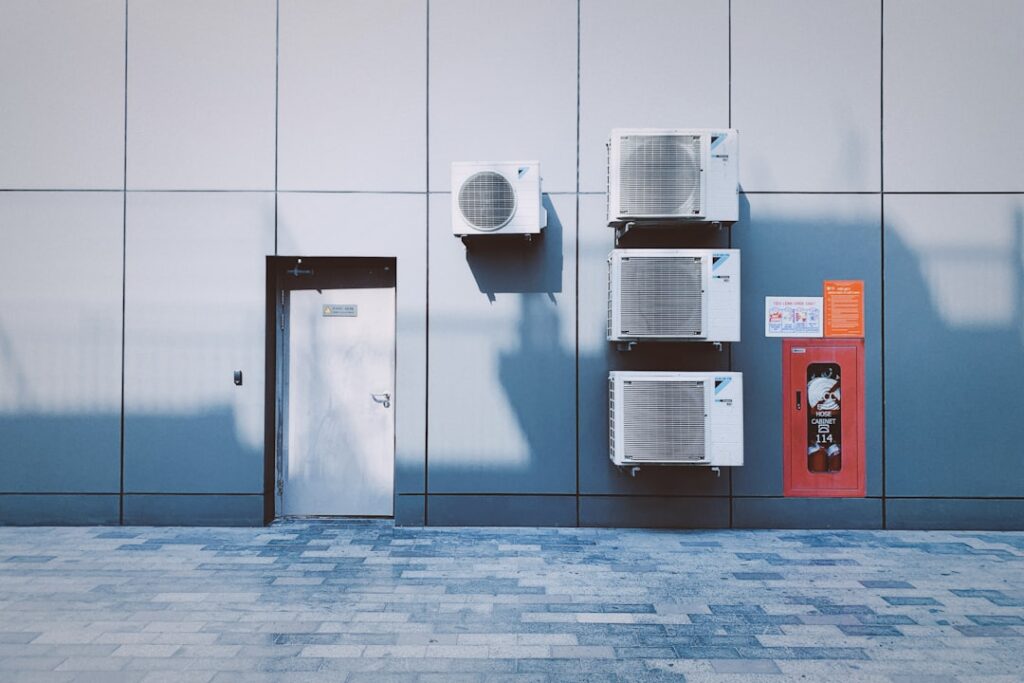
The story behind the heat pump vs traditional hvac market share 2025 data is one of the clearest shifts in home heating in decades: heat pumps have overtaken gas furnaces in annual U.S. sales, and that lead is widening into 2026. For several years running now, Americans have bought more heat pumps than gas furnaces, a reversal that would have seemed unlikely a decade ago. If you’re replacing a system, this isn’t just a trivia point — it tells you where efficiency incentives, technology, and resale value are all heading. Here’s the head-to-head that explains why.
The Market Share Picture
Heat pumps crossed a real milestone: annual shipments have outpaced gas furnaces since around 2022, and the gap has grown each year through 2025. Roughly speaking, heat pumps now account for well over half of the heating equipment sold in a typical year, while traditional gas furnaces hold the remainder and continue to slip. Air-source heat pumps drive most of that volume, with ductless mini-splits growing fastest.
The momentum is regional. Heat pumps have long dominated the warm Southeast, where they double as efficient air conditioners, but the newer story is their surge into cold-climate Northern states, powered by cold-climate models that stay efficient at low temperatures. Traditional furnace-and-AC setups still hold ground in cold regions with cheap natural gas, but their share is shrinking there too.
How Each System Works
The fundamental difference is heating method. A traditional HVAC setup pairs a furnace that burns gas (or uses electric resistance) to create heat with a separate central air conditioner for cooling — two machines, two jobs. A heat pump is one machine that moves heat rather than creating it, pulling warmth from outdoor air to heat your home in winter and reversing to cool it in summer.
Because a heat pump moves existing heat instead of burning fuel, it delivers far more heating energy than the electricity it consumes — often three to four units of heat per unit of electricity. A furnace can never beat 100 percent efficiency because it’s converting fuel to heat. That physics gap is the engine behind the market shift.
Head-to-Head Comparison
Here’s how the two stack up on the factors that actually decide a purchase:
- Upfront cost: Heat pump $5,000 to $12,000 installed; furnace-plus-AC $6,000 to $12,000. Roughly comparable, with heat pumps often competitive since you buy one system, not two.
- Operating cost: Heat pump wins in most climates thanks to high efficiency; a gas furnace can win where natural gas is very cheap and winters are brutal.
- Efficiency: Heat pump delivers 300 to 400 percent effective efficiency; a high-end gas furnace tops out around 98 percent AFUE.
- Cooling: Heat pump cools built-in; traditional setup needs a separate AC.
- Cold-climate performance: Traditional furnace is unfazed by extreme cold; standard heat pumps lose capacity, though cold-climate models close much of that gap.
- Incentives: Heat pumps qualify for federal tax credits and many utility rebates; furnaces generally do not to the same degree.
- Emissions: Heat pump runs on electricity and gets cleaner as the grid does; a gas furnace burns fossil fuel on site.
Read that list and the trend explains itself: on efficiency, cooling, incentives, and emissions, the heat pump leads, and its historical weaknesses in cold weather are eroding fast.
What’s Driving Heat Pump Adoption
Three forces are behind the market share swing. First, incentives: federal tax credits worth up to $2,000 plus state and utility rebates can knock thousands off a heat pump, tilting the math decisively. Second, technology: cold-climate heat pumps now maintain strong output well below freezing, erasing the biggest objection Northern homeowners had. Third, operating cost: with electricity increasingly competitive against gas and the efficiency advantage baked in, heat pumps often cost less to run month to month.
Add the cooling that comes free with a heat pump and the simplicity of one system instead of two, and it’s clear why buyers keep choosing them. Builders and utilities are pushing them too, which accelerates the shift further.
Where Traditional HVAC Still Wins
Traditional systems aren’t obsolete, and in specific situations they remain the better call. In the coldest climates with very cheap natural gas, a high-efficiency furnace can still deliver lower winter heating bills and unwavering performance during deep cold snaps when even good heat pumps lose some capacity. Homes with existing gas service and a recently replaced AC may find replacing only the furnace cheaper than converting to a heat pump.
There’s also the backup argument: a gas furnace keeps heating during a prolonged cold spell regardless of how hard the electric grid is stressed. Many Northern installers now split the difference with a dual-fuel system — a heat pump for efficient heating most of the year, with a gas furnace kicking in only when it gets truly frigid.
Which Should You Choose?
For most homeowners in most of the country, a heat pump is now the smarter choice — it heats and cools in one system, runs more efficiently, qualifies for substantial incentives, and aligns with where the market and codes are heading, which protects resale value. If you live in a moderate or warm climate, or you’re replacing both a furnace and an aging AC at once, the decision is easy: go heat pump.
Choose traditional HVAC, or a dual-fuel hybrid, if you’re in a severe cold climate with inexpensive natural gas, if only your furnace failed and your AC is newer, or if you want guaranteed heat independent of electric-grid stress during extreme cold. The dual-fuel route gives you the heat pump’s efficiency most of the year with a furnace as a cold-snap backstop, and it’s increasingly popular in the North for exactly that reason.
The Efficiency Ratings That Matter
To compare these systems honestly, you need to speak their rating language, because the metrics changed recently. Cooling is now measured in SEER2, and the federal minimum sits around 14.3 to 15.2 SEER2 depending on region, with premium heat pumps reaching 18 to 20 SEER2. Heating efficiency for a heat pump is rated in HSPF2, where a solid unit lands around 7.5 to 9 HSPF2 and cold-climate models push higher. A gas furnace is rated in AFUE, or annual fuel utilization efficiency, expressed as a percentage: a mid-grade furnace runs 80 percent AFUE and a condensing high-efficiency furnace reaches 95 to 98 percent. The key insight is that AFUE caps at 100 percent because a furnace can never output more heat than the fuel it burns, while a heat pump’s effective heating efficiency runs 300 to 400 percent because it moves heat instead of making it. That is not a marketing trick; it is why an all-electric heat pump can beat gas on operating cost even when electricity costs more per unit of energy.
Lifespan and Maintenance
The two approaches age differently. A gas furnace commonly lasts 15 to 20 years, and a central AC 12 to 15, so a traditional pairing means the two halves wear out on different schedules, and you often replace the AC once during the furnace’s life. A heat pump runs year-round for both heating and cooling, so it logs more hours and typically lasts 12 to 15 years. Both benefit from annual service and filter changes. A furnace needs a yearly combustion and heat-exchanger check for safety, since a cracked exchanger can leak carbon monoxide, while a heat pump needs coil cleaning and a refrigerant-charge check. Neither is dramatically cheaper to maintain, though a heat pump consolidates service into one system instead of two.
A Closer Look at the Share Numbers
Put concrete figures to the trend and it sharpens. Heat pumps have outsold gas furnaces in the United States every year since 2022, and by 2025 they represented on the order of 21 percent of combined U.S. heating and HVAC equipment share, with unit sales running a few million per year and climbing at a faster rate than gas furnaces, which have declined. The growth is not evenly spread: the Southeast has run on heat pumps for decades, but the sharpest recent gains are in the Northeast and Midwest, where cold-climate models and generous state rebates have converted homes that would have defaulted to gas a few years ago. The direction of the data has been consistent and one-way, which is what makes it a reliable signal for a buying decision rather than a single-year blip.
The Verdict and the Trend
The heat pump vs traditional hvac market share 2025 numbers make the direction unmistakable: heat pumps have taken the lead in U.S. sales and keep extending it, driven by efficiency, incentives, built-in cooling, and cold-climate models that neutralized their old weakness. Traditional furnace-and-AC systems still make sense in cold, cheap-gas regions and dual-fuel setups, but they’re the shrinking share for a reason. If you’re deciding today, default to a heat pump and only choose traditional HVAC when your climate, fuel prices, or backup needs specifically call for it. That’s the choice that lines up with both your energy bills and the way the market is clearly moving.


