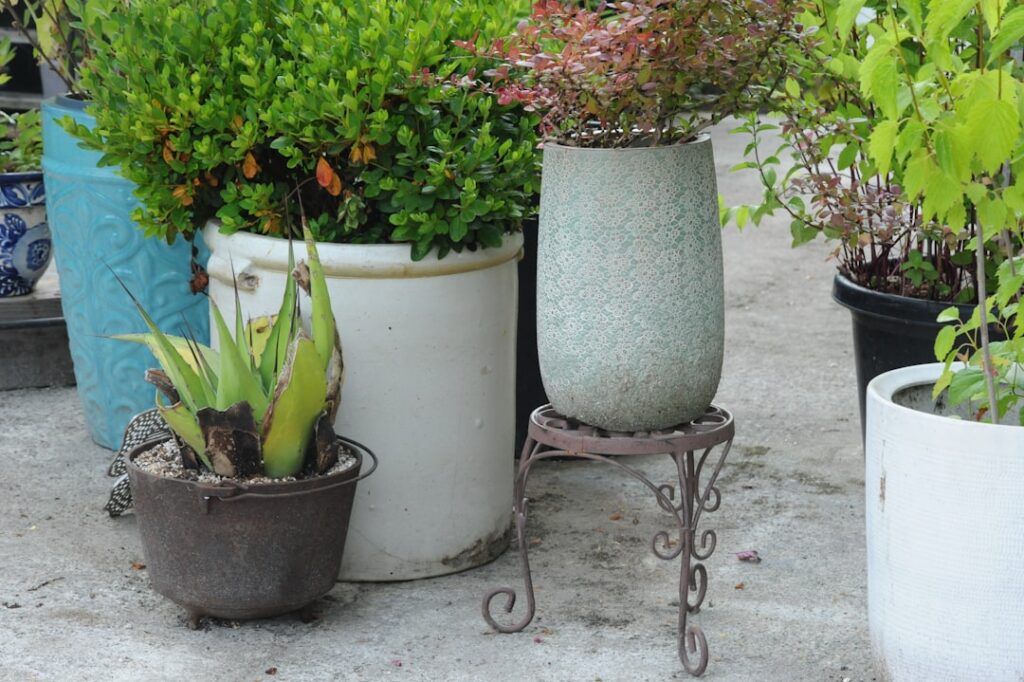
A fully watered 16-inch ceramic planter can weigh more than 50 pounds, which is why a flimsy stand buckles within a season. Heavy duty outdoor metal plant stands are built to carry that load year after year, resisting wind, rain, and rust while keeping your container gardens off the ground. This guide covers the metals that hold up outdoors, the weight ratings that matter, and how to keep a stand looking new for a decade.
- Why Choose Metal Over Other Materials
- Best Metals for Outdoor Plant Stands
- Understanding Weight Ratings
- Key Features to Look For
- Types and Styles
- Single Pot Pedestals
- Tiered and Multi-Level Stands
- Plant Caddies With Wheels
- Wall-Mounted and Railing Brackets
- Placement and Stability Tips
- How to Prevent Rust and Extend Life
- What to Expect to Spend
- Final Thoughts
Why Choose Metal Over Other Materials
Plant stands come in wood, plastic, and metal, but metal is the clear winner for heavy outdoor use. Wood rots when it stays wet against soil and pots, and plastic grows brittle under UV exposure, cracking after a few summers. Metal, when properly finished, shrugs off moisture, supports far more weight per square inch, and resists the warping that plagues wood. For large pots, mature plants, and exposed patios, metal is the only material that reliably handles the load and the elements together.
Best Metals for Outdoor Plant Stands
Not all metal is equal outdoors. The finish and base material determine how long the stand survives the weather.
- Wrought iron: Extremely strong and heavy, ideal for the largest pots. It must be powder-coated or painted to prevent rust, but a well-finished iron stand lasts decades.
- Powder-coated steel: The most common heavy-duty choice. Steel provides strength while the baked-on powder coating seals out moisture. Look for a thick, even coat.
- Aluminum: Naturally rust-proof and lightweight, good for coastal or humid climates, though it carries less weight than iron or steel.
- Galvanized steel: Coated in zinc to resist corrosion, giving a rustic finish that ages gracefully and holds significant weight.
Understanding Weight Ratings
The single most important spec for a heavy duty stand is its weight capacity, and it is easy to underestimate what you need. Dry potting soil is deceptively light, but soaked soil plus the pot plus a mature plant adds up fast. As a rule, a saturated 12-inch pot weighs around 30 pounds, a 16-inch pot around 50 pounds, and a 20-inch pot can exceed 80 pounds. Always buy a stand rated at least 25 percent above your heaviest expected load to provide a safety margin and prevent metal fatigue over time. A stand rated for 60 pounds used at exactly 60 pounds every day will weaken faster than one used at 40.
Key Features to Look For
Beyond the metal and rating, several design details separate a stand that lasts from one that disappoints.
- Welded joints: Welds are far stronger than bolted or snap-together connections, which loosen under repeated load and wind.
- Wide, stable feet: A broad base lowers the center of gravity and prevents tipping in gusts.
- Powder-coated or galvanized finish: A sealed surface is the difference between a stand that rusts in two years and one that lasts ten.
- Drainage-friendly platform: Slatted or grid tops let water drain so pots do not sit in puddles, which stains the metal and breeds rot.
- Adjustable or leveling feet: Useful on uneven patios, decks, and pavers to keep heavy pots from wobbling.
Types and Styles
Heavy duty metal stands come in several configurations to suit different spaces.
Single Pot Pedestals
A tall, sturdy pedestal showcases one statement planter. These are the strongest per-pot option and ideal for a large specimen plant by an entrance.
Tiered and Multi-Level Stands
Staircase or pyramid designs hold several pots at staggered heights, maximizing greenery in a small footprint. Confirm the per-tier rating, since the total capacity is split across shelves.
Plant Caddies With Wheels
Rolling bases with locking casters let you move very heavy pots for cleaning or to chase sunlight. Look for caddies rated well above your pot weight and with metal, not plastic, wheels.
Wall-Mounted and Railing Brackets
Heavy gauge brackets attach to walls or deck railings, freeing floor space. These require solid anchoring into framing, not just siding.
Placement and Stability Tips
Even the best stand fails if it is poorly placed. Set stands on firm, level surfaces like concrete, pavers, or solid decking rather than soft soil that shifts when wet. In windy areas, position tall pedestals against a wall or in a sheltered corner. For tiered stands, place the heaviest pots on the lowest level to keep the center of gravity low. If your patio slopes, use leveling feet or a paver to true up the base so the load sits evenly across all legs.
How to Prevent Rust and Extend Life
Maintenance is simple and makes a dramatic difference in lifespan.
- Wipe the stand dry after heavy rain if water pools on flat surfaces.
- Inspect the finish twice a year for chips or scratches that expose bare metal.
- Touch up any nicks promptly with a rust-inhibiting outdoor paint to seal the spot before corrosion starts.
- Place a saucer or feet under pots so standing water never sits directly on the platform.
- In harsh winters, move stands under cover or apply a coat of paste wax to powder-coated surfaces for extra protection.
What to Expect to Spend
In the US market, a quality single heavy duty metal pedestal typically runs 30 to 70 dollars, while larger tiered stands and rolling caddies range from 50 to 150 dollars depending on size and metal. Wrought iron and thick powder-coated steel sit at the higher end but justify the cost with strength and longevity. Avoid the cheapest snap-together models if you plan to hold large pots, since they rarely survive a single windy season under real load.
Final Thoughts
The best heavy duty outdoor metal plant stands combine a corrosion-resistant finish, welded construction, a wide stable base, and a weight rating comfortably above your heaviest soaked pot. Match the metal to your climate, choosing aluminum or galvanized steel for coastal humidity and powder-coated steel or wrought iron for maximum load. Place stands on firm level ground, keep pots from sitting in standing water, and touch up any chips before they rust. At D and G Flooring we know homeowners care about durable surfaces inside and out, and a properly chosen metal plant stand brings that same long-lasting, weather-tough quality to your patio and garden for many seasons to come.