A staircase is the first thing many guests see, and dressing it well pays visible dividends, which is why herringbone carpet for stairs has surged in popularity among homeowners who want a floor that is both striking and safe. The distinctive V-shaped zigzag weave draws the eye up each tread, adds welcome traction on a surface where slips are a real hazard, and lends even a modest hallway a tailored, high-end finish that plain broadloom cannot deliver.
Installing a patterned carpet on a run of steps takes more planning than a flat bedroom install, though, and choosing the right fiber, backing, and layout up front prevents costly mistakes. This guide walks through everything from pattern alignment and safety to pricing and upkeep so you can specify the job with confidence.
Why Herringbone Suits Stairs
The herringbone weave does more than look sharp. Its interlocking diagonal lines create a subtly textured surface that improves grip underfoot, an important advantage on stairs where flat, slick carpet can feel treacherous in socks. The busy geometry also disguises everyday dirt and the wear tracks that inevitably form on the nose of each tread.
Visually, the pattern elongates and defines the staircase, guiding the eye upward and making the space feel more intentional. In both period homes and modern builds, herringbone reads as a considered design choice rather than an afterthought, which is exactly why designers reach for it on feature staircases.
Pattern Direction and Matching
Getting the pattern right is the single biggest challenge on stairs. Decide early whether the herringbone points should run vertically up the flight or horizontally across each tread, because that choice affects both the look and the amount of material you need. Vertical alignment leads the eye up the stairs and is the most common request; horizontal runs feel more traditional.
Pattern repeat matters enormously. A large-scale herringbone requires careful planning so the design stays symmetrical on every step and lands cleanly at the nosing, and it generates more waste as your installer cuts to keep the pattern aligned. Discuss the repeat size with your supplier and confirm that your installer has experience with patterned stair work before ordering.
Runner Versus Full-Width Installation
You have two main layouts, each with a different look and cost profile:
- Stair runner: a narrower strip of herringbone laid down the center of the flight, leaving painted or stained wood exposed on either side. This showcases the pattern, is easier to keep clean at the edges, and often uses less carpet.
- Full-width fitting: carpet covering the entire width of every tread and riser for a soft, uniform, and warmer feel underfoot.
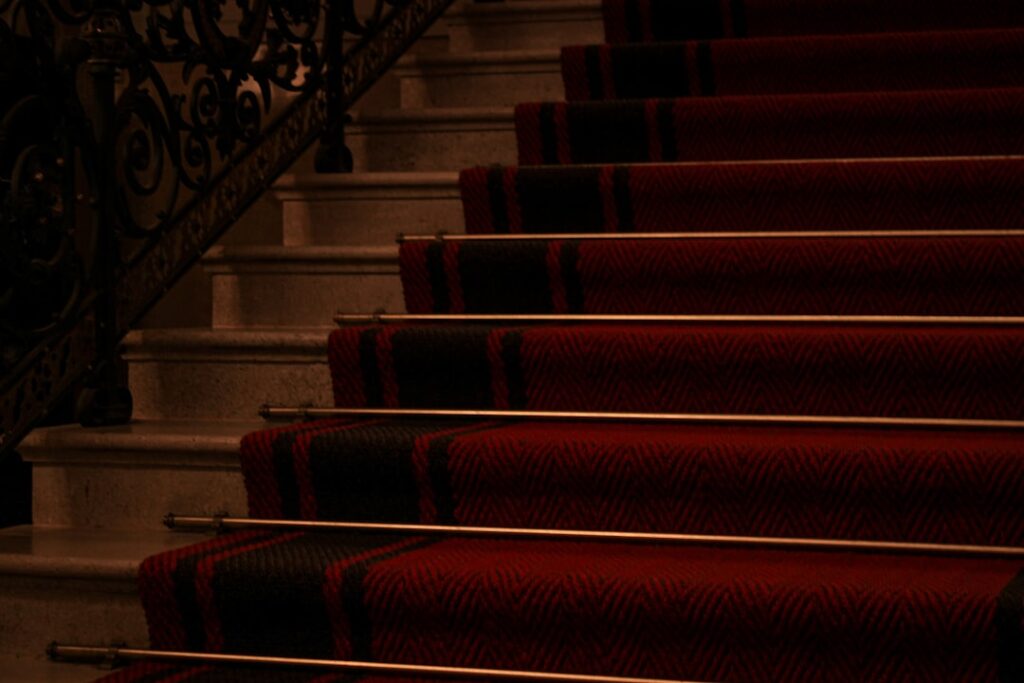
Runners can be finished with binding tape or whipped edges and paired with decorative stair rods for a classic look. Full-width installs suit families who want maximum cushioning and quiet. Consider how much wood you want to show and how the staircase connects to the flooring above and below before you choose.
Best Fibers and Backings
Stairs endure concentrated wear on a small area, so durability outranks softness. Prioritize these material qualities:
- Solution-dyed nylon: the top pick for stairs thanks to excellent abrasion resistance and colorfastness.
- Wool or wool-rich blends: naturally resilient and luxurious, springing back well from foot traffic, though pricier.
- Triexta: a resilient synthetic with good stain resistance at a mid-range cost.
Choose a low-profile, dense construction rather than a deep, loose pile that can distort over the tread nose. A firm, quality backing helps the carpet wrap the nosing cleanly and hold its shape. Skip cheap, thick pads on stairs; a firmer, thinner pad gives better support and reduces the risk of the carpet shifting underfoot.
Pricing and Budget
Herringbone stair carpet costs more than a plain equivalent because of the pattern and the labor involved. Material for a patterned nylon or wool-blend often runs $4 to $12 per square foot, with premium wool herringbone reaching $15 or more. A standard flight of 13 to 15 steps typically needs roughly 50 to 75 square feet of carpet once pattern-matching waste is included.
Installation is where stairs get expensive. Skilled fitters commonly charge $20 to $50 or more per step because each tread and riser must be cut, wrapped, and aligned by hand, and waterfall versus cap-and-band finishing changes the labor further. All in, carpeting a single flight in herringbone frequently lands between $800 and $2,500. Always order extra material, since pattern matching wastes more than plain carpet and a spare length lets you patch a worn step years later.
Safety Considerations
Stairs are the most accident-prone surface in a home, so treat the install as a safety project, not just a decorating one. Insist on a professional fitting: carpet must be pulled tight and firmly anchored at every tread and riser so there is no movement, bunching, or loose edge to catch a toe.
A low, dense pile grips better than a long shag and is less likely to bunch. If children or elderly family members use the stairs often, avoid slick low-pile-over-hard-pad combinations and confirm the nosing is snug. Well-fitted herringbone actually improves footing compared with bare polished wood, but only when it is installed correctly and kept firmly tensioned.
Cleaning and Maintenance
Stairs concentrate traffic, so a consistent routine keeps herringbone looking crisp:
- Vacuum weekly, using a handheld or stair tool to reach the crease where each tread meets the riser.
- Blot spills immediately with a clean white cloth before they can set into the busy weave.
- Spot-treat with a fiber-appropriate cleaner, testing on a hidden section first.
- Deep clean the flight every 12 to 18 months, more often in a busy household.
The pattern hides light soil, but grit that collects in the tread creases grinds against the fibers and accelerates wear, so pay special attention to those seams when you vacuum.
Is Herringbone Stair Carpet Right for You
Opt for herringbone carpet on your stairs when you want a genuine style statement combined with better grip and dirt concealment than plain carpet offers. It rewards homeowners willing to invest a little more in materials and skilled installation, and it elevates the whole staircase into a design feature.
If budget is tight or your installer lacks patterned-stair experience, a quality plain or subtly textured carpet may serve you better. But for anyone chasing that tailored, upscale look on a well-used flight, properly fitted herringbone delivers beauty, safety, and durability that hold up for many years.
Coordinating Stairs With Adjacent Floors
Stairs rarely exist in isolation; they connect a landing above to a hallway or living room below, so plan how the herringbone relates to those surfaces. A common and elegant approach runs the same herringbone carpet from the upper landing down the flight for a seamless, flowing look. Where the stairs meet a wood or tile floor at the bottom, a clean transition strip or a neatly bound edge keeps the junction crisp.
If the adjoining rooms already have a strong pattern or bold color, choose a more restrained tweed-toned herringbone so the spaces do not compete. Conversely, on a staircase framed by plain painted walls and simple flooring, a higher-contrast herringbone can serve as the sculptural centerpiece the entryway needs. Sample the stair carpet against your existing floors before ordering to confirm the tones and scale sit comfortably together rather than clashing at the threshold.