Herringbone flooring is one of the most timeless and elegant floor patterns available to homeowners. With its distinctive V-shaped zigzag design, the herringbone floor pattern has graced the halls of European palaces for centuries and continues to be a top choice for modern interiors. Whether you prefer the warmth of solid wood or the practicality of vinyl, herringbone adds instant character to any room.
In this comprehensive guide, we cover everything you need to know about herringbone flooring, from the different materials and costs to installation methods and long-term maintenance. By the end, you will know exactly which herringbone option suits your home, your lifestyle, and your budget.
- What Is Herringbone Flooring?
- Types of Herringbone Flooring
- Herringbone vs Chevron: What Is the Difference?
- Herringbone Flooring Cost
- Herringbone Flooring Materials Compared
- Pros and Cons of Herringbone Flooring
- Herringbone Flooring Installation
- Best Rooms for Herringbone Flooring
- Herringbone Flooring Maintenance
- Is Herringbone Flooring Worth It?
- Herringbone Flooring FAQs
What Is Herringbone Flooring?
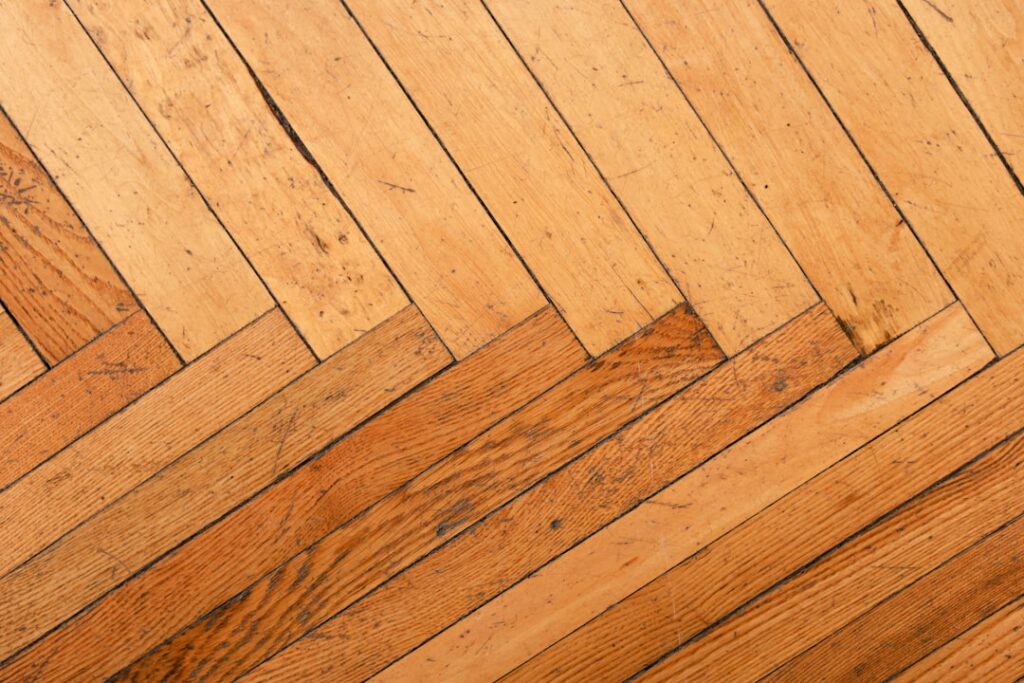
Herringbone flooring is a pattern created by arranging rectangular planks or tiles at 90-degree angles to one another, forming a continuous V-shape or zigzag across the floor. The name comes from the skeleton of a herring fish, whose bones radiate outward from the spine in a similar pattern.
The herringbone floor pattern dates back to the Roman Empire, where it was used in road construction for its structural strength. By the 16th century, it became a hallmark of aristocratic European interiors, particularly in French chateaux. Today, herringbone is widely accessible and available in a range of materials to fit every budget.
What makes herringbone so appealing is its visual impact. The angled planks draw the eye along the length of a room, creating the illusion of more space. It works equally well in traditional homes and contemporary apartments, making it one of the most versatile flooring patterns you can choose.
Types of Herringbone Flooring
Herringbone is not limited to a single material. You can achieve this striking pattern with solid hardwood, engineered wood, laminate, luxury vinyl, and ceramic or porcelain tile. Each material brings its own advantages in terms of cost, durability, and installation complexity.
Herringbone Wood Flooring
Herringbone wood flooring is the most traditional and sought-after option. Both solid hardwood flooring and engineered wood can be arranged in the herringbone pattern. Oak is the most popular species, prized for its prominent grain, though walnut, maple, and ash are also excellent choices.
Engineered wood is often preferred over solid hardwood because its layered construction resists warping better under temperature changes, making it suitable for underfloor heating. Expect herringbone wood flooring to last 25 years or more with proper care, and solid hardwood can be sanded and refinished multiple times.
Herringbone Laminate Flooring
For homeowners who love the look of wood but need a more budget-friendly option, herringbone laminate flooring delivers impressive results. Modern laminate uses high-resolution photographic layers to replicate real wood, including natural grain patterns and knots.
Laminate herringbone planks typically use click-lock systems, making them easier to install than wood. Many manufacturers offer pre-assembled herringbone panels that simplify installation further. While laminate is scratch-resistant and easy to clean, it is not waterproof, so vinyl or tile may be a better choice for kitchens and bathrooms.
Herringbone Vinyl Flooring
Herringbone vinyl flooring has grown enormously in popularity, and for good reason. Luxury vinyl plank (LVP) and luxury vinyl tile (LVT) products now come in herringbone-specific formats that are 100% waterproof, comfortable underfoot, and remarkably realistic.
Vinyl herringbone is an excellent choice for kitchens, bathrooms, laundry rooms, and basements. It is softer and warmer underfoot than tile, and most products use click-lock installation as a floating floor. The main trade-off is longevity: while a quality LVP floor can last 15 to 20 years, it cannot be refinished like wood.
Herringbone Tile
Herringbone tile is a classic choice for bathrooms, kitchens, and entryways. Both ceramic and porcelain tile flooring can be arranged in the herringbone pattern, as can natural stone like marble and travertine.
Porcelain herringbone tile is exceptionally durable and fully waterproof, and it is available in wood-look finishes for the aesthetic of wood with the resilience of tile. The downside is installation cost: tile herringbone significantly increases labour time, and grout lines require ongoing sealing to prevent staining.
Herringbone vs Chevron: What Is the Difference?
One of the most common questions homeowners ask is about chevron vs herringbone. While the two patterns look similar at first glance, they are distinct in both design and installation.
In a herringbone pattern, rectangular planks are laid at 90-degree angles, with the end of each plank meeting the side of the next, creating a staggered zigzag. In a chevron pattern, planks are cut at an angle (usually 45 degrees) so the ends meet in a continuous, clean V-shape.
Here is a quick comparison:
- Plank shape: Herringbone uses standard rectangular planks. Chevron uses planks with angled ends.
- Visual effect: Herringbone has a more textured, staggered look. Chevron appears more streamlined and symmetrical.
- Installation: Herringbone is generally easier to install because no angled cuts are needed on the plank ends.
- Cost: Chevron tends to be slightly more expensive due to the additional cutting and material waste.
- Style: Herringbone suits both traditional and modern interiors. Chevron leans more contemporary and formal.
If you want a classic, versatile look with easier installation, herringbone is the way to go. If you prefer clean geometric lines and a more formal aesthetic, chevron may be the better fit.
Herringbone Flooring Cost
The cost of herringbone flooring varies based on material, quality, and installation complexity. As a general rule, herringbone installations cost 15% to 30% more than the same material in a standard straight pattern due to additional labour and material waste.
Typical costs per square metre (materials only) in the UK:
- Solid hardwood herringbone: £40 – £100+ per m²
- Engineered wood herringbone: £30 – £80 per m²
- Laminate herringbone: £15 – £35 per m²
- Vinyl herringbone (LVP/LVT): £20 – £45 per m²
- Ceramic or porcelain tile herringbone: £20 – £60 per m²
Installation labour adds another £15 to £40 per square metre depending on the material and your location. Tile herringbone tends to have the highest installation costs because of the precision cutting and grouting involved.
For a more detailed breakdown of flooring expenses, see our flooring cost guide, which covers material, labour, and underlay costs for every flooring type.
Herringbone Flooring Materials Compared
| Feature | Hardwood | Laminate | Vinyl (LVP/LVT) | Tile (Porcelain) |
|---|---|---|---|---|
| Material Cost (per m²) | £40 – £100+ | £15 – £35 | £20 – £45 | £20 – £60 |
| Durability | Very high (can be refinished) | Moderate (scratch-resistant surface) | Moderate to high | Very high |
| Lifespan | 25 – 50+ years | 10 – 20 years | 15 – 20 years | 30 – 50+ years |
| Waterproof | No | No (water-resistant options available) | Yes | Yes |
| Installation Difficulty | High (professional recommended) | Moderate (click-lock systems) | Moderate (click-lock or peel-and-stick) | High (professional recommended) |
| Underfloor Heating Compatible | Engineered only | Yes (check manufacturer specs) | Yes | Yes (excellent heat conductor) |
| Best Rooms | Living rooms, hallways, bedrooms | Bedrooms, living rooms, dining rooms | Kitchens, bathrooms, basements | Bathrooms, kitchens, entryways |
| Maintenance Level | Moderate (periodic refinishing) | Low | Low | Low to moderate (grout care needed) |
Pros and Cons of Herringbone Flooring
Advantages
- Timeless aesthetic appeal: Herringbone has been popular for centuries and never goes out of style. It adds instant elegance to any room.
- Increases property value: The pattern is associated with high-end interiors, and estate agents frequently note herringbone flooring as a selling point.
- Visually expands spaces: The directional lines of the herringbone pattern can make rooms appear longer or wider depending on the orientation of the planks.
- Works with multiple materials: Whether your budget is modest or generous, you can achieve the herringbone look in wood, laminate, vinyl, or tile.
- Structurally strong: The interlocking pattern distributes weight and pressure evenly, reducing the risk of individual planks shifting or buckling.
- Compatible with underfloor heating: Most herringbone materials (especially engineered wood, vinyl, and tile) work well with underfloor heating systems.
Disadvantages
- Higher installation cost: The pattern takes significantly longer to lay than straight or brick-bond layouts, increasing labour expenses.
- More material waste: Cutting planks to fit the edges of a room in a herringbone pattern produces more offcuts, typically adding 10% to 15% to material requirements.
- Professional installation usually needed: While click-lock laminate and vinyl herringbone can be a DIY project, wood and tile herringbone generally require a skilled installer for a clean result.
- Can overwhelm small rooms: In very compact spaces, the busy pattern may feel visually heavy. Lighter wood tones and wider planks can help counteract this.
- Subfloor preparation is critical: Herringbone patterns show imperfections in the subfloor more readily than straight-lay installations, so thorough levelling is essential.
Herringbone Flooring Installation
Installing herringbone flooring is more involved than laying planks in a standard straight pattern. Regardless of the material, proper planning and subfloor preparation are essential to a professional-looking result.
Step 1: Prepare the Subfloor
The subfloor must be clean, dry, level, and structurally sound. Use a self-levelling compound to correct any dips or bumps, as the herringbone pattern highlights any inconsistencies in the surface.
Step 2: Find the Centre Line
Snap a chalk line down the middle of the room as your guide. Herringbone installations start from the centre and work outward to ensure the pattern is symmetrical.
Step 3: Dry Lay a Test Row
Dry lay the first two rows along your centre line to check alignment, adjust spacing, and plan border cuts before anything is permanent.
Step 4: Install the Pattern
For wood herringbone, planks are typically glued or nailed to the subfloor. For laminate and vinyl, use click-lock systems as floating floors over underlay, leaving expansion gaps around the perimeter. For tile herringbone, apply thin-set adhesive in small sections, using spacers to maintain consistent grout lines.
Step 5: Cut Border Pieces and Finish
Cut planks or tiles to fit the room edges using a mitre saw or tile cutter. Order 10% to 15% extra material to account for waste. For wood, apply your chosen finish once laid. For tile, grout all joints and apply a sealer. Laminate and vinyl require no finishing beyond skirting boards.
DIY or Professional Installation?
Click-lock laminate and vinyl herringbone can be a manageable DIY project for confident homeowners. However, wood and tile herringbone installations are best left to experienced professionals. The precision required for consistent alignment, especially at the borders, makes these materials challenging for first-time installers.
Best Rooms for Herringbone Flooring
Herringbone flooring works beautifully in many areas of the home, but some rooms benefit from the pattern more than others.
Hallways and Entryways
The directional pattern guides the eye along the length of the space, making narrow corridors feel more spacious. Engineered wood or porcelain tile handle heavy foot traffic well in these areas.
Living Rooms
A herringbone floor instantly elevates a living room. Oak herringbone wood flooring in a natural or light-washed finish is a particularly popular choice for open-plan living spaces.
Kitchens and Bathrooms
For kitchens, herringbone vinyl flooring or herringbone tile are the best options due to their waterproof properties. In bathrooms, porcelain herringbone tile handles moisture and humidity without issue, and smaller format tiles add visual interest to compact spaces.
Bedrooms
Herringbone wood flooring or herringbone laminate flooring works wonderfully in bedrooms, where moisture is rarely a concern and softer materials are comfortable underfoot.
Herringbone Flooring Maintenance
Maintaining herringbone flooring follows the same principles as maintaining the material it is made from. The pattern does show dirt more readily than plain layouts due to the directional grain, so regular cleaning is important.
Daily and Weekly Care
- Sweep or vacuum regularly to remove grit and dust that could scratch the surface. Use a soft-bristle attachment on your vacuum to avoid damaging the finish.
- Damp mop as needed using a well-wrung mop or microfibre cloth. Avoid soaking wood or laminate floors with excess water.
- Wipe up spills promptly to prevent moisture damage, particularly on wood and laminate herringbone floors.
Long-Term Maintenance
- Wood herringbone: Refinish every 7 to 10 years depending on wear. Reapply oil or wax finishes annually for oiled floors.
- Laminate herringbone: No refinishing possible. Replace individual damaged planks if your installation allows it, or replace the full floor after 10 to 20 years.
- Vinyl herringbone: No special long-term maintenance. Replace when the wear layer shows through, typically after 15 to 20 years.
- Tile herringbone: Reseal grout lines every 1 to 2 years. Replace cracked tiles individually as needed.
Use felt pads under furniture legs and doormats at entryways to protect your herringbone floor from scratches and grit.
Is Herringbone Flooring Worth It?
Herringbone flooring is an investment that pays dividends in aesthetic impact and property value. If budget is a concern, herringbone laminate flooring and herringbone vinyl flooring make the pattern accessible. For those willing to spend more, herringbone wood flooring offers decades of beauty with the option to refinish. Whatever material you choose, herringbone is a flooring decision you are unlikely to regret.
Herringbone Flooring FAQs
Is herringbone flooring more expensive than regular flooring?
Yes. Herringbone installations typically cost 15% to 30% more than the same material laid in a standard straight pattern. The extra cost comes from increased labour time, the precision required for pattern alignment, and higher material waste due to border cuts. The material itself is not necessarily more expensive, but the installation process is more involved.
Can I install herringbone flooring myself?
It depends on the material. Click-lock laminate and vinyl herringbone products are designed for DIY installation and come with straightforward instructions. However, hardwood and tile herringbone require professional skills for a polished result, particularly when cutting border pieces and ensuring the pattern stays perfectly aligned across the entire floor.
What is the difference between herringbone and chevron flooring?
The key difference is in how the plank ends are cut. Herringbone uses standard rectangular planks laid at 90-degree angles, with the end of one plank meeting the side of the next. Chevron uses planks with angled ends (typically cut at 45 degrees) so the points meet in a clean, continuous V-shape. Herringbone has a more staggered, textured look, while chevron appears more streamlined and symmetrical.
Is herringbone flooring suitable for underfloor heating?
Most herringbone flooring materials are compatible with underfloor heating. Engineered wood, laminate, vinyl, and tile all work well, though you should always check the manufacturer’s specifications. Solid hardwood is generally not recommended with underfloor heating due to its tendency to expand and contract with temperature changes.
How long does herringbone flooring last?
Lifespan depends on the material. Solid hardwood and porcelain tile herringbone floors can last 30 to 50 years or more with proper maintenance. Engineered wood typically lasts 25 to 30 years. Vinyl herringbone floors last 15 to 20 years, and laminate herringbone floors last 10 to 20 years. Choosing the right material for the room’s conditions is the best way to maximise the lifespan of your herringbone floor.
Prefer to explore on your own?
See how new flooring looks in your actual room in seconds — free, no signup.
Try the free Floor Studio →