Small tiles on a shower floor are not just a design trend; they are a physics decision. Hexagon shower floor tile in a one- or two-inch size solves two problems that large tiles cannot: it conforms to the slope your shower needs to drain, and its dense grid of grout lines gives wet feet the traction they need to stay upright. Understand why the small format wins on a shower floor and you will make a choice that looks great and performs safely for years.
Why Small Hexagons Belong on the Shower Floor
A shower floor is not flat. It has to slope toward the drain at roughly a quarter inch of fall per foot so water runs off instead of pooling. Large-format tile is rigid and cannot flex to follow that compound slope, especially around a center or linear drain. Small hexagon mosaics, mounted on a flexible mesh sheet, bend and settle into the pitch beautifully, letting each little tile sit at its own slight angle to follow the contour.
The second reason is grip. Every grout joint is a tiny channel that breaks surface tension and gives bare feet something to hold. Because hexagons pack a lot of grout lines into a small area, they deliver far more traction per square foot than big tiles with sparse joints. On a wet, soapy floor, that matters more than any other single factor.
Traction, DCOF, and Staying Safe
Slip resistance is measured by a number called DCOF, the dynamic coefficient of friction. For wet floors you walk on, the industry benchmark is a DCOF of 0.42 or higher. Two things drive a shower floor toward that target: a tile with a matte or textured surface, and plenty of grout lines to interrupt the slick.
Small hexagon shower floor tile checks both boxes. Choose a porcelain hex with a matte or honed finish rather than a high-gloss polish, which turns dangerous the moment it gets wet. The abundant grout joints of a mosaic add mechanical grip on top of the tile’s own texture, which is exactly why designers reach for small hexes and penny rounds on shower pans.
- Finish: Matte or textured porcelain, never polished, for a wet floor.
- Size: 1-inch or 2-inch hexagons maximize grout-line traction.
- DCOF: Look for a rating of 0.42 or higher on the spec sheet.
Sheet-Mounted Installation Basics
Hexagon mosaics come pre-arranged on 12-by-12-inch mesh-backed sheets, which makes an intimidating pattern manageable. The sheets let you cover the sloped pan quickly while keeping consistent spacing between every tile. Still, the shower floor is unforgiving work, so a few fundamentals keep it watertight.
Start with a properly built and waterproofed shower pan; a foam or mortar-bed pan with a bonded waterproofing membrane is the modern standard beneath the tile. Use a quality thinset rated for the application, and because mosaic sheets have so much grout area, choose a thinset color that will not telegraph through light grout. Back-butter tricky pieces around the drain for full coverage.
Installing Around the Drain
The drain is where hexagons earn their keep. Set the field sheets first, working from the drain outward or from a layout line, and let the small tiles follow the slope naturally. As you approach the drain flange, you will cut individual hexagons to nest around it.
Use tile nippers or a wet saw with a fine blade to trim the little tiles to fit the curve of the drain. Keep the cut edges facing the drain opening where they will be hidden by the strainer cover. Press each sheet firmly and check that no tile bridges a slope change and sits proud; a tile that stands high becomes a stubbed toe and a puddle. Let the thinset cure fully before grouting, typically 24 hours.
Choosing the Right Grout
Grout choice on a shower floor is not an afterthought. The joints see constant water, soap, and the occasional flood, so the grout has to resist staining and moisture while contributing to that all-important traction.
- Epoxy grout: Nearly waterproof and stain-resistant, the premium choice for a shower floor, though it sets fast and demands quick cleanup.
- High-performance cement grout: A modern polymer-modified cement grout with built-in stain resistance is a more forgiving, budget-friendly option.
- Joint width: Keep the joints tight and consistent, typically 1/16 to 1/8 inch, using a sanded formula suited to that width.
Whatever you pick, if you use a cement-based grout, seal it after it cures and reseal periodically. Skip the sealer and the light grout lines around your hexes will darken and stain in the wettest spot in the house.
Design and Style Considerations
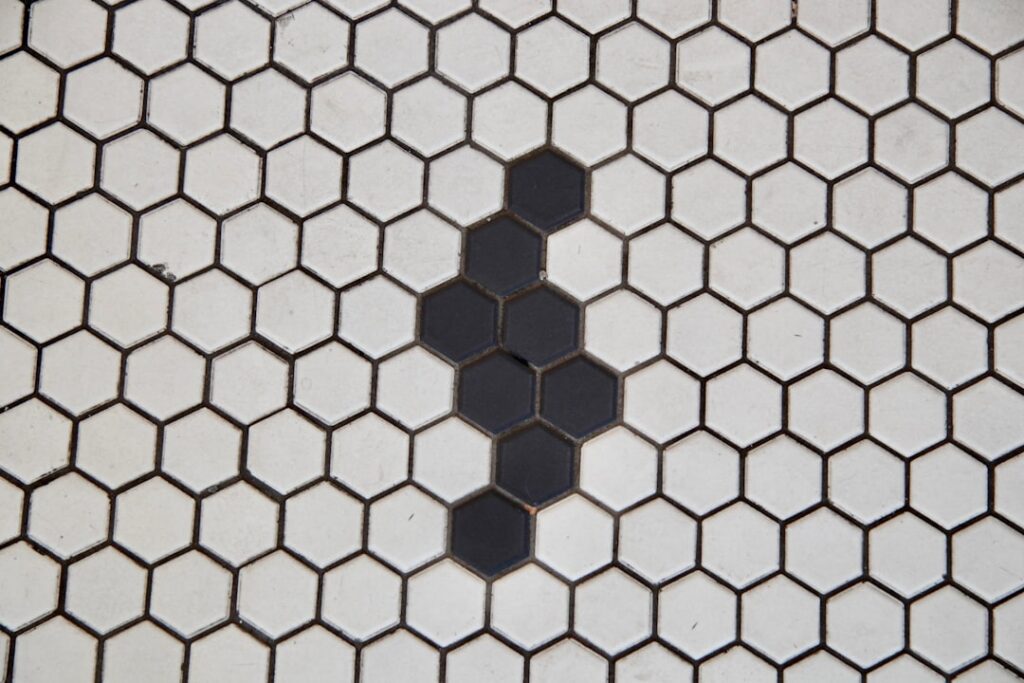
Beyond performance, hexagons bring timeless style. A classic white or marble-look hex reads as vintage and clean, while black, charcoal, or terrazzo-look hexes feel modern and hide grime between cleanings. Darker grout on a shower floor is practical because it disguises the inevitable soap and mineral staining better than bright white.
You can also carry the hex motif onto a shower niche floor or a bench top for a coordinated look, while using larger tiles on the walls for contrast. That mix of small-scale floor and large-scale wall is both a design classic and a functional pairing.
Material Choices: Porcelain, Ceramic, and Stone
What the hexagons are made of matters as much as their shape. Each material brings tradeoffs on a wet, hard-working shower floor.
- Porcelain: The go-to choice. It is dense, absorbs almost no water, resists staining, and comes in matte finishes ideal for traction.
- Ceramic: A budget-friendly option, but softer and more porous than porcelain, so verify it is rated for floor and wet use.
- Natural stone: Marble and slate hexes look stunning but are porous and demand regular sealing to fend off water spots and staining.
For most homeowners, a matte porcelain hexagon is the sweet spot of durability, low maintenance, and slip resistance. Reserve natural stone for those willing to keep up with sealing, and steer away from any glossy glazed tile on the floor no matter how appealing it looks dry.
Maintenance and Cleaning
A hexagon shower floor is easy to keep up if you stay ahead of the two enemies of any shower: soap scum and hard-water mineral deposits. Squeegee or wipe the floor after showers when you can, and clean weekly with a pH-neutral tile cleaner rather than harsh acids that can etch stone or degrade grout over time.
The many grout lines that give you traction also give soap scum more places to cling, so a soft brush helps you scrub the joints during regular cleaning. If you used a cement-based grout, refresh the sealer once a year to keep the joints from staining and to preserve that clean look between the tiles.
The Bottom Line
For a shower floor, small hexagon shower floor tile is close to the ideal material. Its mesh-mounted sheets flex to follow the slope to the drain, its dense grid of grout lines delivers the traction wet feet need, and a matte porcelain hex paired with epoxy or high-performance grout gives you a floor that is safe, watertight, and genuinely handsome. Build the pan right, waterproof it well, and let those little tiles do what large ones simply cannot.
Prefer to explore on your own?
See how new flooring looks in your actual room in seconds — free, no signup.
Try the free Floor Studio →