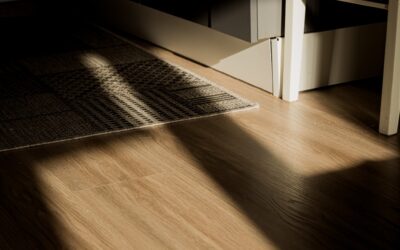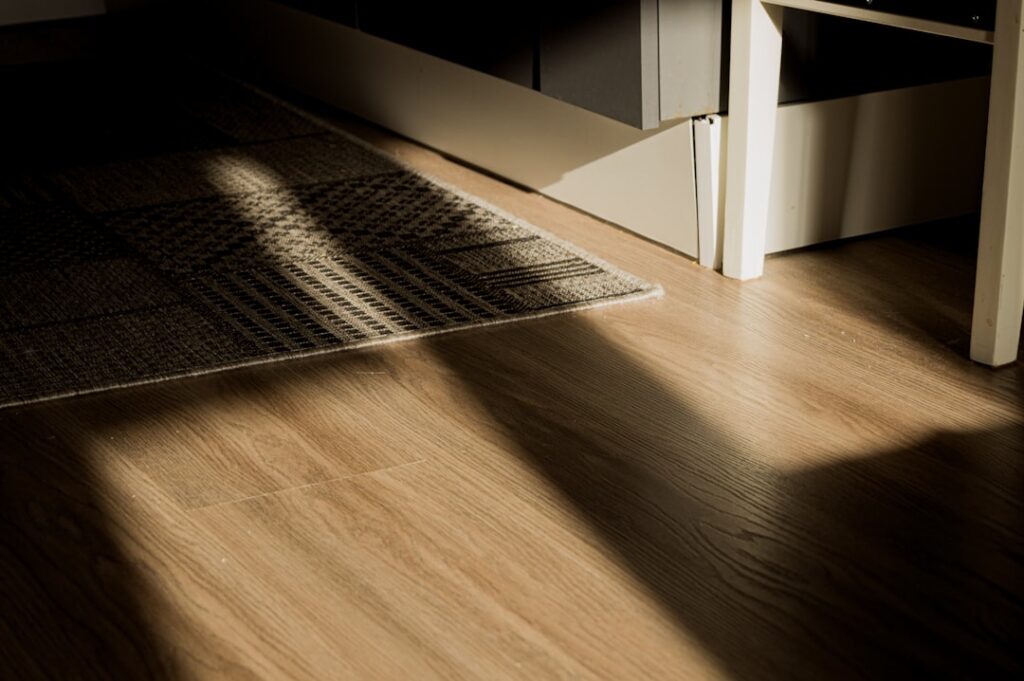
The vinyl on your grandmother’s kitchen floor has almost nothing in common with what is sold today. High end vinyl flooring now mimics oak, marble, and travertine so convincingly that guests often cannot tell it from the real thing, and it does so while being fully waterproof and far tougher than the wood or stone it imitates. The trick is knowing which specs actually signal premium quality, because the label “luxury vinyl” gets stamped on plenty of ordinary product. This guide breaks down what separates the genuinely high-end floors from the pretenders.
What Defines High End Vinyl Flooring
The luxury vinyl category splits into two main constructions. Luxury vinyl plank and tile (LVP/LVT) are flexible and can be glued down or floated. Rigid core products, which include SPC (stone plastic composite) and WPC (wood plastic composite), have a solid center that resists dents and hides subfloor imperfections. Most high end vinyl flooring today uses a rigid SPC or WPC core with an attached acoustic underlayment.
Several features distinguish premium tiers from budget goods:
- Thick wear layer: 20 mil (0.5 mm) or greater for residential luxury, versus 6 to 12 mil on economy lines.
- Embossed-in-register texture: the surface grain lines up with the printed grain, so it looks and feels like real wood.
- Enhanced ceramic-bead or aluminum-oxide finish: boosts scratch and stain resistance.
- Attached IXPE or cork underlayment: for warmth and quieter footfall.
- Wide, long planks and varied print patterns: 7-inch-plus widths, 48- to 60-inch lengths, and 20-plus unique board images to avoid a repeating look.
Why Homeowners Choose It
The single biggest draw is that premium vinyl is 100 percent waterproof. You can install it in kitchens, bathrooms, mudrooms, and basements where hardwood would never survive. That alone makes it a practical whole-home flooring.
Beyond waterproofing, high end vinyl offers a comfortable, slightly warmer surface than tile, strong scratch resistance for homes with pets and kids, and easy click-lock installation. Realistic visuals are the finishing touch. The best products use high-resolution photographic layers, beveled micro-edges, and matte finishes that read as authentic wood or stone rather than plastic.
Understanding the Cost
Premium vinyl material typically runs $4 to $9 per square foot, with the top designer and commercial-grade lines reaching $10 to $12. That is a real step up from builder-grade vinyl at $1.50 to $3. Professional installation adds $2 to $5 per square foot, though many homeowners float rigid click-lock planks themselves.
For a 500-square-foot main floor, a high-end installed project generally lands between $3,000 and $7,000. Compare that with engineered hardwood at $8 to $15 per square foot installed, and vinyl looks like strong value, especially when you factor in that it will not need refinishing. The premium over cheap vinyl buys a thicker wear layer, better warranty, and visuals that hold up to close inspection.
How to Read the Spec Sheet
Do not shop by price or photos alone. Focus on the numbers that predict real-world performance.
- Wear layer thickness: aim for 20 mil or more for busy households; 12 mil is the practical minimum for light use.
- Overall thickness: 5 mm to 8 mm rigid core planks feel solid and span minor subfloor flaws.
- Core type: SPC for maximum dent resistance and dimensional stability; WPC for a softer, warmer step.
- Warranty: 25-year to lifetime residential coverage signals manufacturer confidence.
- Certifications: FloorScore or GREENGUARD Gold for low VOC emissions, plus phthalate-free labeling.
A floor with a 20-mil wear layer, an SPC core around 6 mm, an attached pad, and a lifetime residential warranty is a genuinely high-end product, regardless of brand name.
Durability and Realistic Limits
Premium vinyl shrugs off water, resists scratches better than laminate, and cleans up with a damp mop. It is dimensionally stable across normal temperature swings, and rigid cores tolerate the fluctuations of a three-season room better than flexible glue-down vinyl.
It is not indestructible, though. Very heavy appliances or furniture can dent softer WPC cores, so use wide floor protectors. Direct, prolonged sunlight can fade some products, and dragging sharp objects will scratch even a good finish. Vinyl also cannot be sanded and refinished, so once the wear layer is compromised, replacement is the only fix. Set expectations accordingly, and it will serve for 20-plus years.
SPC Versus WPC Cores
Once you settle on rigid-core vinyl, the next decision is SPC versus WPC, and it genuinely affects how the floor feels and performs. SPC, or stone plastic composite, uses a limestone-and-PVC core that is extremely dense and dimensionally stable. It resists dents from heavy furniture, spans minor subfloor imperfections, and barely reacts to temperature swings, which makes it the better choice for sunrooms, entryways, and anywhere heavy loads sit.
WPC, or wood plastic composite, adds a foaming agent that makes the core lighter and softer. The payoff is a warmer, more forgiving step and slightly better sound absorption, which many people prefer in bedrooms and living rooms. The trade-off is that WPC dents a bit more easily under concentrated weight. Neither is universally superior. If your priority is toughness and stability, choose SPC. If comfort underfoot matters more and the room sees moderate traffic, WPC is a pleasant upgrade. Plenty of high-end lines now blend the two philosophies with a dense SPC core and an attached foam pad.
How to Compare Brands and Warranties
Brand names carry less weight than the fine print, so learn to read a warranty critically. A strong residential warranty runs 25 years to lifetime, but the coverage details matter more than the headline number. Check whether it covers wear-through, staining, and fading, and confirm what installation conditions it requires to stay valid.
Watch for these warranty gotchas that can void your coverage:
- Failing to acclimate the planks for the required time before installation.
- Installing over a subfloor that exceeds the flatness tolerance.
- Skipping the recommended underlayment or vapor barrier over concrete.
- Using cleaning products the manufacturer explicitly prohibits.
Keep your receipts and installation notes. If a claim ever arises, manufacturers routinely ask for proof that the floor was installed and maintained to spec, and homeowners who cannot provide it often lose otherwise valid claims.
Installation and Care Tips
Most high end vinyl uses an angle-and-tap click-lock system that floats over the subfloor. Acclimate the planks in the room for 48 hours, make sure the subfloor is flat within 3/16 inch over 10 feet, and leave the manufacturer-specified expansion gap at the walls. Rigid cores can go over most existing hard-surface floors, which saves demolition. For large open spaces, check whether the maker requires transition strips beyond a certain run length.
Maintenance could hardly be simpler. Sweep or vacuum regularly, and damp-mop with a pH-neutral vinyl cleaner. Skip abrasive pads, wax, and steam mops. Use felt pads under furniture and non-staining rug backings, since rubber-backed mats can discolor some vinyl. Wipe grit off promptly and the finish stays sharp for years.
Is High End Vinyl Flooring Right for You
If you want one durable, waterproof floor that can run through the entire house and still look like wood or stone, high end vinyl flooring is one of the smartest choices on the market. It suits families, pet owners, rental properties, and anyone who wants premium looks without the upkeep of natural materials. Just buy on specs, not marketing. A thick wear layer, a solid rigid core, low-VOC certification, and a strong warranty separate a floor that will impress for two decades from one that merely looks the part in the showroom.
Prefer to explore on your own?
See how new flooring looks in your actual room in seconds — free, no signup.
Try the free Floor Studio →