
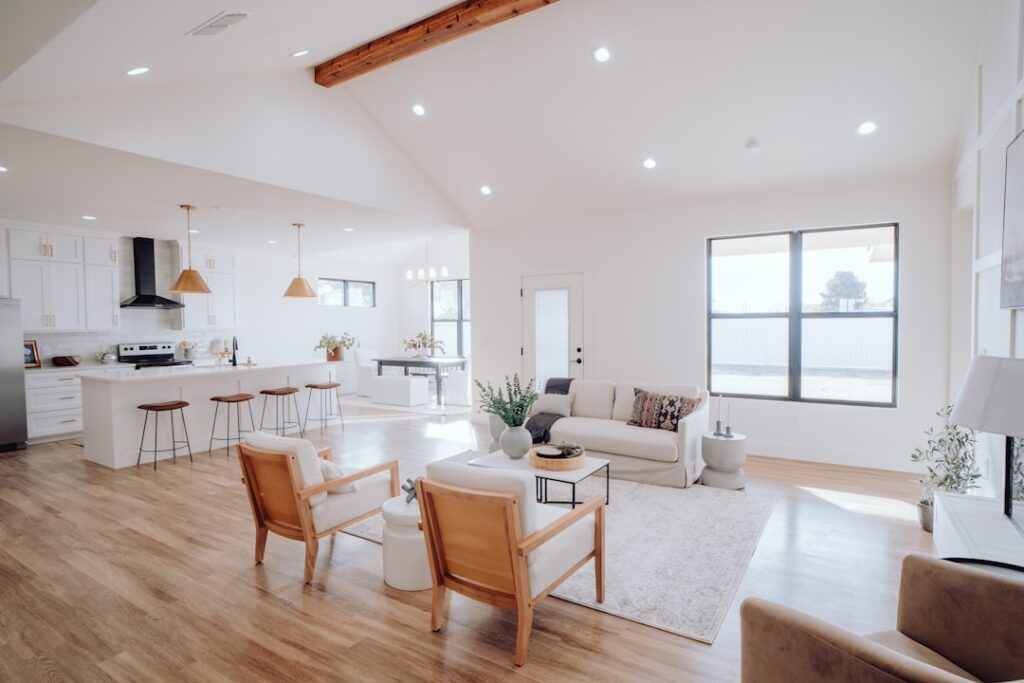
The farmhouse aesthetic is no longer a trend; it is the dominant interior style in roughly one-third of new US homes built since 2020. Homestead flooring taps into that look with wide planks, hand-scraped textures, and the muted earthy tones you would expect in a 19th-century cabin. Several brands now use the Homestead name, and the line you actually buy matters more than the marketing. This guide covers what to look for, what to skip, and what installation pitfalls to avoid.
What Homestead Flooring Refers To
Homestead is both a product line name used by a handful of manufacturers and a stylistic category that crosses materials. Three brands sell flooring under the Homestead label in the US market: a wide-plank engineered hardwood line from a southeastern manufacturer, a budget LVP collection from a national importer, and a reclaimed-look laminate line stocked at regional dealers.
Stylistically, homestead-style floors share three features: planks 6 inches wide or wider, distressed or hand-scraped surface texture, and color palettes that mimic aged wood.
Hardwood Homestead Options
Engineered hardwood homestead lines typically use 7-ply Baltic birch cores with 2 to 4 mm sawn-face veneers in white oak, hickory, or maple. Plank widths run 7 to 9 inches, with random-length boxes that include 12, 36, 60, and 72 inch boards. Pricing lands at $5.25 to $8.50 per sq ft, with hand-scraped textures pushing the high end of that range.
Finishes lean toward UV oil rather than aluminum oxide urethane because oil gives the matte, hand-rubbed look that fits the homestead aesthetic. Plan on annual maintenance with a product like Pallmann Magic Oil Care or Rubio Monocoat Refresh.
LVP Homestead Options
Budget homestead-style LVP runs $2.25 to $3.75 per sq ft and uses SPC cores with 12 to 22 mil wear layers. The visuals print convincingly when viewed from standing height, especially on planks 8 inches wide or wider. Up close, the embossed-in-register texture can feel less authentic than real wood.
For rental units, flip houses, or basements where humidity rules out hardwood, LVP homestead lines deliver the look at a fraction of the cost. Just budget for the higher wear layer (22 mil minimum) if you want the floor to last more than 5 years in a busy household.
Pros of Homestead-Style Floors
- Hides minor scratches, dents, and pet damage thanks to the distressed surface.
- Wide planks make rooms feel larger, especially in open-concept layouts.
- Matches the dominant US interior style, which supports resale value.
- Forgiving on slightly out-of-flat subfloors because the texture masks minor irregularities.
- Works with farmhouse trim, shaker cabinets, and shiplap walls without competing for attention.
Cons and Limitations
Wide planks need a flatter subfloor than narrow strips. Standard hardwood tolerances of 3/16 inch over 10 feet are not enough for 9 inch planks; specify 1/8 inch over 10 feet to avoid hollow spots and squeaks.
Hand-scraped textures can trap dirt and dust in the grooves, requiring a vacuum with a soft floor attachment rather than the easier flat mop you can use on smooth floors. The matte and oil finishes also show water spots faster than urethane, so dry up spills within a few minutes.
Resale risk is real if the farmhouse style fades. Five years from now, white oak hand-scrape may look as dated as the cherry hardwood that ruled 1995 living rooms.
Installation Tips That Save Money
- Acclimate hardwood for 7 to 10 days at 60 to 80°F and 35 to 55% RH before opening boxes.
- Check subfloor flatness with a 10-foot straightedge. Grind high spots or float low spots before laying any wide plank.
- Use the included trim pieces. Mixing brand transition strips with a different manufacturer rarely matches the floor’s tone.
- Stagger end joints by at least 12 inches for wide planks. Closer staggers create visual lines that look unnatural.
- Photograph box labels before discarding. Color batches matter for warranty claims and matching repairs.
Pet and Family Performance
Distressed hardwood hides claw marks remarkably well, which is one reason homestead-style floors are popular with large-dog households. The matte UV oil finish stains less obviously than glossy urethane when a dog has an accident, though it does require faster cleanup.
LVP versions are essentially waterproof, with seam protection that handles puppy accidents and spilled water bowls without warping. For multi-pet households, LVP with a 22 mil or 28 mil wear layer is the safer call.
Cost Comparison Snapshot
For a 500 sq ft living room, expect total installed pricing roughly as follows in 2026:
- Homestead-style engineered hardwood, professionally installed: $6.50 to $11 per sq ft. Total $3,250 to $5,500.
- Homestead-style LVP, professionally installed: $4.50 to $6.50 per sq ft. Total $2,250 to $3,250.
- Homestead-style laminate, professionally installed: $4 to $5.50 per sq ft. Total $2,000 to $2,750.
DIY installation cuts roughly $1.50 to $3 per sq ft off any of those totals if you have basic carpentry skills and rent a flooring nailer for hardwood.
Should You Choose Homestead Flooring
If your home leans farmhouse, modern rustic, or transitional, homestead flooring is a strong choice that delivers character at a reasonable price. The engineered hardwood option holds the most resale value, the LVP option offers the lowest maintenance, and the laminate option splits the difference for budget-conscious shoppers. Whichever route you pick, get installed samples big enough to view in your actual lighting, and budget at least 10% overage to handle cuts and color sorting during install.
Prefer to explore on your own?
See how new flooring looks in your actual room in seconds — free, no signup.
Try the free Floor Studio →

