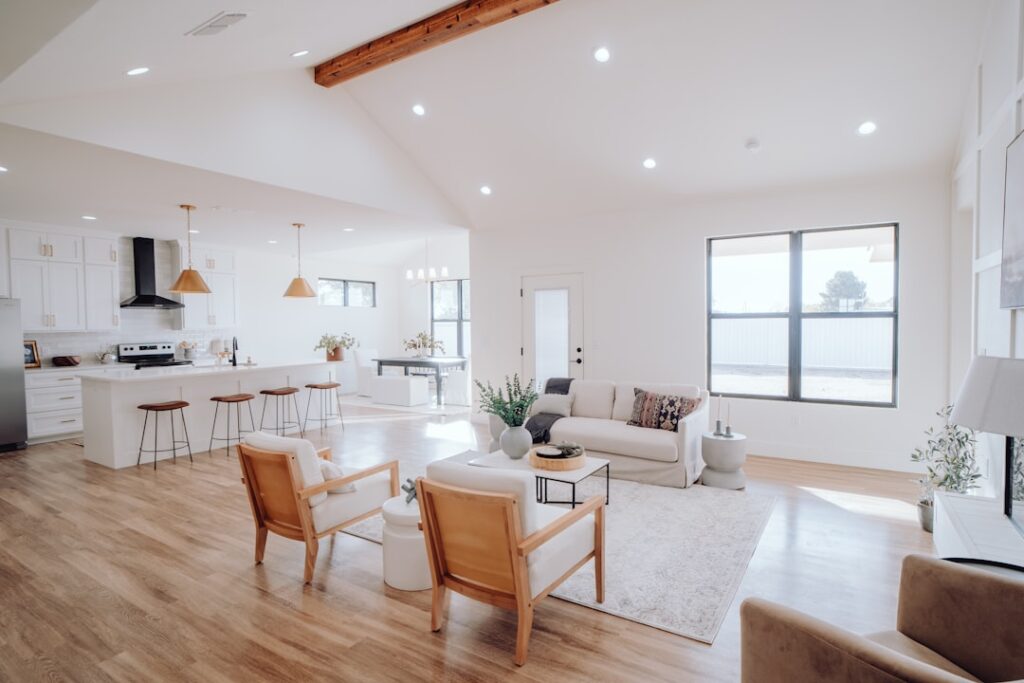
The Horizon brand shows up under at least three different distributors across the US, which makes shopping it confusing if you don’t know which version landed in your local showroom. Horizon flooring generally refers to a value-tier line of luxury vinyl plank, engineered hardwood, and laminate aimed at landlords, flippers, and budget remodels. Wear layers, plank dimensions, and warranties shift between collections, so a $1.99 per sq ft sticker can hide either a solid 12 mil product or a flimsy 6 mil throwaway depending on the SKU.
Product Lines Under the Horizon Name
The most common Horizon collections in the US market include Horizon SPC, Horizon Plus, and Horizon Hardwood Reserve. SPC products use a rigid stone-polymer core 4mm to 6mm thick with attached IXPE underlayment, plank widths around 7 inches, and lengths between 48 and 60 inches. Wear layers range from 12 mil for entry-level multifamily SKUs to 20 mil for the homeowner tier with a residential lifetime warranty. Horizon Plus is typically a WPC product with a foam core and softer underfoot feel, suited to single-family use but less stable on slabs above 85°F.
The Hardwood Reserve line carries engineered oak and hickory in 5- and 6-inch widths, 9/16-inch thickness, with 2mm to 3mm wear veneers. Janka hardness on the oak runs around 1,290 and hickory hits 1,820, both adequate for family rooms but not commercial wear.
Pricing Tiers and What You Get
Expect Horizon SPC at $1.79 to $3.49 per sq ft retail, with installed pricing landing between $5.50 and $7.50 once labor, underlayment, and trim are added. Engineered hardwood in the Hardwood Reserve tier sits at $4.25 to $6.99 per sq ft material-only, installed in the $9 to $13 range with glue-down adhesive. Laminate options, where available, hold a tight $1.39 to $2.79 per sq ft window with AC3 ratings suitable for residential bedrooms and hallways.
One pricing trap to watch: distributors sometimes promote a low headline price on a 6 mil wear-layer SKU that’s marketed for multifamily rental use. That product wears through in 4 to 6 years under normal household traffic. Insist on 12 mil minimum for any owner-occupied install.
Installation Methods and Subfloor Prep
Horizon SPC installs as a floating click-lock floor with a tongue-and-groove or drop-lock edge profile depending on the year. Subfloors must be flat within 3/16 inch over 10 feet per the spec sheet, and concrete slabs need ASTM F1869 calcium chloride testing under 5 pounds or ASTM F2170 relative humidity readings under 80%. The Hardwood Reserve engineered planks accept floating, glue-down, or staple-down methods on plywood substrates, but glue-down is the only approved method over concrete below grade.
Pros of Choosing Horizon
- Aggressive pricing for rental properties, flips, and budget-driven remodels
- SPC rigid core resists indentation and telegraphed subfloor imperfections
- FloorScore certification on most SKUs for indoor air quality compliance
- Stocked at regional distributors with quick 3-to-7-day delivery in most markets
- Lifetime residential warranty on higher-tier SPC products
Cons to Weigh
Customer support runs through the distributor rather than a national brand, which slows warranty claims and replacement plank sourcing. Color matching across separate purchase dates is unreliable because dye lots shift, so always over-buy by 10% on the initial order. Lower-tier SKUs with 6 mil wear show scratches and shoe scuffing faster than name-brand equivalents like Shaw Floorte or Mohawk SolidTech. The 2mm wear veneer on the engineered hardwood line limits future sand-and-refinish cycles to a single pass with a buffer, not a drum sander.
Pet households should bump up to the 20 mil wear-layer SKUs or step into a name brand. Dog claws will dent a 4mm SPC core under sustained weight in front of a food bowl or sofa within 12 to 18 months.
Brand Spotlight: How Horizon Stacks Up Against COREtec and Pergo
COREtec Plus carries a 20 mil wear layer, attached cork backing, and a stronger residential lifetime warranty backed by the parent Shaw network. Expect $4.50 to $6.50 per sq ft material-only. Pergo Extreme and Pergo Max sit at $3.50 to $5.50 per sq ft with similar SPC construction and 12 to 22 mil wear. Horizon undercuts both on price, but the trade-off is thinner warranty support and less consistent batch quality. For a primary-residence kitchen or family room, the COREtec or Pergo upgrade is usually worth the extra $1.50 per sq ft.
When Horizon Makes Sense
Horizon flooring is a smart pick for landlords, rental flips, basement playrooms, and short-hold properties where the budget per square foot matters more than the 30-year wear profile. For a forever-home install, step up to a tier with a 20 mil or 22 mil wear layer and a national warranty network. Always pull the actual spec sheet for the SKU you’re buying, not just the showroom display card, because the Horizon name spans a wider quality range than the brand marketing implies.
Maintenance and Long-Term Care
SPC vinyl plank requires less maintenance than hardwood but more than most homeowners assume. Sweep or vacuum (hard-floor setting only) two to three times per week to remove grit that abrades the wear layer. Damp-mop with a pH-neutral cleaner like Bona Stone Tile and Laminate; avoid steam mops, bleach, ammonia, and pine cleaners, all of which void most warranties. Place felt pads under furniture legs and replace them every 6 months. Use entry mats at exterior doors to catch sand and salt that cause the fastest wear.
Final Word on Buying Horizon
For the right project, Horizon delivers acceptable value at an aggressive price point. The 20 mil wear-layer SKUs hold up to family use, and the SPC core handles spills and seasonal humidity without buckling. Buy from a dealer that stocks the product (rather than special-orders it) so you can verify the lot numbers match, and always over-buy 10% on the initial order to cover future repairs as patterns retire over a 12-to-18-month cycle.
Prefer to explore on your own?
See how new flooring looks in your actual room in seconds — free, no signup.
Try the free Floor Studio →