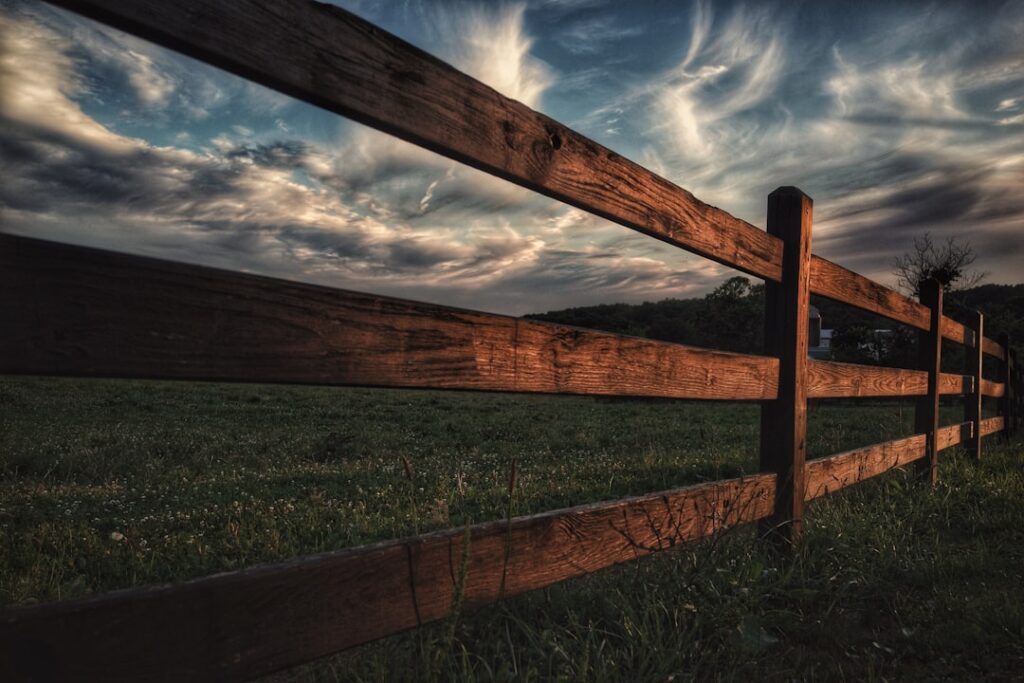
Turn a standard picket fence on its side and it stops looking like a fence and starts looking like architecture. A horizontal wood fence runs its boards sideways between posts instead of vertically, and that single change reads as modern, clean, and distinctly high-end, which is why it has become the signature look of contemporary homes. But the sideways orientation introduces one real engineering challenge that vertical fences never face: without vertical support, long horizontal boards want to sag over time. Nail the wood selection, post spacing, and board thickness and you get a stunning fence that stays straight for decades. Get them wrong and it bows within a couple of seasons. Here is how to build it right.
- Why Horizontal Fences Look So Modern
- The Sagging Problem and How to Solve It
- Choosing the Right Wood
- Board Sizing and Spacing
- Post Selection and Setting
- Attaching the Boards Cleanly
- Finishing and Protecting the Wood
- Privacy Versus Airflow: Choosing Your Gap
- Adding a Modern Design Twist
- Cost Expectations
Why Horizontal Fences Look So Modern
The appeal is largely visual, and it is strong. Horizontal lines draw the eye along their length, making a yard feel wider and more expansive, and they echo the clean, linear aesthetic of modern and mid-century architecture. Where a traditional vertical fence recedes into the background, a horizontal one becomes a design feature.
The style also pairs beautifully with a range of looks, from sleek stained cedar for warmth to painted black boards for drama. It complements contemporary landscaping, works as a striking backdrop for plantings, and lends even a modest home a designer edge. That elevated look is exactly why horizontal fences command attention and often add curb appeal out of proportion to their cost.
The Sagging Problem and How to Solve It
Physics is the horizontal fence’s main challenge. A vertical board is supported along its length by horizontal rails, but a horizontal board spans between posts with nothing underneath, so gravity and moisture can cause it to bow or sag over a long span. Solving this is the core of a lasting build, and it comes down to three levers.
First, keep post spacing tight, ideally 4 to 6 feet on center rather than the 8 feet common in vertical fences, so each board spans a shorter distance. Second, use thicker, higher-grade boards that resist flexing. Third, choose a dimensionally stable wood species less prone to warping. Address all three and sagging simply does not happen; ignore any one and it will.
Choosing the Right Wood
Wood selection affects looks, longevity, and how well the boards stay straight. Because horizontal boards are more visible and more prone to warping, species choice matters even more than on a vertical fence. The leading options:
- Cedar: The most popular choice. Naturally rot- and insect-resistant, dimensionally stable, and beautiful stained or left to silver. Mid-range cost.
- Redwood: Premium, gorgeous, and stable, with excellent rot resistance, at a higher price.
- Pressure-treated pine: The budget option. Affordable and rot-resistant, but more prone to warping and twisting, so buy the straightest boards and dry them before installing.
- Tropical hardwoods (ipe, garapa): Extremely durable and stable but expensive and hard to work with.
For most homeowners, cedar hits the sweet spot of stability, appearance, and cost, which is why it dominates horizontal fence projects.
Board Sizing and Spacing
The dimensions of your boards shape both the look and the structural performance. Common horizontal fence boards are 1×4, 1×6, or wider 1×8 planks, and thicker or wider boards resist sagging better across a given span.
You also decide the gap between boards, which sets the fence’s character. Butt the boards tight together for full privacy and a solid, wall-like look. Leave a small, consistent gap of a quarter inch to an inch for a lighter, more contemporary feel that lets air and dappled light through, sometimes called a good-neighbor or slatted style. Use a spacer block to keep every gap identical, since inconsistent gaps are immediately obvious on a horizontal run and undermine the clean aesthetic.
Post Selection and Setting
Because posts carry the whole load and are spaced closer together, setting them right is critical. Use sturdy 4×4 or, better, 6×6 posts, and set them in concrete footings dug below your local frost line so winter heave cannot shift them and throw the horizontal lines out of level.
Many homeowners choose metal posts for a horizontal fence, since steel posts stay perfectly straight and never rot, keeping the crucial horizontal lines true for the life of the fence. If you use wood posts, select the straightest available and consider a rot-resistant species or a protective sleeve at ground level. Whatever you choose, obsessive leveling of the posts is essential, because any lean is glaringly visible against horizontal boards.
Attaching the Boards Cleanly
Fastening technique affects both durability and looks. Attach boards to the posts with exterior-rated, corrosion-resistant screws, stainless or coated deck screws, rather than nails, since screws hold far better against the flexing and warping forces on horizontal boards and let you snug down any board that starts to bow.
For the cleanest modern look, some builders hide fasteners by attaching boards to a hidden vertical cleat or from behind, though face-screwing with neat, aligned screws is perfectly attractive and much simpler. Stagger board joints over posts if your runs are longer than your board lengths, and always end runs on a post for support. Leave the boards slightly long and trim the whole fence flush at the end for a crisp, factory-straight edge.
Finishing and Protecting the Wood
A horizontal fence is a showpiece, so the finish matters. Seal or stain the wood to protect it from moisture, UV, and rot, and to lock in the color you want, whether a warm natural cedar tone, a rich walnut, or a bold solid paint. Do this soon after installation, and reapply every two to three years.
Pay special attention to the board ends and the bottom row, which absorb the most moisture. Keeping the lowest board a few inches off the ground reduces wicking and rot. A quality penetrating stain both beautifies and preserves, and because the horizontal orientation makes every board so visible, the payoff for a careful finish is high. Neglect it and the wood grays, cracks, and warps faster, undermining all the structural care you put into the build.
Privacy Versus Airflow: Choosing Your Gap
The gap you leave between boards is one of the biggest design decisions, and it comes down to how you balance privacy against a lighter, more open feel. A tight, no-gap installation gives you a solid wall of wood that fully blocks sightlines, ideal for a backyard bordering a busy street or a close neighbor. It reads substantial and modern but also catches more wind, which is worth considering in exposed, gusty locations.
A spaced installation, leaving a consistent quarter-inch to one-inch gap, creates the airy, contemporary slatted look many people associate with high-end horizontal fences. The gaps let breeze and dappled light through, reduce wind load on the structure, and still provide substantial privacy since the eye cannot see straight through at an angle. A popular middle path is the shadow-box or overlapping style, where boards alternate on either side of the posts so the fence looks solid from straight on but allows airflow. Whichever you choose, a spacer block keeps every gap identical, because uneven spacing is glaringly obvious on a horizontal run.
Adding a Modern Design Twist
Because a horizontal fence already reads as contemporary, small design choices push it further into custom, architectural territory. Mixing board widths, alternating 1×4 and 1×6 planks in a deliberate rhythm, adds visual texture that a uniform fence lacks. Combining tightly spaced boards in one section with wider gaps in another creates a gradient effect that feels intentional and designer.
Material and color choices amplify the look too. Staining the fence a rich walnut or ebony tone reads sleek and modern, while a natural cedar finish keeps it warm and organic. Some homeowners integrate other materials for contrast, setting horizontal wood panels between black steel or powder-coated aluminum posts, or pairing the fence with a matching horizontal-slat gate and planter boxes. Adding low-voltage lighting that grazes across the boards at night highlights the horizontal lines and turns the fence into a backyard feature after dark. These touches cost little but elevate a simple horizontal fence into a genuine design statement.
Cost Expectations
A horizontal wood fence generally costs more than a standard vertical one, mainly because it needs more posts, higher-grade straight boards, and more careful labor. Expect roughly $25 to $45 per linear foot installed for a cedar horizontal fence, versus $15 to $30 for a basic vertical wood fence. Premium woods like redwood or ipe, or steel posts, push the figure higher.
If you DIY, you save the labor and can build a cedar horizontal fence for materials cost alone, though the tighter post spacing and precise board alignment make it more demanding than a vertical fence. Weigh the premium against the payoff: a well-built horizontal wood fence delivers a modern, architectural look that lifts a whole property’s appearance, and with proper wood, tight post spacing, and regular finishing, it stays straight and striking for 20 years or more.