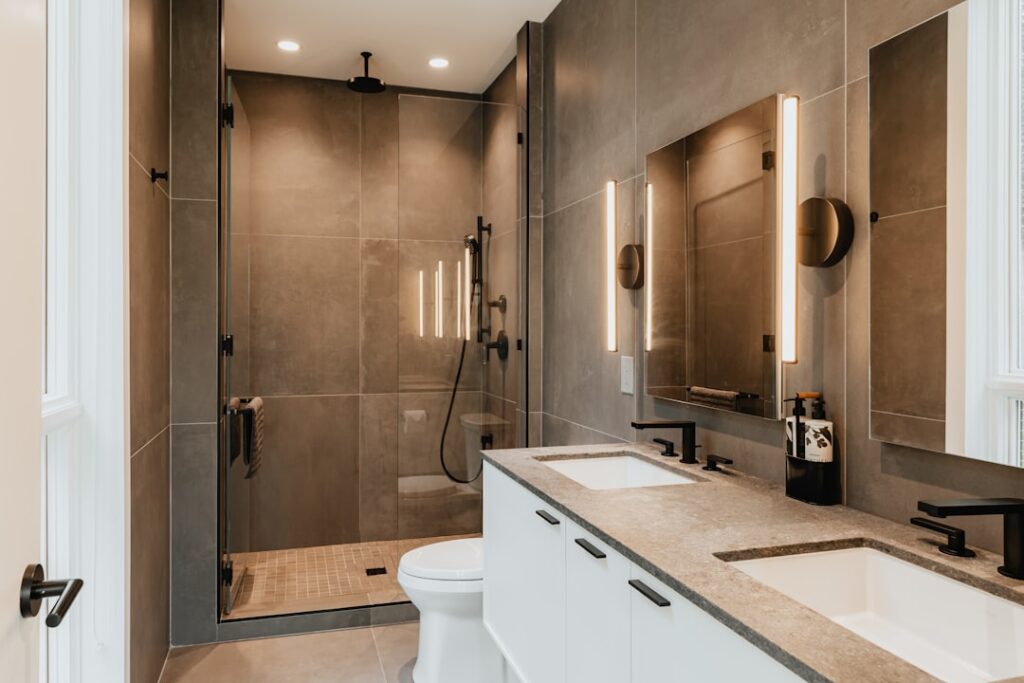
A steam shower turns your bathroom into a personal spa, but plenty of homeowners aren’t sure what’s actually happening behind the tile. How does a steam shower work? At its core, a steam shower uses a small electric generator to boil water and pipe the resulting steam into a fully sealed shower enclosure, filling it with warm, moist vapor. Unlike a regular hot shower, where steam is just a byproduct, a steam shower produces dense, controllable steam on demand without the water spraying down on you. Understanding the system helps you decide whether it’s worth adding to your home.
The Main Components
A steam shower is a system of parts working together, not a single appliance. Knowing each piece makes the whole thing click.
- Steam generator: the heart of the system, a small tank that heats water to boiling and produces steam
- Steam head: a nozzle in the enclosure where steam enters the space
- Control panel: a digital interface to set temperature, run time, and sometimes lighting or music
- Sealed enclosure: a fully enclosed, watertight shower with a ceiling and a tight door to trap the steam
- Water and electrical supply: a dedicated water line and a 220 to 240-volt circuit feeding the generator
The sealed enclosure is what separates a steam shower from an ordinary one. A regular shower has an open top or a gap above the door that lets steam escape. A steam shower must be completely enclosed, ceiling, walls, and a sealed door, so the vapor stays inside.
The Process Step by Step
When you press start on the control panel, a sequence kicks off automatically. The whole thing is surprisingly simple once you see it laid out.
- You set your desired temperature and duration on the control panel.
- A valve opens, filling the generator’s tank with cold water from your supply line.
- An electric heating element inside the tank brings the water to a boil, much like a giant kettle.
- The resulting steam travels through an insulated pipe to the steam head in the enclosure.
- The steam head releases the vapor near floor level, where it rises and fills the sealed space.
- A built-in sensor monitors the temperature and cycles the generator on and off to hold your setting, typically between 100 and 115 degrees Fahrenheit.
The generator usually sits out of sight, in a vanity cabinet, a closet, or the attic, within about 25 feet of the shower. It quietly does its work while you enjoy the steam, refilling and reheating as needed to maintain a steady cloud of vapor.
How It Differs From a Sauna
People often confuse the two, but they’re quite different. A sauna uses dry heat, often 150 to 195 degrees Fahrenheit with very low humidity, generated by heating rocks or an element in a wood-lined room.
A steam shower runs much cooler, around 110 degrees, but with 100 percent humidity. That moist heat feels intense even at a lower temperature because the humidity prevents your sweat from evaporating. Steam is gentler on the respiratory system for many people and is the choice if you want that wet, enveloping spa feeling rather than dry sauna heat.
What It Takes to Install One
Adding a steam shower is more involved than a standard remodel because of the sealing and the generator. The enclosure needs a sloped, sealed ceiling so condensation runs off instead of dripping, fully waterproof walls, and a tight-fitting door with no gaps.
You’ll also need a dedicated electrical circuit, usually 220 to 240 volts, and a nearby spot for the generator. Materials matter too: nonporous surfaces like porcelain tile, natural stone, or solid acrylic panels stand up to constant moisture, while you should avoid anything that traps water. Because of the electrical and waterproofing demands, most steam showers are professionally installed.
Costs to Expect
A steam shower is a premium feature, and the price reflects it. The generator and controls alone typically run $1,000 to $3,000 depending on size and features.
- Generator and controls: $1,000 to $3,000
- Sealing and waterproofing the enclosure: $1,000 to $4,000
- Electrical and plumbing work: $500 to $2,000
- Total installed (new build into a remodel): often $3,000 to $10,000+
Prefabricated steam shower units exist and can lower costs and simplify installation, while a fully custom tiled steam shower sits at the top of the range. Operating cost is modest, since the generator only runs during your session and uses far less water than a long hot shower.
Benefits and Things to Consider
Fans cite muscle relaxation, easier breathing, skin hydration, and pure stress relief. A 15 to 20 minute steam session at the end of the day is genuinely restorative, and the feature can add appeal at resale.
There are tradeoffs to weigh. The enclosure must be vented and dried out properly to prevent mold in all that humidity, so an exhaust fan and a habit of leaving the door open afterward are important. People with certain heart or blood pressure conditions should check with a doctor before regular steam use. Maintenance is minimal but real, occasional descaling of the generator keeps it running well in hard-water areas.
Sizing the Generator Correctly
One detail that makes or breaks a steam shower is matching the generator’s output to the size of the enclosure. An undersized generator struggles to fill the space and never reaches a satisfying steam density, while an oversized one wastes energy and water.
Generators are rated in kilowatts, and the right size depends on the cubic footage of your enclosure plus adjustments for the wall material. Tile, stone, and glass absorb and radiate heat differently, so a stone-lined steam shower needs more power than an acrylic one of the same volume. Ceiling height counts too, since steam fills the entire volume. Most manufacturers provide a sizing chart or calculator where you enter your dimensions and surface materials, and following it closely is essential. When in doubt, size up slightly, since a generator that’s a touch large simply reaches temperature faster and cycles off, while one that’s too small never performs well.
Maintenance and Longevity
A steam shower is low-maintenance, but a little routine care keeps it running for years. The biggest enemy is mineral scale, especially in hard-water areas, which builds up inside the generator tank and on the heating element.
Many modern generators include an auto-flush or auto-drain feature that empties the tank after each use to limit scale, and using it is worth the small water cost. Periodically descale the tank per the manufacturer’s instructions, more often if your water is hard. After each session, leave the shower door open and run the exhaust fan so the enclosure dries fully, which prevents mold in the constant humidity. Wipe down glass and grout regularly, and check that the steam head and controls stay clear. With basic upkeep, a quality steam generator commonly lasts 10 to 15 years or more.
Final Thoughts
So how does a steam shower work? A generator boils water, pipes the steam into a sealed, waterproof enclosure, and a control panel and sensor hold the room at a comfortable, humid warmth. It’s a spa-grade luxury that’s very achievable in a modern bathroom remodel, provided you handle the sealing, electrical, and ventilation correctly. If you crave that enveloping, muscle-melting steam at home, the system behind it is straightforward, reliable, and well worth understanding before you build.