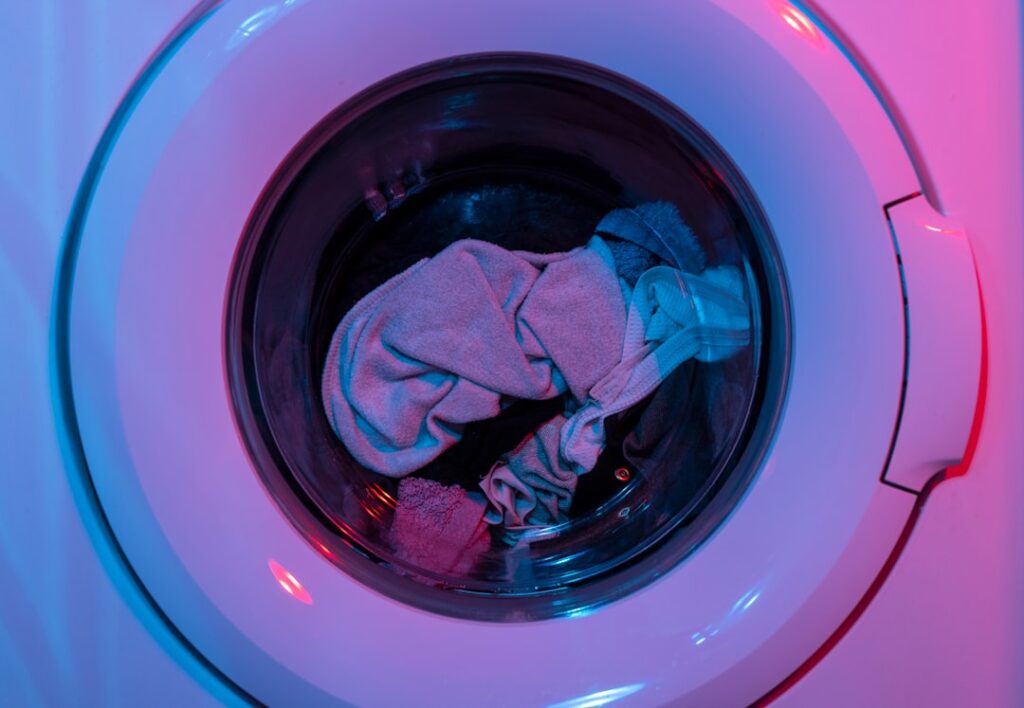
Almost everyone uses too much soap, and figuring out how much detergent to use in he washer loads is the fastest way to fix stiff towels, musty smells, and that mysterious film on your clothes. High-efficiency machines use as little as a third of the water of an old top-loader, roughly 13 to 20 gallons per load versus 40 or more, which means the detergent you pour in has far less water to dissolve into. The old habit of filling the cap to the top is exactly what leaves residue behind. The right answer is usually two teaspoons to two tablespoons, not a brimming cap.
- Why HE Washers Need Less Detergent
- The Detergent Amounts That Actually Work
- How Load Size Changes the Math
- Water Hardness and Your Detergent Dose
- Signs You Are Using Too Much
- Liquid, Powder, or Pods: Which to Choose
- Building a Simple Routine
- Cold Water Versus Warm and Why It Matters
- Adding Boosters Without Overdoing It
Why HE Washers Need Less Detergent
High-efficiency washers, both front-loaders and modern top-loaders without a center agitator, are engineered to clean with minimal water. They tumble clothes through a small pool rather than floating them in a full tub. Because there is so little water, it takes only a small amount of concentrated detergent to reach the right cleaning concentration. Add more and there is simply not enough water to rinse it all away.
That leftover detergent does real damage. It builds up in the drum, the door gasket, and the internal hoses, where it goes rancid and produces the sour, mildew-like odor HE owners complain about constantly. On fabric, excess soap traps dirt and body oils instead of releasing them, which is why over-soaped towels feel scratchy and lose absorbency. Using less detergent is not about being frugal, though you will save money; it is about actually getting cleaner clothes.
The Detergent Amounts That Actually Work
For a standard load with a 2X concentrated liquid detergent, two teaspoons is plenty. A large or heavily soiled load can go up to one tablespoon. Only an oversized, very dirty load justifies closer to two tablespoons. That is dramatically less than the cap markings suggest, because those lines are printed by manufacturers who profit when you buy detergent more often. Ignore the cap fill lines and measure a real teaspoon or tablespoon instead.
Concentration matters enormously. An ultra-concentrated 4X detergent needs roughly half the amount of a 2X formula, so one to two teaspoons handles most loads. Single-dose pods are pre-measured for a standard load; use one pod for normal loads and two only for a genuinely huge, filthy one. Powder detergents run about two tablespoons for a normal load. Always look for the “HE” symbol on the bottle, because non-HE detergent produces excess suds that an HE machine cannot rinse out.
How Load Size Changes the Math
Detergent should scale with how many clothes you wash, not fill the same cap every time. A small load of a few shirts needs barely a teaspoon. A medium everyday load of mixed clothing needs one to two teaspoons of concentrated liquid. A large load that fills the drum to about three-quarters full needs a full tablespoon. Cramming the drum completely full is counterproductive anyway, since clothes need room to tumble and rinse.
Soil level matters just as much as size. Gym clothes soaked in sweat, muddy work pants, or kids’ grass-stained jeans warrant the higher end of the range and maybe a pre-treatment on spots. A load of lightly worn office clothes needs the lower end. When in doubt, use less; you can always rewash, but you cannot un-soap a load that came out coated in residue.
Water Hardness and Your Detergent Dose
The mineral content of your water changes how much detergent you need. Hard water, which affects roughly 85 percent of U.S. homes, contains calcium and magnesium that bind with detergent and reduce its cleaning power, so hard-water homes may need slightly more, toward the top of the recommended range. Soft water, whether natural or from a water softener, makes detergent far more effective, so soft-water homes should use even less than the standard amount to avoid a slippery, under-rinsed feel.
If you are not sure about your water, an inexpensive test strip from a hardware store costs a few dollars and tells you where you stand. In hard-water areas, adding a water-softening booster like washing soda lets you keep detergent low while still cutting through grime. Do not compensate for hard water by simply doubling detergent, because that reintroduces all the residue and odor problems you are trying to avoid.
Signs You Are Using Too Much
Your machine will tell you when you overdo it. Excessive suds visible through a front-load door during the wash cycle is the clearest sign, since a properly dosed HE load shows only a thin layer of foam. White or bluish streaks on dark clothes are undissolved detergent. Towels that feel stiff and repel water instead of absorbing it are saturated with soap film. And a persistent musty smell from the drum or gasket is detergent residue feeding mildew.
If you recognize these symptoms, cut your detergent amount in half immediately and run a few loads to let the buildup clear. Once a month, run an empty hot cycle with a cup of white vinegar or a dedicated washing-machine cleaner to strip accumulated residue from the drum and hoses. Wipe the door gasket dry after each use and leave the door ajar between loads so the interior can breathe and dry out.
Liquid, Powder, or Pods: Which to Choose
All three formats clean well in an HE machine as long as you dose them correctly. Liquid detergent dissolves instantly and works well in cold water, making it the most forgiving choice, but it is the easiest to over-pour. Powder is cheaper per load and excellent for mud and clay stains, though it can leave undissolved grit in very cold water, so run it warm. Pods offer foolproof measuring and travel well, but you cannot scale them down for a small load, which wastes product.
Whatever you choose, add detergent to the correct place. Front-loaders and modern top-loaders have a dispenser drawer; liquid and powder go in the main wash compartment, and pods go directly in the drum before you add clothes, never in the dispenser where they may not fully dissolve. Putting a pod in the dispenser drawer is a common reason people find gooey undissolved residue after a cycle.
Building a Simple Routine
Once you nail down how much detergent to use in he washer loads, the whole system runs smoothly. Keep a measuring teaspoon or tablespoon right on the shelf next to your detergent so you never eyeball it into the cap again. Start with two teaspoons of 2X liquid as your default, adjust up a touch for large or dirty loads, and adjust down for soft water or small loads. Within a couple of weeks your towels will soften, the musty odor will fade, and a bottle of detergent will suddenly last twice as long.
The counterintuitive truth is that using less detergent gives you cleaner clothes, a longer-lasting machine, and lower costs all at once. A typical bottle of concentrated detergent claims 32 loads but easily stretches to 60 or more at correct doses, saving a household roughly $50 to $100 a year. Measure deliberately, respect how little water an HE machine uses, and let the machine do exactly what it was engineered to do.
Cold Water Versus Warm and Why It Matters
Water temperature interacts with your detergent dose more than most people realize. Cold water, which the majority of loads use to save energy and protect colors, does not dissolve detergent as readily as warm water, so powder in particular can leave undissolved grit if you overfill. Liquid and pod detergents formulated for cold water dissolve fine, but you still want the amount low so the reduced dissolving power of cold water is never overwhelmed. Around 90 percent of a washer’s energy use goes to heating water, which is why cold washing is standard, but it does demand accurate dosing.
If you must wash in cold and worry about dissolving, pre-mix a liquid detergent into a cup of warm water before adding it, or switch to a liquid or pod format entirely for winter months when incoming water can drop near 50°F. Reserve warm and hot washes, around 105°F to 130°F, for heavily soiled loads, whites, towels, and bedding where the extra temperature genuinely helps sanitize and dissolve oils. Matching temperature to the load lets you keep detergent amounts minimal without sacrificing cleaning.
Adding Boosters Without Overdoing It
Sometimes a plain detergent needs help, but boosters should supplement, not stack on top of, a full detergent dose. For whitening and odor, a half cup of oxygen bleach or a half cup of baking soda added to the drum lifts performance without adding sudsing detergent. For hard water, a quarter to half cup of washing soda softens the water so your small detergent dose works at full strength. For stubborn sweat and body odor in athletic wear, a cup of white vinegar in the rinse cuts residue and freshens fabric.
The key rule is that when you add a booster, you do not also increase detergent; the booster is doing part of the cleaning work. Doubling up on both is how people end up with the exact residue and stiffness they were trying to solve. Treat detergent as your baseline cleaner and boosters as targeted tools for specific problems, and your loads stay balanced, well-rinsed, and genuinely clean load after load.