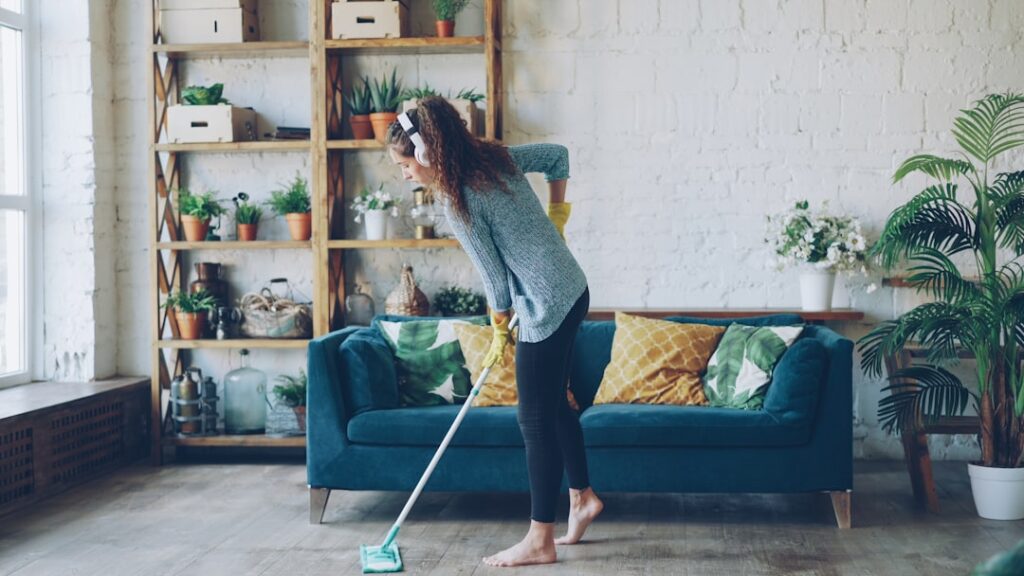
Vacuums miss the fine grit that scratches hardwood, and a wet mop pushes that grit around in muddy circles. Dry mopping is the missing step that lifts dust, hair, and abrasive particles off the floor before they grind into your finish. Knowing how to dry mop properly is the difference between a hardwood floor that still looks sharp at year ten and one that needs a $4 per square foot screen-and-recoat after year five. The technique takes under ten minutes per room, costs almost nothing in supplies, and works on hardwood, laminate, luxury vinyl plank, tile, and engineered stone alike.
Why Dry Mopping Beats Vacuuming on Hard Floors
A microfiber dry mop pad uses electrostatic attraction to pull particles toward its fibers. Particles under 50 microns, which include most household dust and pet dander, slip past vacuum brush rolls and bypass even HEPA filters at the seal points. A microfiber pad with a charge holds them on contact.
Hoover and Shark robot vacuums work the open floor, but they cannot reach baseboards or under low-clearance furniture. Dry mops slide under sofas with as little as 3 inches of ground clearance and hug toe-kicks where dust accumulates first. Pair dry mopping with periodic vacuuming for the best result.
Pick the Right Tool
Three tool categories cover nearly every home:
- Flat microfiber mops: The Bona Premium Microfiber Mop at $43 and the O-Cedar ProMist MAX at $28 both come with reusable pads that wash 300+ times. Bona pads are denser and last longer.
- Disposable dry sweeping pads: Swiffer Sweeper Dry Pads run about $0.30 per pad. Convenient but expensive long-term and not as effective on heavier debris.
- Electrostatic dust mops: Rubbermaid Pulse Mop and the Quickie Microfiber Dust Mop, $25 to $40. Larger 18 to 24-inch heads suit big open layouts.
For homes with pets or kids, the wider 18-inch flat mops save real time. Skip cotton string mops for dry work; they shed lint and have no static charge to grab particles.
Prep the Room Before You Start
Move dining chairs onto the table, shift area rugs into the next room, and pick up shoes, toys, and pet bowls. The goal is one continuous sweep without lifting the mop. Lifting the head drops accumulated dust back onto the floor.
Skip any spray treatments on the pad. Pledge, Murphy’s Oil Soap, and Bona’s spray bottles are designed for damp mopping, not dry. A treated pad smears dust into greasy streaks and leaves residue that holds onto the next round of debris.
The Right Pattern: Edges First, Then Snake
Two patterns work for any room shape:
- Edge pass first: Start along one wall and walk the perimeter of the room, keeping the mop head flat against the baseboard. This collects the heaviest dust band, which always sits within 6 inches of the wall.
- Snake the open floor: Move to one corner and push the mop in a straight line to the opposite wall. Turn 180 degrees, overlap the previous pass by 2 inches, and walk back. Repeat until the entire floor is covered.
- Never lift the head mid-pass: Slide and pivot rather than picking up. Lifting releases dust back onto cleaned areas.
For hardwood and laminate, work parallel to the plank direction. Cross-grain passes can lodge grit into the seams between boards. On tile, move diagonally to the grout lines so the pad picks debris out of grout valleys rather than pushing it along them.
Cleaning and Storing the Pad
Microfiber pads need to be cleaned after every use, but never with fabric softener or chlorine bleach. Both break down the static-charged fibers and ruin the pad within five to ten washes. Wash in warm water with a small amount of regular detergent, like Tide Free & Gentle, and tumble dry low or air dry.
Store the dry mop head-up, off the floor, in a closet or utility area. Hanging keeps the fibers from compressing flat and preserves the static charge between uses. A Command hook on the inside of a closet door works well and costs $4 for a two-pack.
How Often to Dry Mop
Frequency depends on traffic and pets. For most households, this cadence works:
- High-traffic entryways and kitchens: Every 1 to 2 days.
- Living rooms and dining rooms: Twice a week.
- Bedrooms: Weekly.
- Homes with shedding pets: Daily in main living areas.
Combine dry mopping with damp mopping once or twice a month. Manufacturers like Mohawk, Pergo, and COREtec recommend dry mopping before any wet cleaning to prevent grit from scratching the floor during the wet pass.
Common Mistakes That Damage Floors
Three mistakes routinely shorten a hardwood floor’s life. First, using a dirty pad. A pad already loaded with debris stops attracting new particles and starts scrubbing the existing grit into the finish. Switch pads halfway through any house over 1,800 square feet. Second, dry mopping with cotton string mops or feather dusters, which scatter particles into the air rather than capturing them. Third, ignoring entrance mats. A walk-off mat at every exterior door cuts the dust load by 60 to 80 percent according to floor-care studies cited by the National Wood Flooring Association.
Treat dry mopping as routine maintenance, not a chore. Once you have the rhythm of how to dry mop efficiently dialed in, the whole house takes 15 to 20 minutes and the difference in floor longevity is measurable in years.
Dry Mopping on Different Floor Types
The same microfiber pad performs slightly differently across surfaces. On engineered hardwood and solid oak from Bruce or Mohawk, work parallel to the grain and refresh the pad every 800 square feet. On laminate from Pergo or Mannington, the harder Aluminum Oxide wear layer scratches the pad less than it scratches the floor, so any clean microfiber works. Luxury vinyl plank like COREtec or Karndean accepts slightly damp microfiber pads, which lift the fine dust polypropylene fibers can otherwise miss. On natural stone tile, including travertine and marble, never use scented dust sprays; they leave residue that holds onto soil and creates a hazy film that requires a deep clean to remove. Tile installed with sanded grout collects dust in the grout lines; tip the dry mop at a 30 degree angle to brush across the grout rather than along it.