Water stains have a reputation for being permanent, but most are surface mineral deposits or trapped moisture that lift with the right technique. The trick is matching the method to the surface and the type of stain. How to get rid of water stains on a coffee table is a completely different process from removing a hard-water ring from a glass shower door or a brown halo from a ceiling. This guide covers the seven surfaces homeowners ask about most, with the proven DIY method for each, what you will spend (almost always under $20), and when to give up and call a pro.
Water Stain Basics: White vs Dark
On wood, water stains come in two colors that mean very different things. White or cloudy stains sit in the finish, not the wood itself, meaning moisture got trapped between the topcoat and the surface but never reached the fibers. These are easy to remove. Dark or black stains have penetrated through the finish into the wood and sometimes reacted with iron deposits to form tannin stains. These often require sanding and refinishing.
For non-wood surfaces, water stains are almost always mineral deposits (calcium, magnesium, iron) left behind when hard water evaporates. The fix is dissolving the minerals with mild acids.
Wood Furniture: The Iron Method
The fastest fix for a fresh white water ring on a coffee table or dining table is a clothes iron. The heat drives moisture out of the finish and the rings disappear in 30 seconds.
- Place a clean dry cotton towel over the stain
- Set the iron to medium heat with no steam
- Press the iron on the towel for 10 seconds, lift, check the stain
- Repeat in 10-second intervals until the ring is gone (usually 30 to 60 seconds total)
- Buff with a microfiber and a small amount of furniture polish
Other proven white-stain methods: rub mayonnaise or petroleum jelly on the stain and let sit for 6 to 12 hours, or use a mixture of equal parts baking soda and white toothpaste applied with a microfiber in the direction of the grain.
Ceiling Water Stains: Stop the Leak First
A brown or yellow ring on a ceiling means water came through from above (roof, plumbing, HVAC condensate). Painting over it without finding the source is a guaranteed callback in 6 to 12 months.
- Locate and repair the source. Common culprits are roof flashing, ice dams, leaky toilets, and AC condensate lines
- Let the ceiling fully dry (3 to 7 days, accelerated with a fan)
- Spot-prime the stain with Kilz Original or Zinsser Cover Stain oil-based primer ($25 per quart). Water-based primers are inadequate; the stain will bleed through
- Touch up with the matching ceiling paint, feathering edges to blend
If the ceiling drywall is sagging, soft to the touch, or you can press a finger into it, the drywall itself is compromised and needs to be cut out and replaced.
Glass Shower Doors: Vinegar and Squeegee
Hard-water film on shower doors is calcium carbonate that has chemically bonded to the glass over months. The fix is acid:
- Spray full-strength white vinegar (5 percent acetic acid) on the glass and let dwell 30 minutes
- For heavy buildup, mix vinegar with baking soda to form a paste, apply, dwell 15 minutes, then scrub with a non-scratch sponge
- Stubborn cases respond to CLR Calcium Lime Rust ($8) per the label directions
- Rinse thoroughly with fresh water, dry with a microfiber, then squeegee after every shower going forward
Apply Rain-X or a glass sealant ($10) twice a year to prevent re-deposit. The single biggest preventer is squeegeeing the door immediately after every shower.
Stainless Steel Appliances
White spots on a stainless dishwasher, fridge, or sink are mineral deposits. Fix:
- Wipe with a 50/50 white vinegar and water solution along the grain direction
- Rinse with fresh water and dry immediately with a microfiber
- Apply Bar Keepers Friend ($4) for stubborn spots; rub with a damp cloth in the direction of the grain
- Polish with a stainless steel polish (Weiman, Method) to restore shine and create a barrier
Fabric and Upholstery
Water stains on silk ties, suit jackets, and microfiber couches happen when partial wetting causes minerals or dye to migrate into a ring. The fix is to wet the entire affected area evenly so the ring blends out:
- Mist the entire panel (whole couch cushion or whole tie length) with distilled water using a fine spray bottle
- Blot evenly with a clean white microfiber, working from the outside in
- Let air dry away from direct heat or sunlight
- For silk and dry-clean-only items, take to a professional rather than DIY
Tile and Grout
Hard-water staining on bathroom tile and grout responds to mild acid cleaners. Use:
- CLR or Lime-A-Way: Apply per label, dwell 5 minutes, scrub with a stiff nylon brush, rinse
- Vinegar paste: Mix vinegar and baking soda into a thick paste, apply to stains, dwell 15 minutes, scrub, rinse
- Oxalic acid (Bar Keepers Friend): Best for rust-colored stains in white grout
Never use vinegar or acidic cleaners on natural stone tile (marble, travertine, limestone). Acid etches the surface permanently. Use a stone-safe cleaner like Granite Gold instead.
Wood Floors
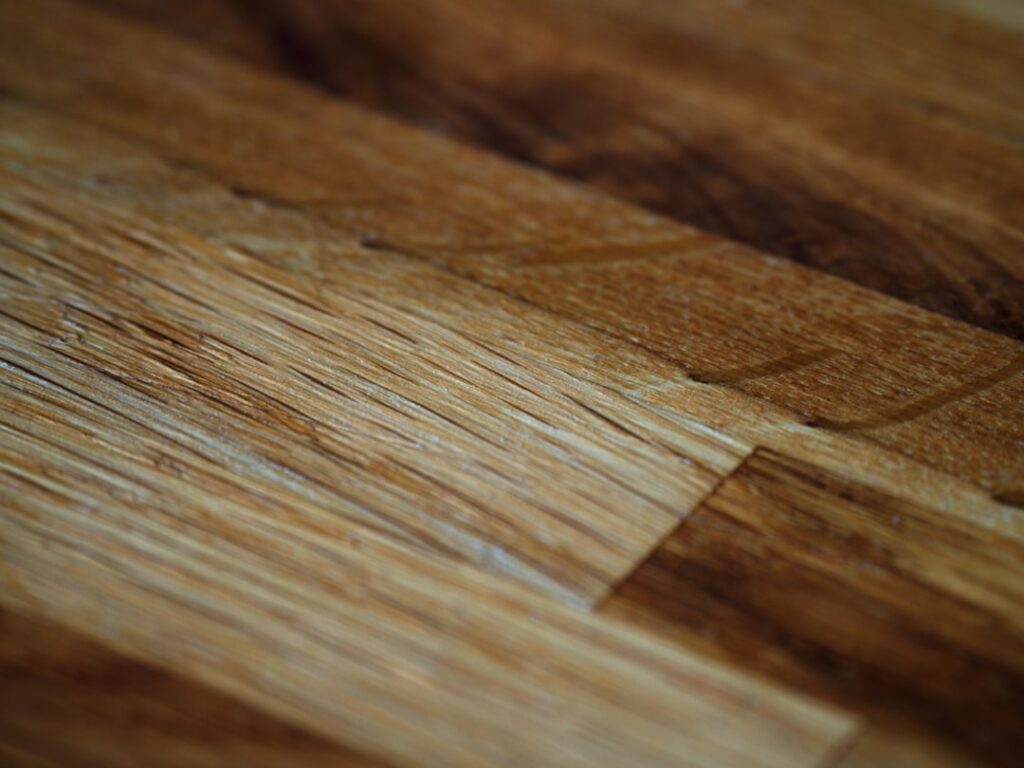
White cloudy patches on hardwood respond to the same iron method used on furniture. Dark stains that have penetrated the wood require sanding:
- Lightly sand the dark stain with 120-grit, then 220-grit sandpaper following the grain
- If the stain persists, apply a wood bleach (Behr Wood Bleach, oxalic acid solution) per label and let sit
- Re-stain to match surrounding wood; this is the hardest part
- Recoat with 2 to 3 coats of matching polyurethane
For widespread dark staining or whole-board penetration, calling a wood floor refinisher is more cost-effective than DIY blending. Spot refinishing rarely matches perfectly.
Toilet Bowl Rings
The brown or rust ring at the waterline is a combination of hard-water minerals and iron oxidation. The pumice stone method works:
- Drop the bowl water level by holding the flush valve open with the float lifted, or scoop out water until the ring is exposed
- Wet a pumice stone (the cheap blue ones at the hardware store, $3) and rub the ring gently
- Pumice will not scratch porcelain when wet, but will scratch dry; keep both wet at all times
- Flush, then apply a toilet bowl cleaner with hydrochloric acid (Lysol, The Works) for any residue
Prevention Beats Removal
The cheapest way to deal with water stains is to prevent them. Use coasters religiously on wood surfaces, install a whole-house water softener if you have hard water (city water above 10 grains per gallon hardness), squeegee shower doors after every use, run an exhaust fan during showers and for 20 minutes after, and address roof and plumbing leaks the day you notice them. Knowing how to get rid of water stains is useful, but never having them in the first place is better.