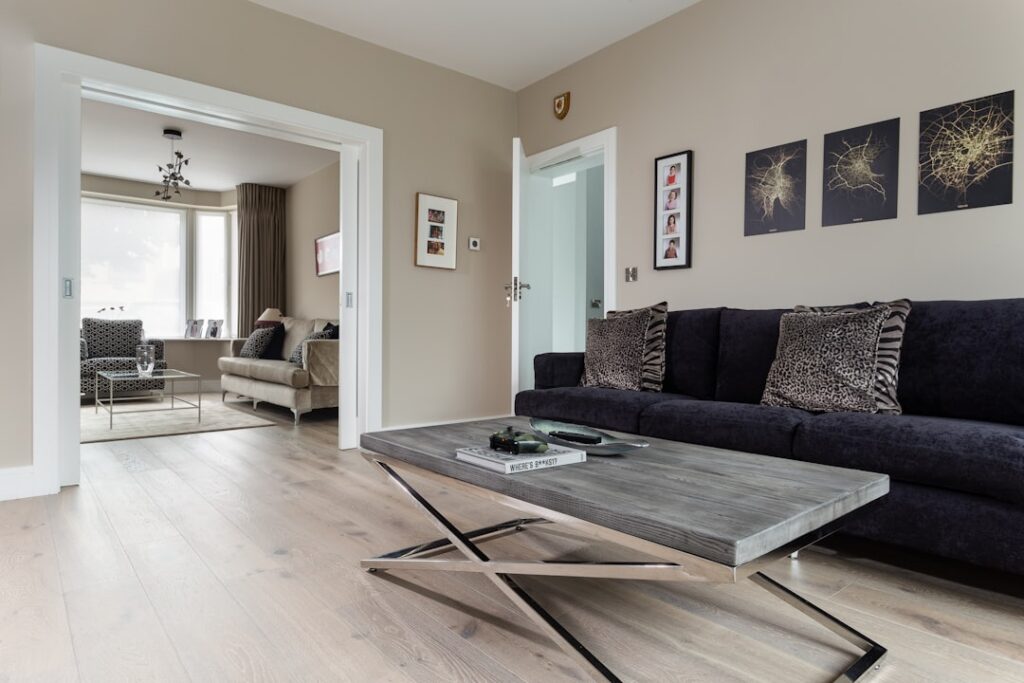
If you have searched how to wash laminate flooring livpristhome, you are likely chasing one of the cleaning routines making the rounds on TikTok and Instagram — “livpristhome” appears to be a tag or brand variant some creators include alongside laminate cleaning hacks. The good news is the actual technique behind those streak-free, shiny laminate floors is well documented, repeatable, and uses products you can buy at any Home Depot or Target. The trick is knowing which cleaners are safe for laminate’s photographic wear layer, how much moisture is too much, and which old-school methods (like soaking the floor with vinegar) actively damage the planks. Here is the complete how-to that delivers the showroom-clean look without ruining your floor.
Why Laminate Needs Special Care
Laminate flooring is a four-layer composite: a stabilizing back, a high-density fiberboard core, a photo-printed decor layer, and a clear melamine wear layer on top. The wear layer is tough against scratches but the seams between planks are vulnerable to water — even a few minutes of standing moisture can swell the HDF core, which then never fully recovers.
That single fact dictates every safe cleaning method. Soaking, wet-mopping with a string mop, and steam mops are off the table. Damp microfiber and quick-evaporating sprays are the standard professional approach.
Daily and Weekly Maintenance
Most laminate floor problems come from grit, not water damage. Tiny particles of sand and dirt act like sandpaper underfoot and dull the wear layer over months. Build a quick routine:
- Daily (high-traffic areas): Sweep or dust mop with a microfiber dust mop like the Bona Microfiber Floor Mop ($30)
- Weekly: Vacuum with a hard-floor setting (no beater bar). The Shark Navigator Lift-Away or Dyson V8 hard-floor head work well.
- Bi-weekly to monthly: Damp clean with a laminate-safe cleaner
- Quarterly: Spot-check seams for water swelling, edges for chipping, and re-tighten any furniture pads
The Best Laminate Cleaners
Several products consistently come out on top for laminate maintenance. The proven winners:
- Bona Stone, Tile & Laminate Floor Cleaner: 32 oz refill at $14, water-based, no residue, pH-neutral. Industry favorite.
- Bruce No-Wax Hardwood and Laminate Floor Cleaner: Older school but effective. About $9 per spray bottle.
- Quick-Step Cleaning Kit: Manufacturer-specific, usually around $35 for the kit including spray and mop.
- Pergo Floor Cleaner: Manufacturer-specific. $10-$15 per bottle.
- Black Diamond Wood and Laminate Floor Cleaner: Concentrated, mixes 4 oz per gallon water for budget-friendly option.
Avoid Pine-Sol, Murphy Oil Soap, Mr. Clean, ammonia-based cleaners, and any wax product on laminate. These leave residue, dull the finish, or void manufacturer warranties.
The Microfiber Mop Method
The single most important tool for cleaning laminate is a flat microfiber mop. The Bona Premium Microfiber Mop ($40) and the Rubbermaid Reveal ($30) are the two consistent top performers. The technique:
- Sweep or vacuum first to remove all loose grit
- Spritz the cleaner directly onto the floor in a small section (3-4 sq ft at a time)
- Glide the microfiber pad over the wet area in long strokes following the plank direction
- Move to the next section before the previous one fully dries to avoid streaks
- Rinse the mop pad in clean water every 100-150 sq ft and wring almost dry
- Allow the floor to fully air-dry — usually 5-10 minutes — before walking on it
This is the technique behind the how to wash laminate flooring livpristhome hacks circulating on social media — and it actually works because microfiber holds dirt without releasing excess moisture.
The Vinegar Debate
Diluted vinegar on laminate is one of the most contested topics in home cleaning. Some sources recommend a 1:4 vinegar-to-water mix as a cheap DIY cleaner. Manufacturers including Pergo and Quick-Step officially advise against it — vinegar’s mild acidity can dull the wear layer over time and may void warranty coverage.
If you do use vinegar, the safer formulation is 1 cup white vinegar + 1 gallon warm water + 1 teaspoon dish soap, applied with a barely damp microfiber mop. Use it sparingly — once a month maximum — and never on textured or hand-scraped laminate where the slight acidity can settle in the recesses and cause cloudiness.
Tackling Specific Laminate Stains
Different spills need different approaches:
- Coffee, juice, wine: Wipe immediately with a damp microfiber. Follow with a spritz of laminate cleaner.
- Grease and oil: Spot-clean with a microfiber dampened in 1:1 dish soap and warm water. Rinse with damp clean cloth.
- Dried mud: Vacuum first to remove loose chunks. Then wipe with a damp microfiber.
- Crayon, marker, lipstick: Mineral spirits on a soft cloth. Test in an inconspicuous area first.
- Nail polish: Acetone-free remover on a cotton swab. Acetone will damage the wear layer.
- Pet accidents: Blot immediately, then clean with enzymatic cleaner like Nature’s Miracle. Watch for swelling at seams.
- Scuff marks: Pencil eraser or a tennis ball cut and slipped onto a broom handle.
Common Mistakes That Damage Laminate
The most damaging cleaning errors:
- Using a string mop and bucket — too much standing water
- Steam mops — heat plus moisture causes plank swelling
- Wax-based polishes (Pledge, Future, Mop & Glo) — leaves residue that dulls and traps dirt
- Bleach or ammonia — discolors the photo decor layer
- Abrasive scrubbers like Brillo or Magic Eraser — scratches the wear layer
- Letting spills sit — even 10 minutes of standing water at a seam can cause permanent swelling
Restoring Dull Laminate
If your floor looks hazy or dull from old cleaner buildup, a deep clean restores the shine. Mix 1 gallon warm water with 4 oz Black Diamond Wood and Laminate Floor Cleaner concentrate. Apply with microfiber mop, work in small sections, and follow with a clean dry microfiber to buff. Two passes typically restore showroom shine without leaving residue.
For laminate that has lost its sheen permanently due to wax or oil-soap residue, the Quick-Step or Pergo refresh products use light abrasives plus a polymer top-coat to restore reflection. Do not apply these to floors under 6 months old or to floors still in warranty without checking with the manufacturer first.
Frequency and Pro Tips
How often you clean depends on traffic and household habits:
- Light use (single adult or couple, no pets): vacuum weekly, damp clean monthly
- Family with kids: vacuum every 2-3 days, damp clean every 1-2 weeks
- Pets: vacuum daily in pet zones, damp clean weekly
- Entryways and kitchens: damp clean weekly minimum
Pro tips that extend laminate life: place doormats inside and outside every entry, add felt pads under all furniture legs, take shoes off at the door, and trim pet nails monthly. These four habits alone double the lifespan of most laminate floors.
What If You Already Damaged a Plank
If a section has swollen at the seams, the plank usually needs replacement — water damage to HDF core is permanent. Click-lock laminate can be lifted from the wall toward the damaged plank, the bad plank removed, and a replacement clicked in. Keep extra boxes from your original installation for this exact scenario. If you are out of replacements, big-box stores still carry many Pergo and Quick-Step patterns for 5-10 years after installation. Whether you found the technique on a livpristhome video or in a manufacturer’s manual, the rules are the same — clean often, clean dry, and use products designed for laminate.
Prefer to explore on your own?
See how new flooring looks in your actual room in seconds — free, no signup.
Try the free Floor Studio →