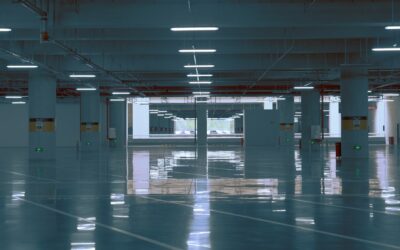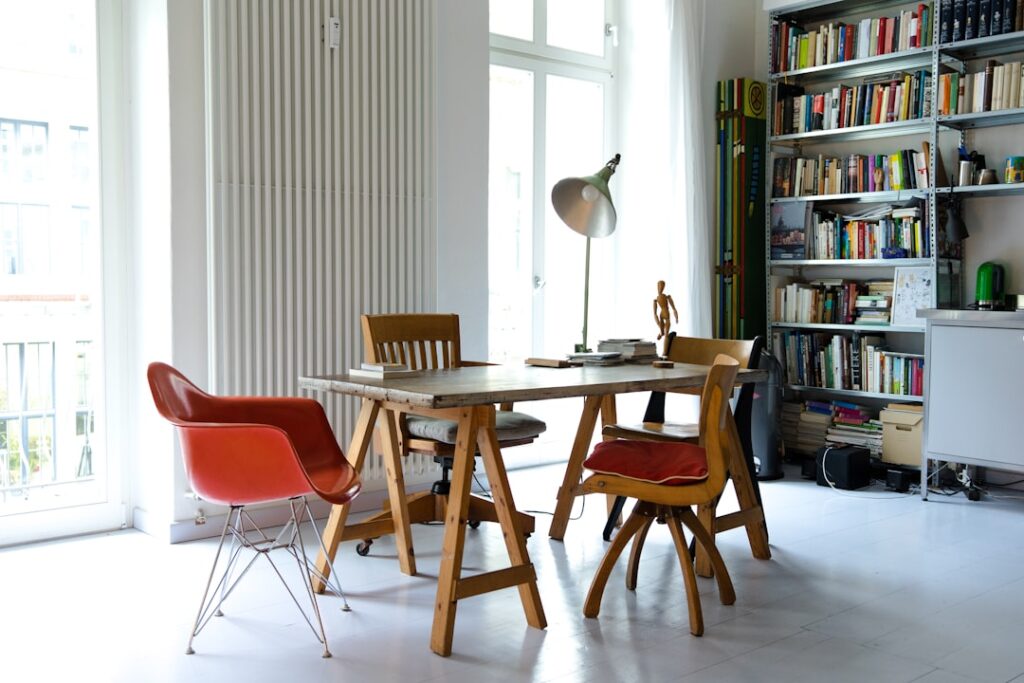
Walk into a European airport, a Scandinavian school, or a high-end German kitchen showroom and you are probably standing on HPL. HPL flooring — short for high-pressure laminate — is the heavy-duty cousin of the click-lock laminate Americans know from big-box stores, and it dominates the commercial and premium residential markets across Europe. After installing it in two restaurants and a dental office, I can tell you the difference between HPL and DPL (direct-pressure laminate) is dramatic, and the price tag matches.
What Makes HPL Different
The “high-pressure” in HPL is literal. Multiple layers of kraft paper saturated in phenolic resin, plus a decorative paper and a melamine wear layer, are fused under pressures of 1,300 psi or more at temperatures above 300 degrees F. The result is a single, dense, monolithic top surface that gets bonded to a separate HDF or wood-composite core in a second step.
Standard residential laminate (DPL) saves money by skipping that two-stage build — everything fuses in one shot at lower pressure. The end product looks similar but is nowhere near as durable. HPL wear layers run 0.6 to 1 mm thick. DPL is closer to 0.2 mm.
Real-World Pros
The durability is the headline. HPL flooring carries AC ratings of AC5 and AC6 — the highest abrasion class on the market — meaning it survives heels, dropped tools, dragged furniture, and decades of foot traffic without showing wear lanes. In commercial spec, that translates to a 25-year warranty on light commercial use and 15 years on heavy commercial.
- Scratch resistance roughly 3x that of standard laminate
- Fire rating of Bfl-s1 (low flame spread, low smoke) on most brands
- Compatible with radiant heat up to 82 degrees F surface temperature
- Color stability — fade resistance under UV is excellent
- Available in plank, tile, and large-format formats up to 24 by 96 inches
It also handles point loads better than vinyl. A piano caster will not leave a permanent dent the way it would on a 6 mm SPC plank.
The Honest Cons
The price hits hard. Expect $5.50 to $11 per square foot for materials, with premium German and Austrian product like Egger Pro Aqua and Parador Trendtime running $9 to $14. That is double what comparable LVP costs and competitive with engineered hardwood.
Repairability is poor. Unlike vinyl, you cannot lift one plank and swap it without dismantling the floor back to the damaged board. And while HPL is more water-resistant than old-school laminate, it is not waterproof — standing water at the click joints will eventually cause edge swell, even on the AquaStop and Hydron versions.
Sound is the third issue. HPL on a hard subfloor without proper underlayment is loud — both impact and reflective. Budget for a 2 mm IXPE or cork pad with at least IIC 65 rating, especially in apartments.
HPL vs DPL vs LVP
This is the comparison that matters when you are at the showroom. HPL beats DPL on every spec except price. HPL beats LVP on scratch resistance, indent resistance, and authentic underfoot feel — vinyl always feels slightly soft because it is plastic over a foamed core. LVP beats HPL on water performance and DIY installation difficulty.
For a kitchen, mudroom, or full-bath conversion, I still pick rigid-core vinyl every time. For a great room, hallway, or commercial showroom where dimensional stability and authentic wood texture matter, HPL flooring is the better choice.
Specs to Verify Before You Buy
- AC rating — AC5 or AC6 only for residential and commercial
- Total thickness 8 to 12 mm; ignore anything thinner
- HDF core density of 880 kg/m3 or higher
- Bevel detail (V-groove on 2 or 4 sides) — affects how realistic the seams look
- Surface texture — synchronized embossed-in-register (EIR) is worth the upcharge
- Click system — Uniclic, ProLoc, or 2G/5G drop-lock are the proven systems
Subfloor and Acclimation
HPL is more forgiving than hardwood but less forgiving than vinyl. The slab or wood subfloor must be flat to within 3/16 inch over 10 feet. Anything more requires self-leveler. Moisture testing is required on concrete — a calcium chloride test should read under 5 lbs per 1,000 sq ft per 24 hours, or RH under 75 percent.
Acclimate the boxes flat-stacked, in the install room, at 65-75 degrees F and 40-60 percent humidity for 48 hours minimum. Skip this step and the floor will telegraph the changes within a few weeks.
Installation in Practice
Floating click-lock is the standard install. Leave a 3/8 inch expansion gap at every wall and vertical obstruction. Stagger end joints by at least 12 inches. For runs over 30 feet in any direction, install a T-molding — HPL expansion is real, even if it is small.
Pro labor runs $2.50 to $4.50 per square foot, plus $1 to $2 for prep work. A solid two-person crew puts down 500 to 700 sq ft per day on a clean layout. DIY is doable for an experienced homeowner, but the precision tolerances on HPL planks are tighter than budget laminate — every cut needs to be square.
Cleaning and Long-Term Care
Dry vacuum weekly. Damp mop with a microfiber pad and a residue-free laminate cleaner like Bona for Hard-Surface Floors. Avoid steam mops, oil soaps, and excessive water. Felt pads under every chair leg, a quality entry mat at every door, and you will get the full 25 years out of the floor.
Bottom Line
HPL flooring is the right call when you want laminate-style realism and ease of install paired with hardwood-grade durability. The premium over standard laminate is real, but on a 20-year horizon, the math works out — fewer scratches, fewer dents, no replacement. Buy AC5 or higher, install with quality underlayment, and respect the moisture limits.
Prefer to explore on your own?
See how new flooring looks in your actual room in seconds — free, no signup.
Try the free Floor Studio →