After a hurricane, the difference between a wet, gutted house and a dry one usually comes down to whether the roof deck stayed sealed. The IBHS Fortified Roof standard exists to make sure it does. Developed by the Insurance Institute for Business & Home Safety — the same research group that fires 2x4s at walls and runs full-scale hurricanes in its South Carolina test chamber — FORTIFIED is a voluntary construction standard that goes beyond building code to keep roofs on houses and water out of them. More than 80,000 homes now carry the designation, and in states like Alabama the insurance discounts attached to it routinely pay back the upgrade cost in a few years.
- What FORTIFIED Actually Is
- The Core Requirements of a Fortified Roof
- 1. Stronger deck attachment
- 2. A sealed roof deck
- 3. Locked-down edges
- 4. Wind-rated coverings, properly installed
- What It Costs
- Insurance Discounts and Grants
- Does It Actually Work in Storms
- How to Get a Fortified Roof
- Questions Homeowners Ask
- Bottom Line
What FORTIFIED Actually Is
FORTIFIED is a set of prescriptive construction requirements plus a third-party verification program. You can’t self-certify. An IBHS-credentialed evaluator documents the work with photos at specific stages — deck nailing before underlayment goes down, sealed seams before shingles — and submits the evidence to IBHS, which issues a certificate valid for five years. Re-designation requires a re-inspection or a new roof.
The program covers three escalating levels:
- FORTIFIED Roof — the roof system only: deck attachment, sealed deck, edge metal, and wind-rated coverings.
- FORTIFIED Silver — adds protection for openings and attachments: pressure-rated garage doors, impact protection for windows and doors in hurricane zones, anchored gable ends, chimneys, and attached structures.
- FORTIFIED Gold — adds a continuous load path, tying roof to walls to foundation with engineered connectors so the whole structure resists uplift as a unit.
Roof-level certification is by far the most common because it can be done during any normal reroof for a modest premium.
The Core Requirements of a Fortified Roof
Four upgrades separate a FORTIFIED roof from a code-minimum one, and none of them is exotic.
1. Stronger deck attachment
Sheathing must be fastened with 8d ring-shank nails at 6 inches on center at panel edges and 6 inches in the field (tighter than the typical 6/12 code pattern), and panels thinner than 7/16 inch have to be dealt with. Ring shanks roughly double the withdrawal resistance of smooth-shank nails — IBHS testing shows a properly nailed deck resists uplift pressures around twice those that peel off standard decks.
2. A sealed roof deck
This is the signature detail. Even when shingles blow off, a sealed deck keeps rain out of the house. Acceptable methods include taping every sheathing seam with 4-inch flashing tape and covering with felt or synthetic underlayment, covering the entire deck with a self-adhering membrane like Grace Ice & Water Shield, or using a two-ply mechanically attached underlayment system. IBHS research found sealed decks block up to 95 percent of the water intrusion that occurs after covering loss.
3. Locked-down edges
Drip edge must be code-plus: wider flanges, fasteners at 4 inches on center, and a fully adhered starter strip so the roof’s most vulnerable zone — the perimeter, where uplift pressures are highest — can’t start peeling.
4. Wind-rated coverings, properly installed
Shingles must meet ASTM D7158 Class G or H (or ASTM D3161 Class F) and get installed per the high-wind nailing pattern, usually six nails per shingle. Metal, tile, and low-slope membranes have parallel requirements keyed to design wind speed. In hail-prone regions, the newer FORTIFIED Roof–High Wind & Hail option adds IBHS-rated impact-resistant shingles.
What It Costs
Because the upgrades ride along with a reroof you were doing anyway, the increment is small. On a typical 2,200-square-foot home, expect:
- Ring-shank renailing of the deck: $300 to $600
- Seam taping or peel-and-stick membrane: $500 to $1,500
- Upgraded drip edge and starter: $200 to $400
- Evaluator fee and IBHS certification: $400 to $900
All told, roughly $1,000 to $3,000 over a standard reroof — typically 5 to 15 percent of the project. Going to Silver or Gold costs meaningfully more because garage doors, shutters, and structural connectors enter the picture, which is why those levels are most economical during new construction.
Insurance Discounts and Grants
This is where FORTIFIED turns from an expense into an investment. Alabama leads the country: insurers there are required to offer discounts, and wind-premium reductions of 20 to 55 percent are documented for FORTIFIED homes. Louisiana, Mississippi, North Carolina, Oklahoma, and Texas have followed with discount mandates or incentive programs of their own. Several states also run grant programs — Alabama’s Strengthen Alabama Homes and Louisiana’s Fortify Homes Program have offered up to $10,000 toward a FORTIFIED reroof, and the funds are routinely oversubscribed within hours of opening.
Resale data backs it up too: a University of Alabama study of Gulf Coast sales found FORTIFIED homes commanded a price premium of roughly 7 percent. Between discounts, grants, and resale value, the payback math on the roof level is among the best of any home improvement in hurricane country.
Does It Actually Work in Storms
Field evidence says yes. After Hurricane Sally hit Alabama in 2020 with 105 mph gusts, surveys of FORTIFIED homes in the impact zone found roughly 95 percent had no visible roof damage, while surrounding conventional homes showed widespread covering loss and interior water damage. Similar results followed Hurricane Ida in Louisiana. The mechanism is simple: keep the deck nailed down, and even partial shingle loss becomes a cosmetic repair instead of a five-figure interior claim.
How to Get a Fortified Roof
The sequence matters, because verification photos can’t be taken after the fact.
- Hire a FORTIFIED-trained roofing contractor — IBHS maintains a searchable directory at fortifiedhome.org.
- Engage a certified evaluator before tear-off. The evaluator, not the roofer, submits documentation to IBHS.
- Reroof with the required nailing, sealed deck, and edge details, with photo documentation at each stage.
- Receive your FORTIFIED certificate, send it to your insurer, and calendar the five-year renewal.
If your roof isn’t due for replacement, you can still capture part of the benefit from inside the attic: a closed-cell spray foam applied to the underside of the sheathing seams qualifies as a sealed-deck method in some circumstances, though most homeowners simply wait for the reroof cycle.
Questions Homeowners Ask
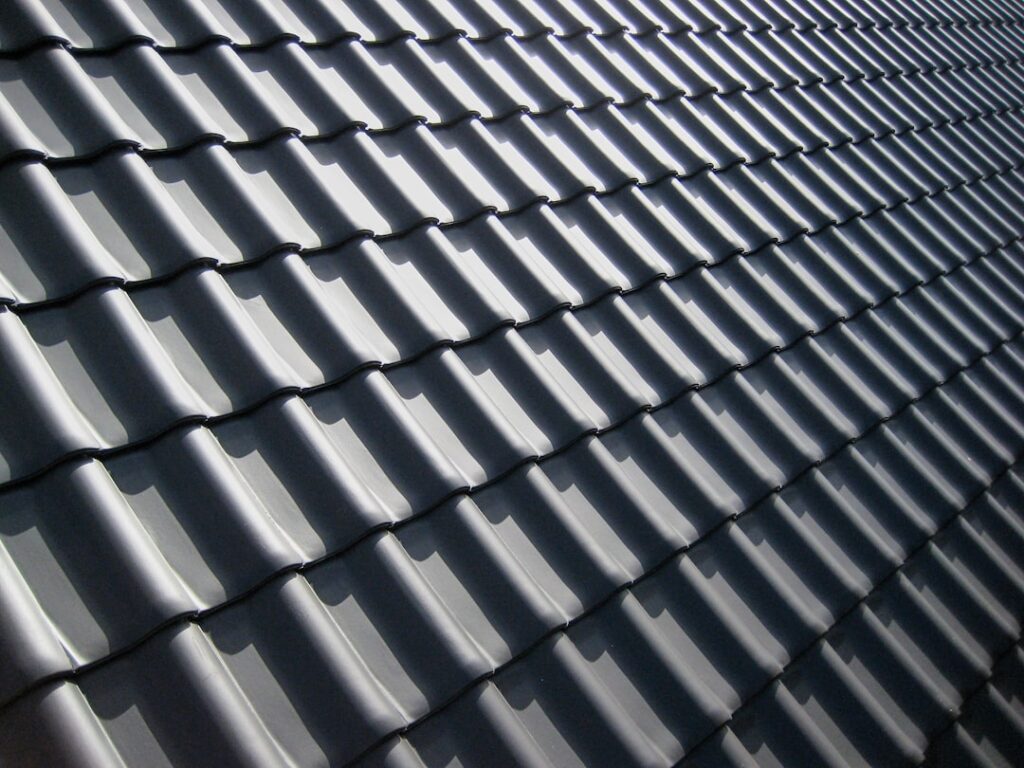
Does FORTIFIED work with metal roofs or tile? Yes. The standard has compliance paths for asphalt shingles, metal panels, concrete and clay tile, and low-slope membranes. Metal roofs must meet uplift ratings appropriate to the design wind speed and still require the sealed deck beneath — a standing seam roof over taped sheathing seams is a common and durable Gulf Coast combination. Tile roofs need attention to attachment (foam-set or screw-fastened per the high-wind tables) and to hip and ridge details, which are the first things to fly in a hurricane on conventionally mortared tile.
Can I certify an existing roof without replacing it? Rarely. The evaluator has to verify deck nailing and the sealed deck, and both are hidden under the covering on a finished roof. Unless your roof was built to the standard with photo documentation, certification effectively waits for the next reroof. What you can do now is upgrade the accessible items — gable-end bracing, attached-structure connections — so the future certification is cheaper.
Does the designation expire? Yes, after five years. Renewal is a re-inspection, not a rebuild, and typically costs a few hundred dollars. Let it lapse and the insurance discount usually lapses with it, so calendar the date.
Is it worth it outside hurricane country? The High Wind and Hail designation extends the logic to the Plains and Midwest, where derechos and hail drive most roof claims. Discounts are smaller than Gulf Coast wind credits but growing as more states adopt incentive legislation — Oklahoma and Kentucky both moved in recent sessions.
Bottom Line
Building codes are a minimum, written to protect life safety — not to keep your house dry or your premiums low. An IBHS Fortified roof costs about as much as an upgraded appliance package, is verified by an independent evaluator, and has real-world storm performance and insurance discounts behind it. If you live anywhere from Texas to the Carolinas, or in hail alley, it’s the rare upgrade that protects the house, lowers your bills, and raises your resale value at the same time.