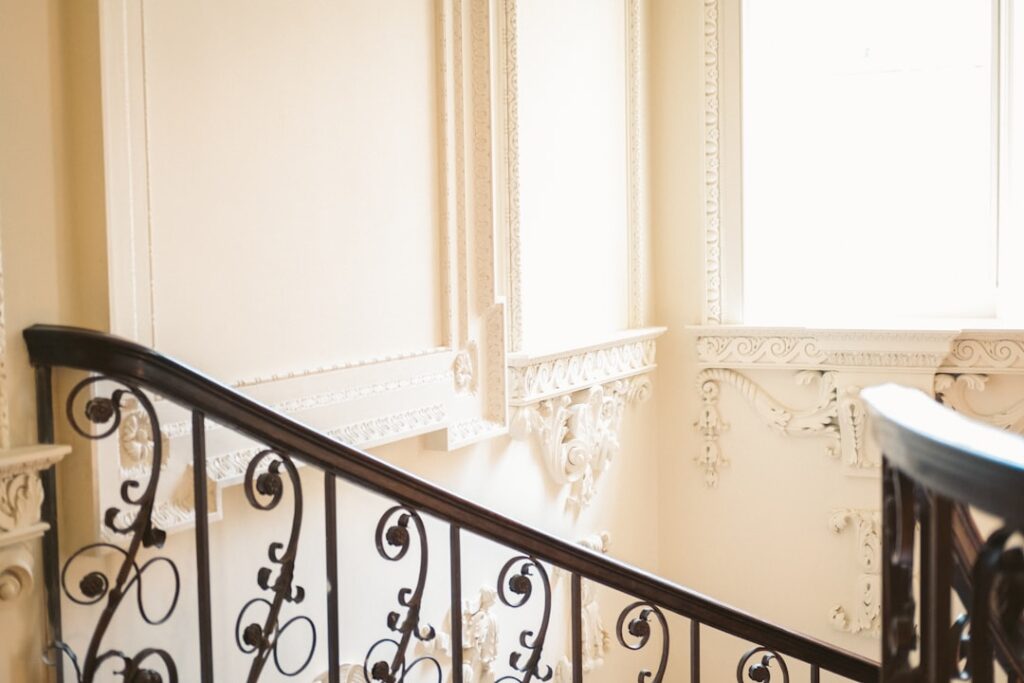
Scroll through any 2010s home flip and you will see the same five inch ornate crown smashed onto every wall, every ceiling, every room. By 2020 designers were quietly tearing it back out. So is crown molding outdated in 2026? The honest answer is more nuanced than yes or no. Some profiles and applications still elevate a space, while others read as builder-grade nostalgia. Here is exactly what is working, what is not, and how to make the call for your own home before you spend $800 to $2,400 on a project that could go either way.
The Short Answer From Real Designers
Crown molding itself is not outdated. The wrong scale, the wrong profile, and the wrong location is what reads as dated. Architects designing high-end new builds in 2026 still spec crown molding in formal rooms, in traditional and transitional homes, and in any space where the architecture supports it. What is genuinely out of fashion is:
- 5+ inch heavily ornate Victorian-style crown in modern ranch homes
- Crown molding installed in every room regardless of ceiling height
- Painted-the-same-color-as-the-walls crown that looks like an afterthought
- Crown installed at 7’9″ ceilings where it crushes the room visually
If you have any of those scenarios in your house, the molding is not aging well. If you have proportional, well-installed crown in formal rooms with 9+ foot ceilings, it still earns its keep in 2026.
Ceiling Height Matters More Than Style
The single most important variable is ceiling height. Crown molding visually lowers the ceiling because it draws the eye to a defined edge. The math:
- 8 foot ceilings: skip or use under 3 inch crown only. Anything taller crushes the room.
- 9 foot ceilings: 3 to 5 inch crown works well, especially with picture rail or wainscoting.
- 10+ foot ceilings: 5 to 8 inch crown looks intentional and proportional.
- Vaulted or cathedral ceilings: skip crown entirely. The angle change is the architectural feature.
Most builder-grade homes from 1995 to 2015 have 8 foot ceilings with 5 inch crown installed everywhere. That is the look that reads as dated to younger buyers.
Modern Profiles That Look Current
If you want the architectural moment crown molding provides without the dated read, choose a minimal modern profile:
- Square 1×4 or 1×6 simple crown — flat board run at the wall-ceiling joint with no carved detail
- Shadow gap or recessed reveal — a 1/2 to 3/4 inch reveal trim that creates a subtle line
- Cove crown 2 to 3 inches — clean concave curve, no shoulders or returns
- Picture rail at 84 inches instead of ceiling crown — original early 1900s detail, very on-trend
These profiles run roughly $1.20 to $3 per linear foot in primed pine or MDF, the same as traditional crown. The look is dramatically different.
Where Crown Still Wins
Some rooms benefit from crown molding even in 2026:
- Formal dining rooms in traditional or transitional homes
- Powder rooms and primary bathrooms with vintage or classical styling
- Libraries, dens, and home offices with built-in shelving
- Foyers and stair halls with 10+ foot ceilings
- Coffered ceilings — crown is essential to the system
In these rooms, even a traditional 4 to 5 inch profile reads as appropriate. The architectural language of the space supports the detail.
Where to Skip It Entirely
Some rooms look better without:
- Modern or contemporary homes with clean lines and minimal trim
- Bedrooms and casual living spaces in homes built after 1990
- Spaces with low (under 8 foot) ceilings
- Kitchens with cabinets running to the ceiling — adding crown creates visual conflict
- Mid-century modern and Scandinavian-style interiors
If you are renovating with resale in mind, ask yourself who your likely next buyer is. Younger millennials and Gen Z buyers consistently rank heavy traditional trim as a negative in market research. In a starter home in a transitional neighborhood, ripping out heavy crown and painting walls a clean modern color increases sale appeal more than installing more crown.
Color Choices Are Half the Battle
Even traditional crown looks current with the right paint approach. Three working strategies in 2026:
- Color drench: paint the wall, ceiling, and crown the same soft color. The crown becomes architectural texture rather than contrast. Sherwin-Williams Agreeable Gray or Benjamin Moore Pale Oak work well.
- Subtle contrast: walls one shade darker than the trim. Avoids the high-contrast crisp white crown on saturated wall look that screams 2008.
- Bold tonal: deep navy or forest green wall with the same color crown, white ceiling. Modern and rich.
Stark glossy white crown on a colored wall is the single most dating look. Even if the crown is well-proportioned and otherwise current, the paint scheme tells buyers the room was last decorated 10 to 15 years ago.
Cost to Remove vs Update
If your existing crown is over-scaled, ornate, and you want to update without full removal:
- Repainting the crown to match wall color: $1.50 to $3 per linear foot in DIY labor
- Removing and patching drywall edge: $4 to $7 per linear foot DIY, plus paint
- Replacing with simpler profile: $5 to $9 per linear foot DIY in materials
- Professional removal and replacement: $12 to $22 per linear foot installed
For a typical 14 by 16 living room with 60 linear feet of crown, the spectrum is $90 (repaint) to $1,320 (pro replace). Repainting alone often solves the problem.
Final Verdict
Crown molding is not dead, but heavy ornate crown on low ceilings absolutely is. In 2026, intentional architectural moments belong in homes that match the style. If you are buying, do not let existing crown drive your decision — it is easy to update. If you are renovating or building, choose profiles that scale to your ceiling height, commit to a paint strategy that works in the current palette, and install crown only in rooms where the architecture supports it. The question of whether is crown molding outdated is really a question of intentional design, and intentional always reads as timeless.