Among the world’s tough, beautiful hardwoods, few make a statement quite like this Australian classic. Jarrah wood flooring comes from Eucalyptus marginata, a eucalyptus species native to the southwest of Western Australia, and it is famous for two things: a deep, warm red-to-burgundy color and exceptional hardness. Old jarrah floors in heritage homes have survived a century of foot traffic and still polish up rich and lustrous. For homeowners who want a hardwood with genuine character, real durability, and a color that needs no stain, jarrah is in a class of its own, though it asks for a few things in return.
What Jarrah Is
Jarrah is a dense Australian eucalyptus hardwood. Freshly milled, its heartwood ranges from a rich red to a deep brownish-red, often with darker streaks, and it can carry gum veins and other natural features that give boards real personality. Exposed to light, jarrah deepens over time into a darker, more burnished tone. It is a heavy, coarse-grained timber, historically used not just for floors but for railway sleepers, wharves, and heavy construction, which tells you a great deal about its strength.
Because so much old jarrah was used in building and rail infrastructure, reclaimed jarrah flooring is also a popular, characterful option, often milled from recovered beams and sleepers.
The Pros of Jarrah Flooring
Jarrah’s reputation rests on a rare combination of toughness and beauty.
- Very hard and durable: jarrah sits high on the hardness scale, well above oak, so it resists dents and stands up to heavy traffic and furniture.
- Naturally resistant: the timber has good natural resistance to rot, decay, and many wood-boring insects, including termites.
- Stunning natural color: a deep red that rarely needs staining and grows richer with age.
- Long lifespan: thick solid boards can be sanded and refinished multiple times over decades.
- Character: gum veins, color variation, and figure make each floor distinctive, and reclaimed stock adds history.
The Cons to Consider
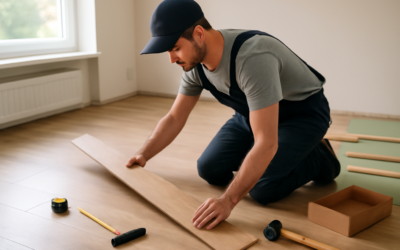
That hardness is a double-edged sword. Jarrah is dense and heavy, which makes it harder to cut, nail, and sand; installers need sharp, robust tooling, and DIY work is more demanding than with a softer species. The same density can make the wood somewhat brittle at edges, so it can chip if mistreated during install. Color is gorgeous but strong: jarrah’s deep red is a commitment that not every interior suits, and it will darken further with light exposure, so plan furniture placement to avoid uneven fading in sun-drenched rooms. Availability outside Australia can be limited, and genuine jarrah, especially reclaimed, commands a premium price. Finally, like all wood, it moves with humidity, so proper acclimation and a controlled indoor climate matter.
Finishing Jarrah
Jarrah’s natural color is the star, so most finishes aim to protect and enhance rather than change it. A clear hardwax oil deepens the red and gives an easily repairable, low-sheen surface, while polyurethane offers a harder film for high-traffic areas. Because the timber is dense and can contain natural oils and gum, sand progressively with sharp abrasives and remove all dust before finishing. Test your chosen finish on an offcut first to confirm color and adhesion. Some installers wipe the surface to manage any resin before applying a film finish, ensuring it cures cleanly.
Solid Versus Engineered, and Reclaimed Jarrah
Jarrah flooring comes in a few forms, and the right one depends on your subfloor, budget, and taste for character.
- Solid jarrah: thick boards of pure timber that can be sanded and refinished many times across decades. Best nailed to a wood subfloor with thorough acclimation, it is the heirloom option but the most demanding to install given the wood’s density.
- Engineered jarrah: a real jarrah wear layer over a stable core, offering better resistance to humidity swings and the ability to install over concrete with the right barrier. A practical choice for slabs and variable climates.
- Reclaimed jarrah: milled from recovered beams, sleepers, and old structures, it carries unmatched character, nail holes, deep patina, color variation, and the satisfaction of reusing timber already harvested long ago.
Reclaimed stock is especially appealing given that so much historic jarrah went into rail and construction; it lets you own a piece of that history while sidestepping fresh harvesting.
How Jarrah Compares to Other Hardwoods
Stacked against common flooring woods, jarrah’s selling points are its hardness and color. It is significantly harder than red or white oak, so it dents less and handles heavy traffic and furniture better, and its deep natural red needs no stain to achieve a color many oaks can only imitate with dye. Compared to other dense tropical and eucalyptus hardwoods, jarrah holds its own on durability while offering a distinctive burgundy tone and frequent gum-vein character that set it apart visually. The trade-offs versus a domestic oak are higher cost, tougher workability, limited availability outside Australia, and a strong color that is a real design commitment. For buyers who specifically want that combination of extreme hardness and rich red character, though, few woods compete.
Care and Maintenance
Caring for a jarrah floor is like caring for any quality hardwood, with attention to its strengths.
- Keep grit off the surface: sweep or vacuum regularly, since tracked-in grit scratches even very hard wood.
- Clean gently: use a barely damp microfiber mop with a pH-neutral wood cleaner; never flood the floor or use a steam mop.
- Protect from sun: use blinds or rotate rugs and furniture so the floor darkens evenly rather than in patches.
- Refresh, don’t replace: re-oil traffic lanes on an oiled floor, or screen-and-recoat a polyurethaned one, to restore the finish without a full sand-back.
Is Jarrah Wood Flooring Worth It
For a floor that delivers serious hardness, natural rot and insect resistance, and a deep red color that only improves with age, jarrah wood flooring is a standout, particularly if you can source genuine or reclaimed stock. Go in clear-eyed about the trade-offs: it is dense and demanding to install, the strong color is a design commitment, and quality jarrah is not cheap. If those fit your project, you get a hardwood floor with real heritage and the strength to last generations, the kind of floor that outlives the house’s other finishes and still looks magnificent after another refinishing.
Prefer to explore on your own?
See how new flooring looks in your actual room in seconds — free, no signup.
Try the free Floor Studio →