Walk into a well-designed room and you might never notice it: a door disguised so seamlessly into the wall that it vanishes. That is a jib door, sometimes called a hidden door, flush door, or secret door. Originally found in 18th-century Georgian and Regency homes, jib doors are making a strong comeback in modern residential design. They eliminate visual clutter, create clean sightlines, and add an unmistakable sense of architectural sophistication to any space.
What Exactly Is a Jib Door?
A jib door is a door designed to blend flush with the surrounding wall surface. Unlike a standard door with visible casing, trim, and a contrasting frame, a jib door sits perfectly in plane with the wall. The surrounding wall finish — paint, wallpaper, paneling, or millwork — continues unbroken across the door face. When closed, the door is nearly invisible. The concept dates back to 18th-century English manor houses, where servants used hidden doors to move between rooms without disrupting the formal spaces.
How a Jib Door Works
The mechanics behind a jib door are straightforward, but the execution demands precision. The door slab is typically made from MDF, solid wood, or a hollow-core panel that matches the wall thickness. It hangs on concealed hinges — usually SOSS invisible hinges or European pivot hinges — that are mortised entirely into the door edge and frame so nothing shows on the surface. A concealed magnetic latch or touch-latch mechanism holds the door shut without a visible handle or knob.
The frame itself is either a specialized jib door frame kit (brands like Portarredo and Eclisse manufacture purpose-built systems) or a custom-fabricated pocket frame built by a carpenter. The frame provides a clean reveal gap of 1/8 to 3/16 inch around the door perimeter, narrow enough to pass as a wall joint or paneling seam.
Where to Use a Jib Door
Jib doors work best in spaces where visual continuity matters. Here are the most common applications:
- Pantry and utility rooms — Hide the pantry entrance in a kitchen to maintain clean cabinet-line aesthetics.
- Home offices and media rooms — Conceal a closet or storage area without breaking the wall design.
- Primary bedrooms — Disguise the entrance to an en-suite bathroom or walk-in closet within paneled or wallpapered walls.
- Hallways — Eliminate visual competition from multiple door frames in a narrow corridor.
- Bookcase walls — Build a jib door into a floor-to-ceiling bookshelf for a classic hidden-room effect.
A jib door also solves practical problems. In small rooms where a standard door with prominent trim would feel heavy, a flush hidden door keeps the space feeling open and uncluttered.
Design and Finish Options
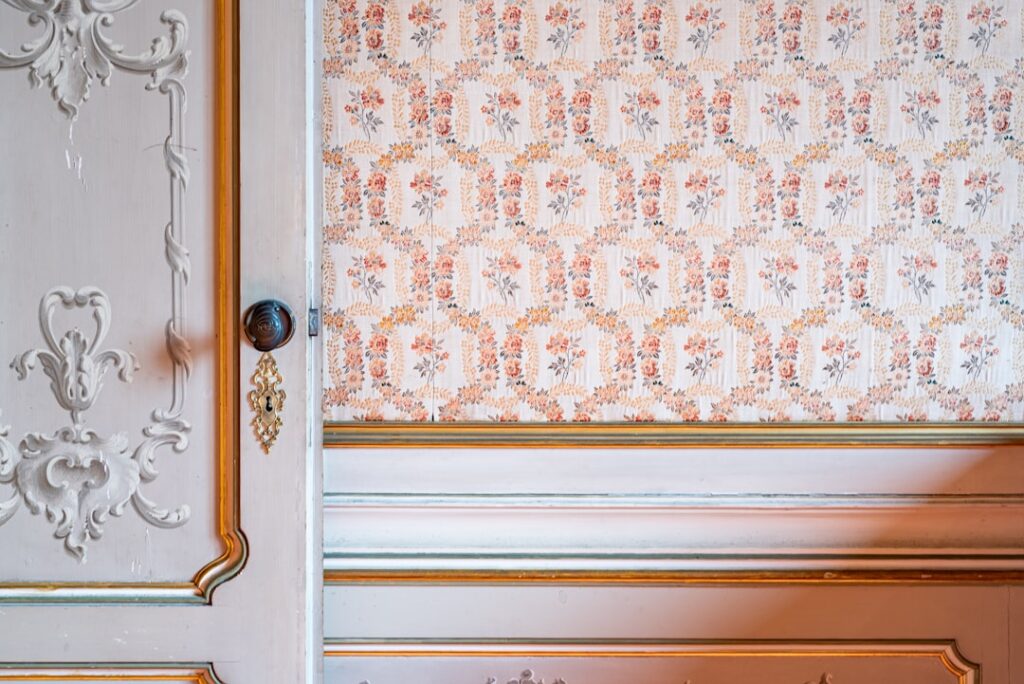
The door face must match the adjacent wall exactly for the illusion to work. Common approaches include painting the door the same color as the wall (use the same paint in the same sheen), applying the same wallpaper across the door and wall in a continuous pattern, running wainscoting or board-and-batten paneling across the door, and integrating the door into a built-in bookcase or shelving unit.
For painted walls, a perfectly smooth Level 5 drywall finish on both the wall and door face is critical. Any texture mismatch between the door panel and the wall will betray the door’s location. If your walls have knockdown or orange peel texture, the door panel needs the same treatment applied before painting.
Hardware for Jib Doors
Choosing the right concealed hardware makes or breaks a jib door installation.
Hinges
SOSS invisible hinges are the industry standard. A pair of SOSS 218 hinges (rated for doors up to 120 pounds) costs $80 to $120 and mortises completely into the door edge and frame. For heavier doors, the SOSS 220 handles up to 200 pounds. Pivot hinges from brands like FritsJurgens offer a floor-mounted alternative that allows the door to swing in both directions, priced from $500 to $1,500 per set.
Latches
Touch latches ($10 to $30) release the door with a push, eliminating the need for any handle. Magnetic catches ($5 to $15) hold the door closed and require a slight pull to open — these can be combined with an edge pull or finger groove routed into the door edge. For high-end installations, electronic latches with remote or keypad release run $150 to $400.
Cost of a Jib Door
Budget varies widely depending on whether you buy a pre-made system or go fully custom.
- Pre-made jib door kits (Eclisse, Portarredo) — $400 to $1,200 for the frame and slab, unfinished. These kits simplify installation significantly.
- Custom-built by a carpenter — $1,500 to $4,000 including materials, concealed hardware, finishing, and labor. Complex designs with integrated paneling or bookcases push costs higher.
- Hardware alone — $100 to $300 for hinges and latch if you are building the door yourself.
Professional installation adds $500 to $1,500 depending on wall construction, finish complexity, and whether the opening already exists or needs to be framed.
Installation Considerations
Installing a jib door is not a typical weekend DIY project. The tolerances are tight — a gap that is even 1/16 inch wider on one side than the other will be noticeable. The wall framing must be perfectly plumb and square. The door slab needs to be exactly the same thickness as the finished wall surface. And the concealed hinges require precise mortising, ideally done with a router and jig rather than a chisel.
If you are adding a jib door during new construction or a major renovation, coordinate with your drywall and paint contractors early. They need to know the door location to ensure seamless finishing. Retrofitting a jib door into an existing wall is possible but involves more drywall patching and finish work.
Maintenance and Long-Term Performance
A well-built jib door requires minimal maintenance. Periodically check that the concealed hinges are tight and lubricated — SOSS hinges benefit from a drop of light machine oil annually. Touch latches may need replacement every 5 to 10 years as the spring mechanism wears. The biggest maintenance concern is paint or wallpaper touch-ups. Because the door swings open and closed, the edges and gap lines can show wear over time. Keep matching paint on hand for quick touch-ups, and use a flexible, paintable caulk in the reveal gap to prevent cracking.