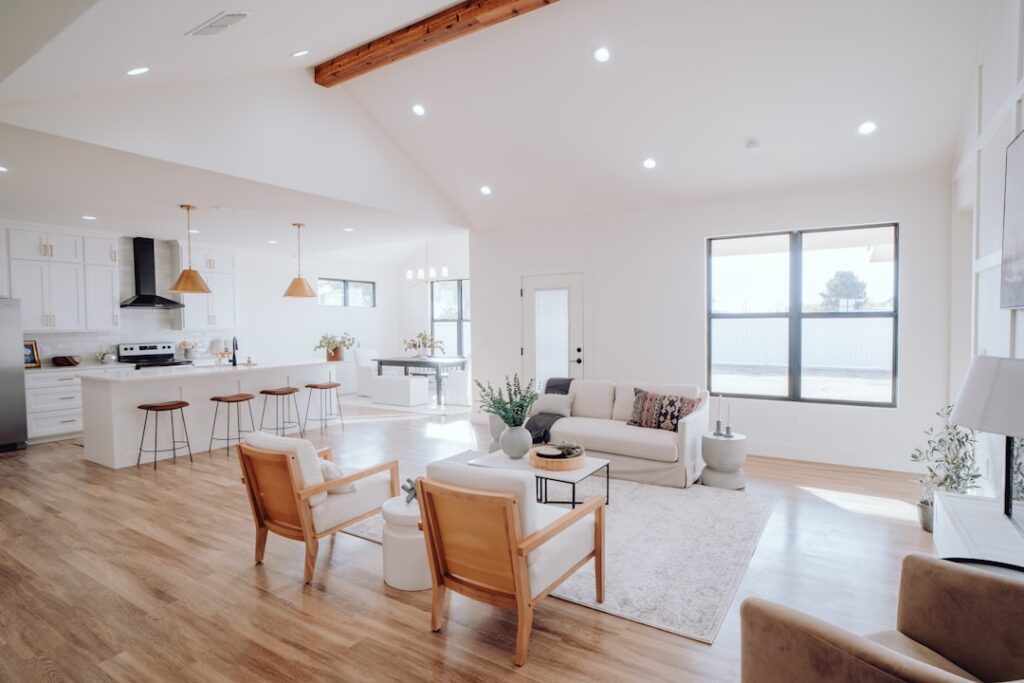
Walk into a high-end design showroom in the Pacific Northwest and you will often spot wide-plank engineered hardwood with smoked oak and reactive iron finishes that look almost cinematic underfoot. Much of that look traces back to Johnson flooring, a California-based brand known for hand-scraped textures, deep wire-brushing, and engineered cores built for radiant heat and dimensional stability. The catch is that the brand sells through a specialty dealer network rather than the big-box stores, so most homeowners only hear about it after their designer pulls a sample.
Here is what you need to know before you commit to 1,200 square feet of it.
Who Makes Johnson Hardwood
Johnson Hardwood is a privately held distributor headquartered in Diamond Bar, California, sourcing veneers and SPC cores from mills across Asia and Europe. The company specializes in European White Oak, American Hickory, and Acacia, with a handful of exotic species like Sapele and Walnut rotating through seasonal collections. Production runs are smaller than Shaw or Mohawk, which is part of the appeal — you are less likely to walk into a neighbor’s house and see the same floor.
Most boards are 6 to 9.5 inches wide and 73 to 86 inches long. The standard wear layer on the premium Alehouse and English Pub lines is 4mm, which is thick enough to refinish two or three times over a 40-year life.
Pricing Per Square Foot
Expect to pay $5.50 to $11 per square foot for materials. The entry-level Frontier Collection sits around $5.50 to $6.75. Mid-tier lines like Reno and Tuscan land at $7 to $8.50. Premium European White Oak collections — Alehouse, English Pub, and Mountain Country — run $9 to $11. Installation by a certified hardwood installer adds another $3.50 to $6 per square foot, and you should budget 7 to 10 percent waste on standard installs, 12 to 15 percent on diagonal or herringbone patterns.
For comparison, a similar wide-plank European Oak from Mohawk’s TecWood Select runs $4.75 to $7.25, while Shaw’s Couture Oak sits at $5.75 to $8. Johnson’s price premium reflects thicker wear layers and lower-volume runs.
Construction Specs That Matter
The cores vary by collection. The Frontier line uses an 11-ply Baltic birch plywood core, which is solid for floating installs but more sensitive to humidity swings below 30 percent RH. Premium lines use a 9-ply hybrid eucalyptus and poplar core that handles radiant heat up to 85°F without delaminating.
- Wear layer: 2mm on Frontier, 3mm on Reno, 4mm on Alehouse and English Pub
- Finish: 9-coat aluminum oxide UV-cured urethane, Janka rating varies from 1,290 (White Oak) to 2,350 (Hickory)
- Edge profile: Micro-beveled on all four sides for forgiving subfloor variation
- Certifications: FloorScore IAQ certified, CARB Phase 2 compliant for formaldehyde emissions
The Pros
Visual depth is the strongest selling point. The reactive smoked finishes on the English Pub line darken with UV exposure over the first six months, giving the floor a lived-in character that pre-finished oak typically lacks. Wire-brushing is done with steel bristles rather than nylon, which means the grain texture is more pronounced and feels closer to a site-finished floor.
The 4mm wear layer is genuinely refinishable, which most engineered floors at this price point are not. If you put a dent in a board ten years from now, a certified installer can sand and recoat the entire floor for $2.75 to $4 per square foot.
The Cons
Lead times are the biggest frustration. Because runs are small, popular SKUs in the Alehouse and English Pub collections frequently sit on 8 to 14 week backorders. If you are on a contractor timeline, confirm stock at the warehouse before signing your contract.
Replacement planks for repair work are also harder to source than mass-market brands. Order an extra carton or two at the original purchase — Johnson does not always run the same dye lots in subsequent production. Color matching across batches can vary by 5 to 8 percent, which is noticeable on lighter species.
Installation Considerations
The tongue-and-groove milling is consistent and tight. Most installers report fewer gapping issues than with comparable Shaw or Mohawk engineered lines. Glue-down over concrete with Bostik’s Best or Mapei Ultrabond ECO 995 is the preferred method for premium collections — floating installs are allowed but not recommended for boards over 7.5 inches wide.
Acclimate boxes flat in the install space for 5 to 7 days at 60 to 80°F and 35 to 55 percent relative humidity. Skipping acclimation is the single most common warranty-voiding mistake homeowners make with wider planks.
Warranty and Long-Term Care
Johnson offers a 50-year residential structural warranty and a 25-year finish warranty on premium collections, dropping to lifetime structural and 15-year finish on the Frontier line. Both warranties require humidity to stay between 30 and 55 percent year-round and prohibit steam mops outright.
For maintenance, use Bona Pro Series Hardwood Floor Cleaner diluted per label or a microfiber damp mop with pH-neutral cleaner. Never wet-mop. Recoating with a compatible polyurethane every 7 to 10 years extends the floor well past the warranty period.
Is Johnson Flooring Worth It
If you want a wide-plank engineered floor with a custom-feel finish and you can tolerate longer lead times, the answer is yes. The thicker wear layer alone justifies the price premium over mid-tier alternatives. If your timeline is tight or you need 3,000-plus square feet of identical material, you will be happier with Mohawk RevWood Plus or Shaw Castlewood for predictable inventory.
How It Compares to Mohawk and Shaw
Side-by-side in a showroom, the Johnson European White Oak collections read as denser and more textured than comparable Mohawk TecWood Select or Shaw Castlewood boards. The wire-brushing depth is roughly twice as pronounced, and the reactive finishes give a color depth that mass-market brands simply cannot replicate at scale. Johnson’s edge milling is also tighter — typical gap measurements at the long edges run 0.04 to 0.06mm, versus 0.08 to 0.12mm for many big-brand engineered floors. This matters most under raking light on wide-plank installs, where loose tongue-and-groove joints cast visible shadow lines that no amount of polish can hide.
On price-per-mil-of-wear-layer, Johnson is competitive — about $2.25 per mil on the Alehouse line, versus $2.40 to $2.60 on Mohawk’s equivalent tier. The premium you pay is for visual character and small-run exclusivity, not raw materials. For homeowners who care about which house on the street has the same floor, the trade-off works.
Final Verdict
Specialty dealers like Johnson Hardwood exist for buyers who want a floor that does not look like the one at the model home down the street. Order through a certified dealer, confirm stock before signing, and budget for the longer lead time. The result is a 40-plus year floor that holds its appearance better than any mass-market alternative at the same price point.
Prefer to explore on your own?
See how new flooring looks in your actual room in seconds — free, no signup.
Try the free Floor Studio →