After two decades of pulling up floors and laying new ones, I’ve developed strong opinions about which luxury vinyl brands deserve a homeowner’s money. Karndean LVP flooring sits firmly in the premium tier, and for good reason. This British-rooted brand has been making design-led vinyl since the 1970s, long before “luxury vinyl plank” became a household phrase. When a client wants a floor that reads as genuine wood or stone but shrugs off spilled wine, muddy paws, and heavy foot traffic, Karndean is one of the first names I bring up.
That said, Karndean is not a budget product, and it isn’t installed the same way as the click-together planks you grab off a big-box shelf. Understanding the ranges, the wear layers, and the installation methods will save you from expensive surprises. This guide walks through everything I’d tell a customer standing in my showroom, so you can decide whether Karndean fits your rooms, your lifestyle, and your budget.
What Makes Karndean Different From Ordinary Vinyl
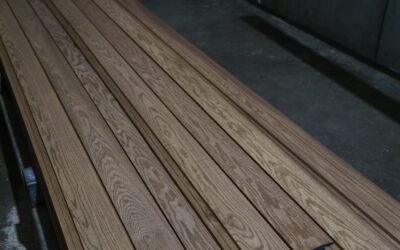
The first thing to understand is that Karndean sits in the “luxury” category for tangible reasons, not just marketing. The photographic layer that gives each plank its grain or veining is unusually detailed, and the surface embossing is often registered to the print, meaning the texture you feel lines up with the knots and grain you see. Run your hand across a Karndean oak plank and it dips where a real knot would sit. Cheaper LVP prints the same repeating pattern with generic embossing, and your eye catches the repetition within a few square feet.
Karndean also leans heavily on glue-down and loose-lay construction rather than the floating click systems that dominate the mass market. A fully bonded floor sits dead-flat, feels solid underfoot with no hollow click, and handles large open-plan spaces without the expansion gaps a floating floor demands. For designers who want herringbone layouts, borders, or mixed-plank patterns, this bonded approach is a real advantage because individual pieces can be arranged freely.
The trade-off is that installation is more involved. Glue-down demands a very smooth, dry, level subfloor, and that prep work is where a lot of the cost and labor hides. This is not a weekend job for most people, and I’ll come back to that when we talk installation.
The Main Karndean Ranges Explained
Karndean organizes its products into collections, and knowing them helps you shop intelligently. The Van Gogh range is a popular glue-down wood-look line with a broad palette of oak, walnut, and painted-timber designs at a mid-premium price. Da Vinci sits above it, offering thinner, more refined planks and tiles with the finest detailing, often chosen for high-end residential and commercial fit-outs where design borders and feature strips matter.
The Knight Tile range is Karndean’s entry point, still glue-down but at a friendlier price, making it the one I recommend when a client loves the brand but has a tighter budget. On the click-together side, Korlok is the rigid-core, looselay-plus-locking hybrid that installs faster and floats over many subfloors, which suits renovators who can’t fully prep a slab. The LooseLay range uses a friction-grip backing that holds the plank in place with minimal or perimeter adhesive, a genuinely clever system for spaces where you may want to lift and access the floor later.
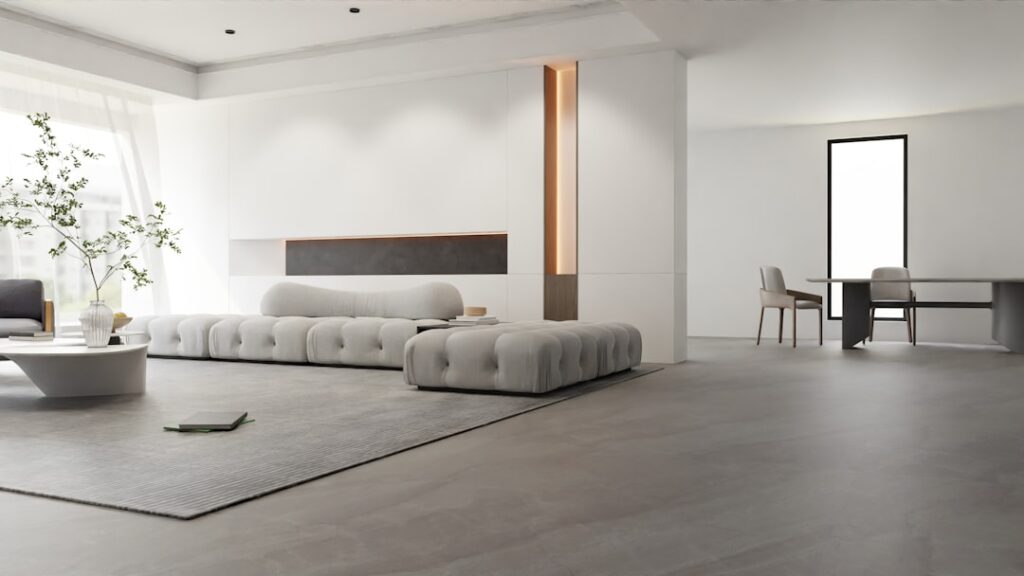
There are stone and slate looks too, with realistic grout-line options for a tiled aesthetic without the cold, hard reality of ceramic. When you request samples, I always tell people to order more than they think they need. Karndean’s designs shift noticeably under different lighting, and a plank that looks warm in the showroom can read gray in a north-facing room.
Wear Layers, Thickness, and Durability
The wear layer is the clear protective film on top of the plank, and it’s the single most important spec for durability. Karndean residential ranges typically carry a wear layer around 0.3mm (12 mil), while heavier-duty and commercial-grade options climb to 0.55mm (roughly 20 mil) or more. For a normal family home, the 0.3mm layer holds up beautifully for many years. If you’re flooring a busy entryway, a home office with rolling chairs, or a small retail space, spend up for the thicker wear layer.
Overall plank thickness generally runs from about 2mm on glue-down ranges to 4.5mm or more on the rigid Korlok boards. Thickness affects underfoot feel and how forgiving the product is over minor subfloor imperfections, but do not confuse total thickness with wear layer. A thick plank with a thin wear layer will still scuff early. I’ve seen homeowners fixate on the millimeters of the whole board and ignore the number that actually protects the print.
In real-world use, Karndean resists scratches, dents, and moisture better than most engineered wood and laminate. The surface is waterproof, so spills and pet accidents wipe up without swelling or cupping. It is not indestructible; dragging unprotected furniture or dropping a cast-iron pan can leave a mark, but for everyday living it earns its keep.
Click vs Glue-Down vs Loose-Lay
This is the decision that trips up the most buyers. Glue-down Karndean, like Van Gogh and Knight Tile, bonds fully to the subfloor with a troweled adhesive. It gives the flattest, most permanent, most premium-feeling result and handles large areas and underfloor heating well. But it demands excellent subfloor prep and is the hardest to remove later.
The Korlok rigid-core range clicks together and floats, so it tolerates slightly less-than-perfect subfloors and installs far faster. If you’re a confident DIYer or working over an existing hard floor, this is the most approachable route into the brand. LooseLay sits in the middle: heavy, dimensionally stable planks held by a grippy backing, often with just a perimeter of tackifier adhesive. It’s my go-to when access to under-floor services matters or when a room may be reconfigured down the road.
My general advice: choose glue-down for the ultimate finish in a forever home where prep can be done properly, Korlok for speed and DIY-friendliness, and LooseLay for flexibility and easy future repairs. All three deliver the Karndean look; they simply differ in effort, permanence, and how much subfloor perfection they require.
Warranties and What They Actually Cover
Karndean backs its residential ranges with lengthy warranties, commonly in the 20-year to lifetime range for domestic wear-through and manufacturing defects, with shorter terms for light-commercial use. On paper that’s reassuring, but read the conditions. Warranties cover the product failing under normal use, not damage from improper installation, standing water from a burst pipe, or dragging furniture across the surface.
Crucially, most warranties require installation by the manufacturer’s recommended methods, using approved adhesives and correct subfloor preparation. This is a big reason I steer clients toward professional installation for the glue-down ranges. A DIY floor laid over a damp or uneven slab can void the warranty and, worse, fail within a couple of years regardless of paperwork.
Keep your receipts, note the batch numbers, and hang on to a few spare planks from your installation. If a board is ever damaged, a bonded plank can be individually cut out and replaced, and having matched spares from the same production run makes that repair invisible. That repairability is one of the quiet advantages of a bonded Karndean floor over a floating laminate.
Real Costs: Material and Installation
Let’s talk money, because “luxury” has a price. As a rough, evergreen guide, Karndean material typically lands in the range of roughly $4 to $8 per square foot for the plank itself, with the entry Knight Tile range at the lower end and the premium Da Vinci and rigid Korlok ranges toward the top. Feature designs, borders, and specialty tiles push higher.
Installation is where budgets stretch. Professional glue-down installation, including adhesive and basic prep, commonly adds $3 to $6 per square foot, and if your subfloor needs leveling compound, moisture mitigation, or old-floor removal, that number climbs further. It’s not unusual for a fully installed Karndean glue-down floor to total $8 to $14 per square foot once everything is accounted for. Floating Korlok can be cheaper to install because prep is lighter and DIY is realistic.
When I quote a job, I always price the subfloor prep as its own line item so clients understand where their money goes. A beautiful plank laid over a bad subfloor is a failure waiting to happen, and the prep is not the place to cut corners. Get at least a couple of quotes, confirm the installer knows Karndean’s methods and adhesives, and don’t be shy about asking to see photos of their previous glue-down work.
Installation and Subfloor Prep Basics
Whichever range you choose, the subfloor makes or breaks the result. It must be clean, dry, structurally sound, and flat, generally within about 3mm over a 2-meter span for glue-down work. On concrete, that means checking moisture levels and often applying a smoothing compound. On timber, it means securing any movement and usually overboarding with a suitable ply or leveling board so the plank has a stable, uniform base.
Karndean, like all vinyl, needs to acclimate to the room’s temperature before installation, so let the boxes sit flat in the space for a day or so. With glue-down, the adhesive open time matters: trowel the correct amount, wait for the tackifier to reach the right stage, then lay firmly and roll the floor to ensure full bond. Rushing the adhesive stage is the most common installer mistake I see, and it leads to lifting edges months later.
For DIYers, the Korlok click range is the realistic starting point. Even then, invest time in getting the base right, plan your plank layout to avoid narrow slivers at the walls, and leave the recommended expansion gap around the perimeter of a floating installation. Do the boring prep well and a Karndean floor will look sharp and stay put for decades, which is exactly why the brand keeps its reputation among the pros who install it.
Prefer to explore on your own?
See how new flooring looks in your actual room in seconds — free, no signup.
Try the free Floor Studio →