
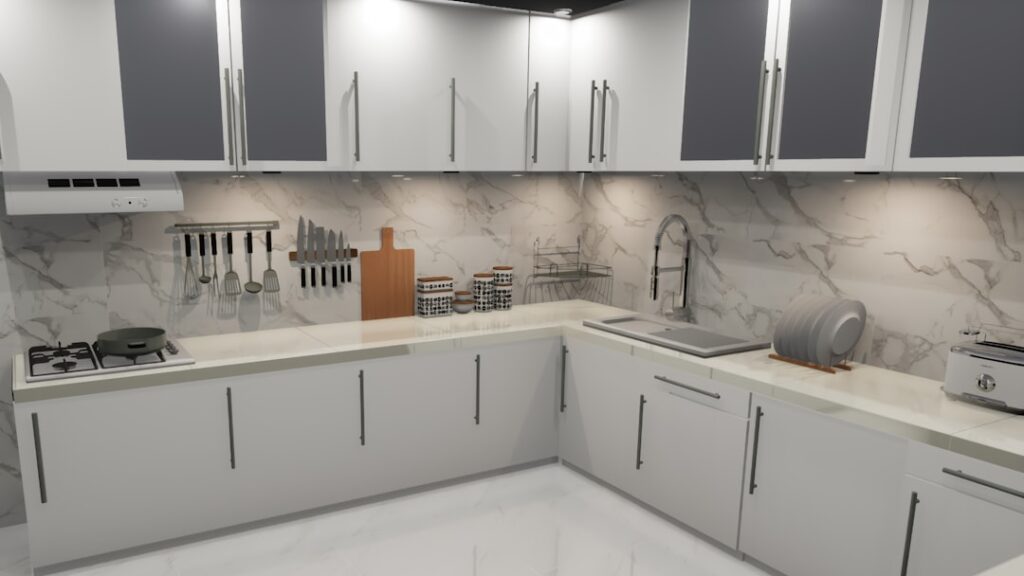
Strip away the mysticism and feng shui is mostly common-sense kitchen design principles dressed up in 3,000-year-old language. Practitioners avoid putting the stove with its back to a doorway because cooks instinctively dislike feeling exposed while working with knives and flame — that is functional, not magical. Applied thoughtfully, kitchen feng shui produces a calmer, safer, more usable kitchen, which is exactly what every homeowner wants regardless of belief system. Here is how the principles translate into practical layout and decor decisions.
The Five Elements and the Kitchen
Feng shui organizes kitchen energy around five elements: wood, fire, earth, metal, and water. The kitchen is the only room that contains all five — fire from the stove, water from the sink, wood from cabinets, metal from appliances, and earth from tile or stone. The goal is balance, not maximizing any single element.
When one element dominates — say, a kitchen with stainless steel appliances, stainless backsplash, stainless range hood, and stainless cabinet pulls — the room feels cold and visually fatiguing. Mixing in warm wood tones or a few earth-tone accents creates the balance that pleases the eye and (in feng shui terms) the energy.
The Stove and Sink Relationship
The single most-discussed feng shui rule is the stove-sink relationship. Fire (stove) and water (sink) are opposing elements. Placing them directly facing each other across a narrow aisle or directly side by side is considered conflicting energy.
The practical reality: a stove and sink less than 24 inches apart is a workflow problem. You constantly turn your body 180 degrees between prep and cook stations. Separating them by at least 36 to 48 inches — with prep counter between — improves both feng shui balance and actual cooking efficiency.
The Commanding Position for the Stove
The “commanding position” is feng shui’s term for placing the most important station in the kitchen — the stove — so the cook can see the main entrance without turning. Standing at the stove with your back to a doorway creates subconscious unease that practitioners attribute to vulnerable energy.
If you cannot physically move the stove, mount a small mirror or reflective backsplash behind it. The cook can see anyone approaching from behind. This is the same principle as the convex mirrors in restaurant kitchens — pure function dressed up in symbolic language.
Color Guidance That Actually Holds Up
Feng shui suggests warm earth tones and balanced color palettes for kitchens. Modern color theory agrees:
- Cream, beige, and warm white — neutral base that complements food presentation
- Soft yellow — stimulates appetite, brightens north-facing kitchens
- Sage green or terracotta — earthy accent colors that pair with most cabinet finishes
- Wood tones in oak, walnut, or maple — add warmth without dominating
Colors to use sparingly: pure black (absorbs too much light), bright red (over-stimulates), and harsh blue (visually cooling in a room that should feel warm). Use these as small accents — a fruit bowl, a backsplash detail, a single wall — not as dominant surfaces.
Clutter and the Energy Flow
Every feng shui consultant will tell you the same thing on the first visit: clear the counters. Cluttered surfaces block what practitioners call qi flow and what designers call sight lines. Either way, the result is the same — a kitchen that feels smaller, less inviting, and harder to clean.
Keep counter items to under 10 visible objects at any time. Store appliances you do not use weekly in cabinets or a pantry. The visual rest a decluttered counter provides is one of the highest-impact, zero-dollar kitchen improvements you can make.
Lighting Layers and Ventilation
Feng shui considers good lighting and air flow non-negotiable for healthy kitchen energy. Three lighting layers work together:
- Ambient — overhead fixtures or recessed lights for general illumination
- Task — under-cabinet LED strips lighting countertops
- Accent — pendants over an island, small lamps on open shelving
Run the range hood at every meal, not just when something is burning. A kitchen with stale cooking-oil residue in the air carries that smell into adjacent rooms for days and is considered stagnant energy in feng shui terms — and unhealthy in modern indoor-air-quality terms. Same conclusion, different vocabulary.
The Refrigerator and Pantry
An always-full refrigerator and pantry symbolize abundance in feng shui. A kitchen with bare shelves and a sparsely stocked fridge can feel anxiety-inducing even subconsciously. The practical version: keep a reserve of dry goods, canned staples, and a few favorite snacks visible.
The opposite extreme matters too. An overstuffed fridge with expired food at the back is considered stuck or stagnant energy. Practitioners recommend a monthly purge of anything past expiration. Modern food-safety advice says the same thing — purge often, keep it stocked but not crammed.
Small Symbolic Touches
A few decorative additions are traditional in feng shui kitchens and harmless even if you treat them as pure aesthetics:
- A bowl of fresh fruit (red apples, oranges, or lemons) — abundance and warmth
- A small plant — pothos, herbs, or a small ficus add the wood element
- A round wood cutting board displayed on the counter — softens hard rectangular cabinet lines
- A wooden bowl of garlic, onions, or shallots — earth element plus daily-use convenience
Skip artificial fruit. Practitioners and designers agree that plastic produce reads as stagnant rather than abundant.
What to Skip From Feng Shui Internet Advice
Online feng shui guidance has run wild. A few rules genuinely worth ignoring: trinket-heavy “lucky” objects with no design relationship to the kitchen, expensive crystal cluster purchases marketed as energy correctors, and bagua-grid analyses that demand structural changes for minor improvements. Apply the principles that align with sound design — commanding position, balanced elements, decluttered counters, layered lighting — and skip the rest.
The kitchen feng shui that produces results is the kind that makes the room work better. Cleaner sight lines, safer stove positioning, warmer color balance, decluttered surfaces. Whether you call that energy flow or smart design, the kitchen is more pleasant to cook in either way.


