
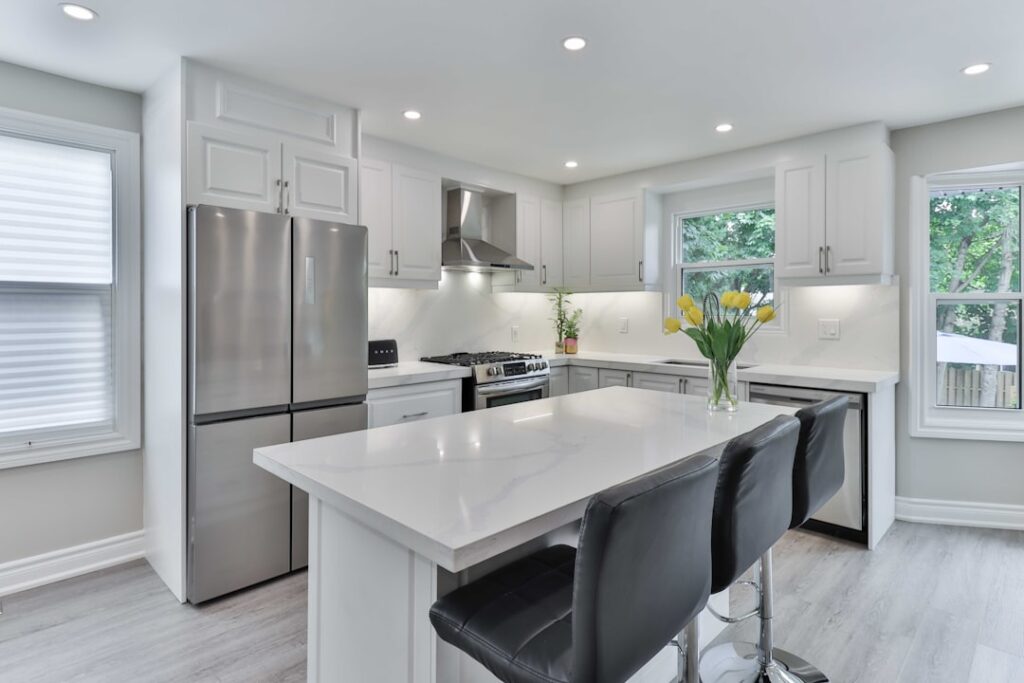
Open kitchen shelving is the single most impactful design change you can make for under $500. Swap two upper cabinets for a pair of 48-inch floating walnut shelves and the room opens up, the ceiling feels taller, and your daily dishes finally have a home that looks intentional. These kitchen shelves ideas cover materials, bracket options, styling rules, and realistic costs so you can plan a refresh that actually works day to day, not just for the Instagram photo.
Why Open Shelving Works in Real Kitchens
Open shelving became trendy around 2015 and never left, for a few practical reasons. It is roughly 60 percent cheaper than custom cabinets, it forces you to declutter, and it makes a small kitchen feel larger by eliminating the heavy visual box of upper cabinetry. The tradeoff is that everything on the shelf is visible, so you need to own dishes you actually want to display.
If your current uppers store mismatched plastic containers, ceramic mugs from every conference since 2012, and that waffle maker you use twice a year, open shelving is not automatically a better solution. Plan for hidden lower cabinet or pantry storage for the ugly stuff.
Floating Shelves vs Bracketed Shelves
Floating shelves hide their hardware inside the shelf itself, creating a clean horizontal line with no visible supports. They are the premium look, but they have strict weight limits, typically 35 to 50 pounds per linear foot depending on wall framing and bracket design.
Bracketed shelves use visible metal or wood brackets and carry 80 to 150 pounds per linear foot easily. The bracket itself becomes a design element, which is why cast iron pipe brackets, matte black flat steel, and oak corbels are all popular in 2025. Expect to pay $25 to $80 per pair for quality brackets from Rockler or Semihandmade.
Best Wood Species for Kitchen Shelves
Wood is the most common kitchen shelf material because it adds warmth to hard surfaces like stone and tile. Picking the right species matters because kitchens cycle through humidity changes daily.
- White oak: stable, open grain, neutral tone. $18 to $25 per sq ft.
- Walnut: rich brown, premium look, softens over time. $28 to $45 per sq ft.
- Maple: light and smooth, tight grain. $12 to $18 per sq ft.
- Reclaimed pine or barn wood: character-heavy, $15 to $35 per sq ft.
- Ash: underrated, similar grain to oak at lower cost. $14 to $20 per sq ft.
Finish kitchen shelves with a food-safe hardwax oil like Rubio Monocoat or Odie’s Oil. These soak into the grain and resist water rings better than polyurethane, which can peel near steamy cooktops.
Metal and Glass Shelving Options
Not every kitchen needs wood. Stainless steel floating shelves bring a commercial kitchen look that works beautifully in industrial lofts and mid-century modern homes. Expect $80 to $200 per linear foot for commercial-grade 16-gauge stainless.
Glass shelves on brushed nickel brackets are making a comeback in the bar and butler pantry areas where you want a bartender-style display for glassware. Go with 3/8-inch tempered glass at minimum, around $40 per linear foot, and space brackets no more than 24 inches apart to prevent bowing.
Shelf Depth, Length, and Spacing
Standard kitchen shelf depth is 10 to 12 inches, enough to hold dinner plates without the edges overhanging awkwardly. Shallower 8-inch shelves work for coffee mug walls and spice displays. Anything over 14 inches starts eating into the workspace and can violate the 15-inch minimum clearance over base cabinets that feels comfortable when you are chopping onions below.
Space shelves 14 to 16 inches apart vertically for plates and bowls, and 10 to 12 inches for glasses and mugs. The lowest shelf should sit 18 inches above the countertop so small appliances still fit underneath without being cramped.
Styling Rules That Prevent Clutter
The single biggest mistake with open shelving is over-styling. Aim for 40 percent empty space on each shelf. Stack three to five of the same plate in a neat pile, line up six to eight matching mugs, add one piece of natural texture like a wooden cutting board leaning at the back, and stop there.
Pick a three-color palette and stick to it. White dishes, warm wood tones, and one accent color like sage green or rust works in almost any kitchen. The grouping of odd numbers, mix of heights, and breathing room between objects is what separates designer shelves from cluttered ones.
Installation: What It Takes to Do Right
A single 48-inch floating shelf install takes about 90 minutes for an experienced DIYer. The sequence is straightforward: find studs with a stud finder, mark and drill 1/2-inch holes for the threaded rod brackets, anchor brackets into at least two studs with 3-inch lag screws, level the rods, and slide the hollow shelf over them.
If your wall framing uses steel studs or you can only catch one stud, add toggle bolts rated for 50 pounds each in the other locations. Never rely on drywall anchors alone for shelves that will carry dish weight. A 36-inch shelf loaded with plates and mugs can easily hit 40 pounds, and a drywall-anchor-only shelf will fail within weeks.
Budgets for Different Shelf Projects
Matching your budget to the right project keeps expectations realistic. A two-shelf floating installation over a sink, 48 inches wide in white oak, costs roughly $275 for materials plus $200 to $350 for a handyman to install. A full wall of bracketed shelves replacing uppers runs $800 to $2,000 depending on wood species and bracket grade.
At the high end, a custom-built shelf wall with integrated LED under-shelf lighting, live-edge walnut, and hidden bracket hardware can easily exceed $5,000 installed, but the look rivals a $40,000 cabinet package. That is the real appeal of open shelving, it delivers high-end kitchen design at a fraction of the traditional cost.


