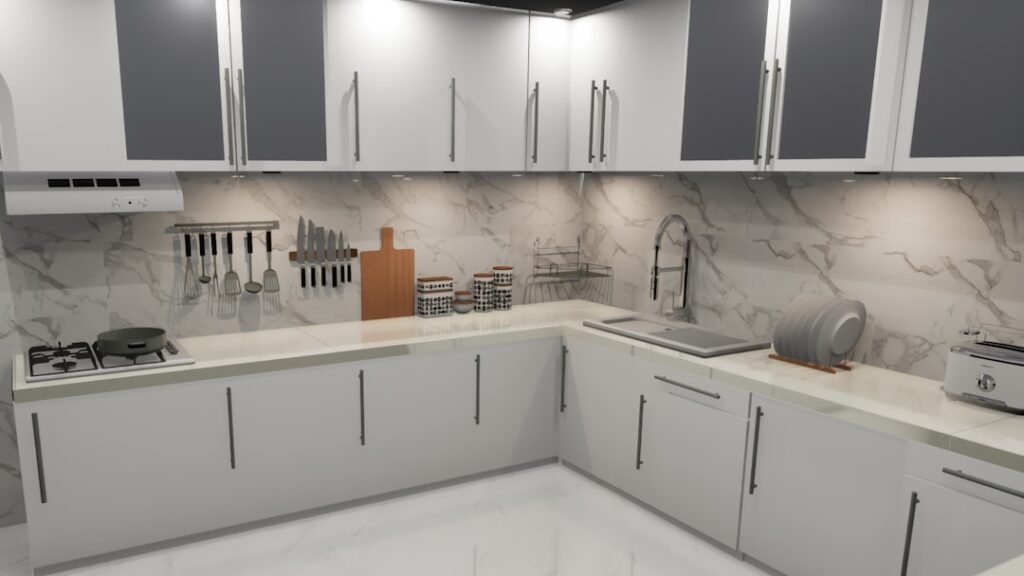
The cabinet under the kitchen sink is the most chaotic 9 cubic feet of square footage in most American homes. Smart kitchen sink organization ideas work around three constraints: the P-trap and supply lines that eat the center of the cabinet, the garbage disposal that takes a corner, and the constant water exposure that ruins anything not rated for humidity. The systems below come from professional kitchen organizers and have been tested in real households, not staged for photo shoots.
- Map the Cabinet Before You Buy Anything
- Two-Tier Pull-Out Drawers
- Door-Mounted Storage Tracks
- Sink Caddy Solutions for Above the Counter
- Trash and Recycling Pull-Outs
- Under-Sink Mat to Catch Leaks
- Vertical Bottle Storage
- Lazy Susan and Turntable Options
- Maintenance Habits That Keep It Organized
- Hidden Pest Prevention
Map the Cabinet Before You Buy Anything
Measure your under-sink cabinet in three dimensions: floor width, depth from front to back wall, and clear vertical space from the floor to the bottom of the sink basin. Note where the P-trap drops, where the supply valves stick out, and the depth of the disposal. A typical 36-inch base cabinet has about 32 inches of clear width, 21 inches of depth, but only 12 to 16 inches of vertical clearance under the basin.
Sketch the layout on graph paper. The single most common mistake is buying a tall pull-out organizer that does not clear the P-trap and ends up returned to Target.
Two-Tier Pull-Out Drawers
Sliding drawers are the highest-value upgrade for under-sink organization. The Rev-A-Shelf 5WB2 Series ($89 to $179 depending on width) installs on full-extension ball bearing slides and gives full access to the back of the cabinet without crouching and reaching. The drawers are notched to clear the P-trap.
For a budget version, the SimpleHouseware Stackable Sliding Basket Drawer ($24 on Amazon) sits on the cabinet floor and pulls out without any installation. Each drawer holds about 12 pounds of cleaning supplies.
Door-Mounted Storage Tracks
Mount organizers to the inside of cabinet doors and you reclaim the dead space between the door and the cabinet contents. The IKEA VARIERA dishwashing brush holder ($4.99) stores sponges and brushes vertically with adhesive backing. The Real Solutions for Real Life Wire Door Bin ($18) holds dish soap, hand soap, and a small bottle of cleaner.
Check door clearance before installing. Some organizers stick out 3 to 4 inches, which can conflict with shelves or drawers when the door closes. Hold the empty organizer in place and shut the door before drilling.
Sink Caddy Solutions for Above the Counter
Countertop sink caddies organize the daily-use items that should stay near the basin. The simplehuman Sink Caddy ($24.99) holds a sponge, a brush, and dish soap in stainless steel with a removable drying tray. The OXO Good Grips Sinkware Caddy ($18.99) clips to the sink divider and drains directly into the basin.
For double-basin sinks, an over-the-sink dish drying rack like the GoodCook Drying Rack ($35) bridges both basins and folds up when not needed. Stainless steel resists rust better than coated steel near constant water exposure.
Trash and Recycling Pull-Outs
A dedicated trash pull-out frees up valuable floor space and hides the garbage can from view. The Rev-A-Shelf 53WC-1835SCDM (single bin, $169) or 53WC-2150-DM2 (dual bin for trash and recycling, $329) install in any cabinet 18 to 21 inches wide. Both feature soft-close slides.
For renters, the simplehuman in-cabinet trash can ($79.99) hooks onto a cabinet door and pulls out when the door opens. No installation hardware required. The 35-liter capacity matches most standard kitchen trash bag sizes.
Under-Sink Mat to Catch Leaks
A drip mat under the cabinet floor saves your subfloor from inevitable leaks. The Xtreme Mats Under Sink Cabinet Mat ($34.99 on Amazon) is a custom-cut PVC mat with raised edges that contains up to 3.5 gallons of leak before overflowing. The mat is sized for standard 33-inch and 36-inch cabinets.
For DIY versions, a cut-to-fit sheet of self-adhesive vinyl flooring from Home Depot ($1.69 per square foot) provides a waterproof layer but lacks the raised edges. Smart water leak detectors like the YoLink Water Leak Sensor ($29 each) send phone alerts when moisture hits the floor.
Vertical Bottle Storage
Cleaning supply bottles are inefficient when stored upright on a flat shelf because they waste vertical space and tip over. A tension rod (Command Tension Rod, $12) installed sideways across the cabinet creates a hanging system for spray bottles. The trigger handles hook over the rod, leaving the bottle bodies hanging below.
This single trick frees up about 60 percent of the cabinet floor space and makes every bottle visible at a glance. Three or four spray bottles fit per linear foot of rod.
Lazy Susan and Turntable Options
For deep cabinets where you cannot see what is in the back, a turntable solves the problem. The OXO Good Grips 16-Inch Turntable ($19.99) handles cleaning supply bottles up to 12 inches tall. For two-tier needs, the YouCopia StoraStand 2-Tier Turntable ($32) doubles capacity in the same floor footprint.
Turntables work best in corners and along the back wall where straight-line access is impossible. Avoid them in cabinets with P-trap conflicts because the round footprint clashes with the angular pipe geometry.
Maintenance Habits That Keep It Organized
The best organization system fails without routine. Every three months, pull everything out, wipe down the cabinet floor with a Mr. Clean Multi-Purpose spray, check the supply lines for slow drips (a paper towel taped at the connection reveals seepage), and toss expired cleaning products.
Keep a labeled bin for products you use weekly (dish soap, dishwasher pods, spray cleaner) separate from products you use monthly or less (oven cleaner, stainless steel polish). The 80/20 rule applies; 80 percent of your sink cabinet use comes from 20 percent of the products. Keep those at the front and shift everything else to the back.
Hidden Pest Prevention
Under-sink cabinets are the second most common pest entry point in a home (after the garage). Roaches, ants, and silverfish enter through the gap where supply lines penetrate the cabinet wall. Seal those openings with GE Silicone II or expanding foam in a can like Great Stuff Pestblock ($6.97 at Home Depot). The foam blocks the gap permanently and adds modest insulation value.
Place sticky monitor traps from Catchmaster ($8 for 12 traps) in two corners of the cabinet for the first month after organizing. Any captured pests indicate an entry point that still needs sealing. Empty bait stations or boric acid powder along the cabinet back wall handles ongoing prevention without exposing food prep areas to chemicals.