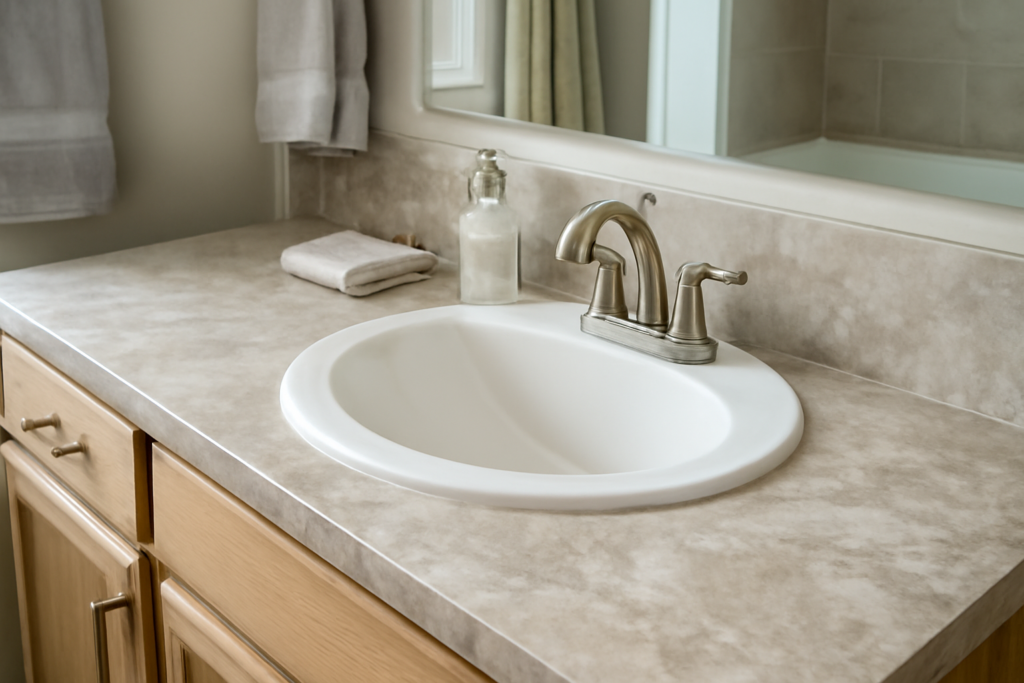
Laminate bathroom countertops remain one of the most practical surfaces you can install above a vanity, and modern manufacturing has erased much of the dated reputation the material once carried. Today’s laminate bathroom countertops mimic marble veining, soft concrete, and convincing woodgrain at a fraction of the price of stone. If you want a clean, low-maintenance vanity surface without spending a small fortune, laminate deserves a serious look before you commit to quartz or granite.
What Laminate Countertops Actually Are
Laminate is a layered product. A printed decorative paper sits beneath a clear melamine wear layer, all of it bonded to a kraft-paper core under heat and pressure. That finished sheet gets glued to a substrate, almost always particleboard or MDF, which gives the counter its thickness and rigidity. The brand names you have probably heard, such as Formica and Wilsonart, refer to this high-pressure laminate, often shortened to HPL.
Because the visible surface is a printed image protected by a tough resin coat, designers have enormous freedom. You can find finishes that read as honed Carrara, brushed steel, or rift-sawn oak. Edge treatments range from a simple square profile to wrapped or beveled edges that hide the brown core seam most people associate with cheaper jobs.
Why Laminate Works in a Bathroom
Bathrooms ask a lot of a countertop. The surface faces splashing water, toothpaste, cosmetics, hairspray, and the occasional curling iron. Laminate handles daily moisture well because the melamine wear layer is non-porous and wipes clean with a damp cloth. Unlike natural stone, it never needs sealing, so there is no annual maintenance ritual to remember.
The bigger advantage is cost. A vanity top is small compared to a kitchen run, which means laminate’s affordability stretches even further. You can outfit a standard 37-inch or 49-inch vanity for a modest sum and redirect your budget toward a better faucet, tile, or lighting.
Cost Expectations
Prices vary by region, brand, and edge style, but the ranges below give you a realistic planning estimate rather than a quote.
- Material only: roughly $10 to $30 per square foot for the laminate sheet and substrate.
- Prefabricated vanity tops: a complete laminate top with integrated or drop-in sink cutout often runs $100 to $300 depending on size and finish.
- Professional installation: figure an added $15 to $40 per square foot, with small bathroom jobs sometimes carrying a flat minimum.
Compare that to quartz or granite, which commonly start around $50 to $100 per square foot installed, and the savings on a vanity-sized surface become obvious.
Durability and Its Honest Limits
Laminate is tougher than its reputation suggests, but it is not indestructible, and knowing its weak points helps you keep it looking new. The wear layer resists scratches from everyday use, yet a sharp blade or abrasive scrub pad can mar it permanently. Heat is the real enemy. A hot styling tool laid directly on the surface can scorch or blister the finish, so always rest curling irons and flat irons on a heat-safe mat.
The most common failure point is not the laminate itself but the particleboard substrate underneath. If water seeps into an unsealed seam or around the sink cutout, the core can swell and the laminate can lift. This is why edge sealing and a properly caulked sink are not optional details.
Managing Water and Seams
Protecting the substrate is the single most important thing you can do for longevity. Apply a continuous bead of quality silicone caulk where the countertop meets the backsplash and around the entire sink rim. Inspect that caulk once or twice a year and refresh it the moment you see a gap or discoloration.
- Wipe standing water around the faucet base rather than letting it pool.
- Choose a top with a post-formed or wrapped front edge, which has no exposed seam to admit moisture.
- If you cut your own top, seal every raw edge of the substrate before installation.
Handled this way, a laminate vanity top routinely lasts ten to twenty years.
Installation: DIY or Hire Out
A prefabricated laminate vanity top is one of the friendlier projects for a confident do-it-yourselfer. Many tops drop onto the vanity cabinet, get leveled with shims, and are secured from below with a few screws or construction adhesive. You then set the sink, connect the plumbing, and caulk.
Custom work is harder. Trimming a sheet, applying it with contact cement, and routing a clean edge takes the right tools and a steady hand, because contact cement bonds instantly with no room to reposition. If your layout involves tricky angles or a long run, the modest cost of professional installation is usually money well spent.
Before you order, take careful measurements of the cabinet’s depth and length, and decide whether you want an integrated backsplash, a drop-in sink, or an undermount basin. Undermount sinks are harder to pair with laminate because the exposed substrate edge at the cutout must be perfectly sealed against water, so many homeowners stick with self-rimming drop-in sinks on laminate tops. Dry-fit everything before you commit adhesive or set the plumbing.
How Laminate Compares to Other Vanity Tops
It helps to see where laminate lands against the alternatives. Cultured marble and solid-surface tops cost more but offer seamless integrated sinks. Quartz and granite bring premium durability, heat resistance, and resale appeal at the highest price. Tile is affordable but its grout lines collect grime in a bathroom. Laminate occupies the value sweet spot: it beats tile on cleanability, undercuts stone dramatically on price, and offers a far wider range of looks than most budget options. The trade-off is its vulnerability to heat and water at the seams, which good habits largely neutralize.
Choosing a Finish That Lasts Visually
Matte and low-gloss finishes hide water spots, fingerprints, and fine surface wear far better than high-gloss options, which is why they suit a busy bathroom. Lighter patterns with subtle veining disguise toothpaste flecks and soap residue between cleanings, while very dark solid colors show every smudge. If you are tiling a backsplash separately, pick the laminate first so you can match grout and tile to its undertone rather than the reverse.
Is Laminate Right for Your Bathroom?
Laminate bathroom countertops make the most sense in guest baths, kids’ bathrooms, rental units, and any space where you want a fresh, attractive surface without stone pricing. If your bathroom doubles as a styling station with frequent heat tools, or you simply want the prestige and resale appeal of natural stone, you may eventually prefer quartz. For most homeowners weighing budget against everyday performance, however, laminate delivers a genuinely good-looking, easy-care surface that punches well above its price. Treat the seams and substrate with respect, keep heat off the finish, and your vanity will reward you for years.