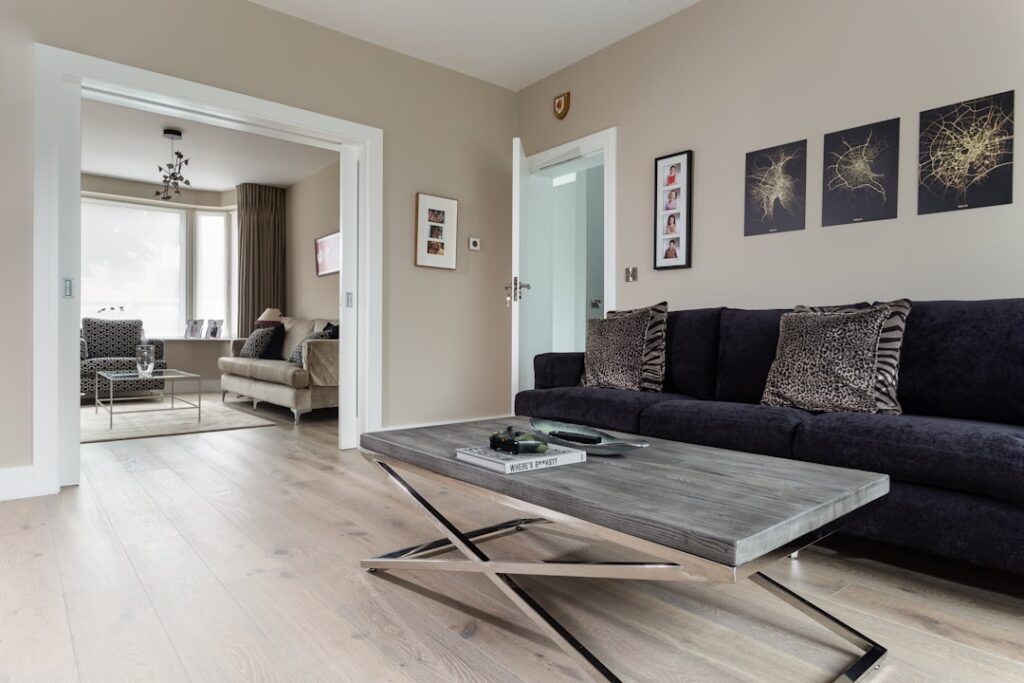
After twenty-odd years of installing and maintaining floors, I can tell you that a good laminate floor cleaner and shine routine is less about buying a miracle bottle and more about picking the right product and using very little of it. Laminate looks like wood, but it behaves nothing like it. The wear layer is a printed melamine surface sealed under aluminum oxide, and that surface hates standing water, waxes, and oily polishes. Get the product wrong and you trade a dull floor for a cloudy, streaky one that traps every footprint.
- Why Laminate Loses Its Shine in the First Place
- Best Types of Laminate Floor Cleaner and Shine Products
- Products to Avoid on Laminate
- The Right Way to Clean and Shine Laminate
- How to Fix a Hazy or Cloudy Laminate Floor
- When to Use a Shine Restorer
- Cost and Product Comparison at a Glance
- Frequently Asked Questions
This guide walks through the products that actually work, the ones to avoid, and the exact technique that leaves laminate with a clean, even, low-luster glow instead of a fake plastic gleam.
Why Laminate Loses Its Shine in the First Place
Laminate doesn’t fade the way hardwood does. What you’re seeing when a floor goes dull is almost always a thin film sitting on top of the wear layer. That film comes from three common sources: soap residue from mopping with too much dish soap or all-purpose cleaner, mineral deposits from hard tap water drying on the surface, and old “mop-and-shine” polishes that build up in layers.
The frustrating part is that people react to a dull floor by adding more product, which makes the film thicker. I’ve stripped floors for clients who swore their laminate was worn out when it was really just wearing eight coats of acrylic polish. Once you understand that shine on laminate is about a clean, residue-free surface reflecting light evenly, the whole cleaning approach changes.
Best Types of Laminate Floor Cleaner and Shine Products
You have four practical categories to choose from. Each has a place depending on how dirty and how dull the floor is.
- pH-neutral ready-to-use sprays — Bona Hard-Surface Floor Cleaner and Black Diamond Wood & Laminate run about $6 to $15 a bottle. These are your everyday workhorses. They clean without leaving residue and dry streak-free.
- Concentrated laminate cleaners — Zep Hardwood & Laminate concentrate costs around $8 and makes gallons. Cheaper per use, but you must measure carefully because over-dosing is what creates haze.
- Restorer/shine products — Rejuvenate and Quick Shine are $10 to $20 and lay down a thin polymer coat that fills micro-scratches and boosts gloss. Use these sparingly and only on genuinely worn floors.
- DIY vinegar solution — a splash of white vinegar in a gallon of warm water is nearly free. It cuts residue well but offers no shine boost and can dull the finish if used too strong or too often.
For most homes, a quality pH-neutral spray is the right call ninety percent of the time. Reach for a restorer only once or twice a year when the floor genuinely looks tired.
Products to Avoid on Laminate
Some cleaners will actively damage laminate or guarantee a hazy finish. Keep these off your floor:
- Oil soaps like Murphy Oil Soap. They’re made for real wood and leave a greasy film on laminate that attracts dirt.
- Wax and acrylic polishes not labeled for laminate. They build up, yellow, and are miserable to remove.
- Steam mops. I don’t care what the box says. Heat and forced moisture drive water into the seams and swell the fiberboard core. That damage is permanent and voids most warranties.
- Abrasive powders and bleach. They scratch and discolor the wear layer.
- Straight ammonia. Too harsh, and it can etch the finish over time.
The Right Way to Clean and Shine Laminate
Technique matters more than the product. Here’s the routine I give every client, and it produces a clean, even shine every time.
- Dry-clean first. Vacuum with the beater bar off, or use a microfiber dust mop. Grit is the enemy; dragging it around under a wet mop is how you get fine scratches that scatter light and kill shine.
- Spray, don’t flood. Mist the cleaner directly onto a section of floor or onto your mop pad. The surface should look barely damp and dry within a minute. Puddles are the number-one cause of edge swelling.
- Use a flat microfiber mop. Work in the direction of the planks, overlapping passes. Microfiber lifts residue instead of smearing it.
- Rinse the pad often. A dirty pad redeposits film. I keep two or three pads going and swap them as they load up.
- Buff dry if needed. On stubborn streaks, follow with a dry microfiber cloth. This one step eliminates almost every complaint about cloudiness.
Do this weekly in traffic lanes, every two weeks elsewhere, and your laminate floor cleaner and shine results will stay consistent without any polish at all.
How to Fix a Hazy or Cloudy Laminate Floor
If the floor already looks foggy, you have residue buildup, not damage. Mix one cup of white vinegar into a gallon of warm water and damp-mop the whole floor, changing water when it turns gray. The mild acid dissolves soap and mineral film. Follow immediately with a second pass of clean water on a wrung-out mop, then buff dry. For heavy polish buildup, a dedicated stripper like Quick Shine’s remover ($10) will cut through layers that vinegar can’t touch. Once the floor is truly clean and residue-free, decide whether you even need a shine product. Most floors look great bare.
When to Use a Shine Restorer
A restorer earns its place on laminate that’s five-plus years old with dull traffic lanes and fine surface scratches. Products like Rejuvenate work by leaving a thin, self-leveling polymer that fills those micro-scratches so light reflects evenly again. The rules for success are simple: the floor must be spotless first, you apply a very thin coat with a flat applicator, and you let it cure a full two hours before walking on it. Expect the finish to last two to six months in busy areas before you reapply. Never layer a restorer over a dirty floor, and never build up more than a couple of coats without stripping first.
Cost and Product Comparison at a Glance
Here’s roughly what you’ll spend and what you get:
- Everyday pH-neutral spray: $6–$15, cleans and leaves a natural low sheen. Best all-around value.
- Concentrate: $8–$12, cheapest per gallon, good for big floors, requires careful mixing.
- Shine restorer: $10–$20, adds noticeable gloss and hides scratches, needs reapplication.
- Vinegar DIY: nearly free, great for de-hazing, no shine benefit.
Frequently Asked Questions
Can I make laminate floors shiny without a special polish?
Yes, and it’s usually the better route. A clean, residue-free floor buffed dry with microfiber reflects light on its own. Most dullness is film, not a lack of polish, so cleaning properly often restores the shine you thought you’d lost.
Is vinegar safe on laminate flooring?
Diluted vinegar, about one cup per gallon of water, is safe and excellent for removing residue. Don’t use it full strength and don’t mop with it daily, since repeated acid exposure can slowly dull the finish. Always damp-mop, never soak.
Why does my laminate floor look streaky after mopping?
Streaks come from too much product, hard water, or a dirty mop pad. Switch to a light mist of pH-neutral cleaner, use a fresh microfiber pad, and buff dry. If streaking persists, do a vinegar-water pass to strip the built-up residue underneath.
How often should I use a laminate floor cleaner and shine product?
Clean weekly in high-traffic areas with a neutral spray. Reserve shine restorers for once or twice a year, only when the floor genuinely looks worn. Over-applying shine products is the fastest way to create the cloudy buildup you’re trying to avoid.
Will a steam mop hurt laminate?
Yes. Steam forces moisture and heat into the plank seams, swelling the fiberboard core. That damage is permanent and typically voids the warranty. Stick to a lightly dampened microfiber mop instead.
Prefer to explore on your own?
See how new flooring looks in your actual room in seconds — free, no signup.
Try the free Floor Studio →