Kansas City’s swing from humid summers to dry, cold winters puts real stress on a floor, which makes material choice more than a style decision. Laminate flooring in Kansas City is one of the most popular choices for local homeowners because it handles that climate well, looks like hardwood, and costs a fraction of the real thing. But buying smart in this market means understanding how the regional weather affects installation, what you’ll realistically pay, and how to choose a product and installer without getting burned. This guide covers all of it from a practical, local-aware angle.
- Why Laminate Suits the Kansas City Climate
- Pros of Laminate Flooring
- Cons to Keep in Mind
- What Laminate Costs in the Kansas City Area
- Choosing the Right Laminate
- Where to Shop in Kansas City
- Installation Tips for the Local Climate
- Best Rooms for Laminate in a Kansas City Home
- Maintaining Laminate Through the Seasons
- The Bottom Line
Why Laminate Suits the Kansas City Climate
The metro area sits in a humid continental zone: muggy summers, cold winters, and big seasonal humidity swings. Those swings cause flooring materials to expand and contract, and solid hardwood is particularly sensitive to it, sometimes gapping in winter and cupping in summer. Quality laminate, with its dense fiberboard core and stable wear layer, holds up better to these shifts than solid wood, which is a big reason it’s so common in local homes.
That said, laminate is not waterproof unless specifically rated, and basements, a common feature in Kansas City homes, can introduce moisture. For below-grade spaces, look at water-resistant laminate or consider luxury vinyl as an alternative.
Pros of Laminate Flooring
- Cost: typically far cheaper than hardwood, both in material and installation.
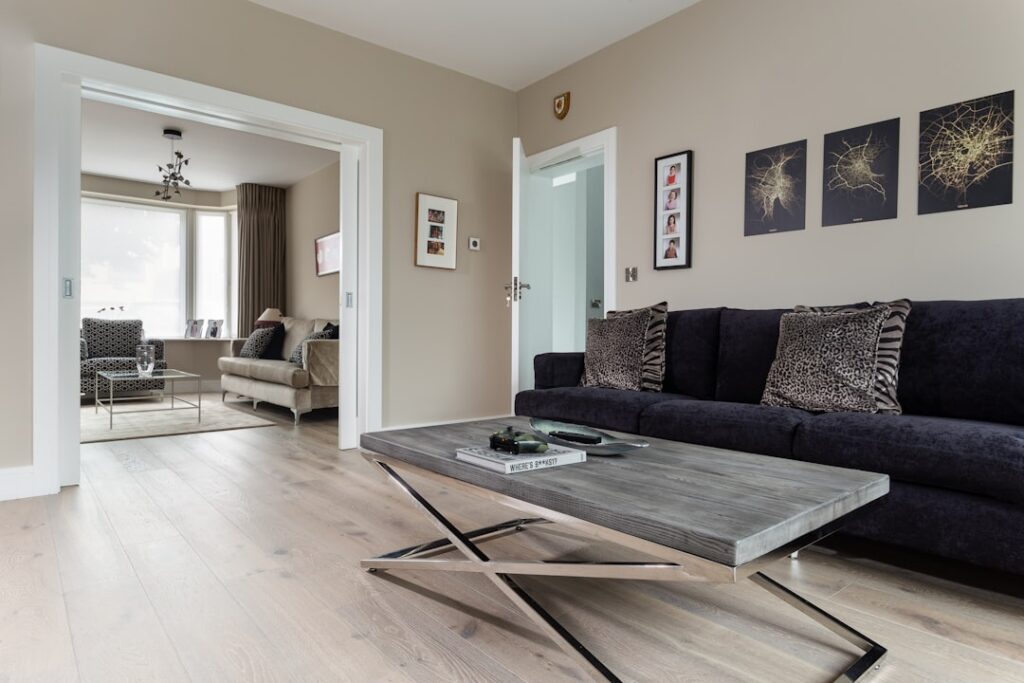
- Appearance: modern laminate convincingly mimics oak, hickory, and other species, with realistic texture.
- Durability: the tough wear layer resists scratches, dents, and fading, which suits busy households with kids and pets.
- Easy installation: click-lock floating floors are DIY-friendly and go down fast over a sound subfloor.
- Low maintenance: sweeping and occasional damp mopping is all it needs.
- Dimensional stability: handles humidity swings better than solid wood.
Cons to Keep in Mind
- Moisture limits: standard laminate can swell if water sits on it or seeps from below, a real concern in basements.
- Can’t be refinished: once the wear layer is damaged, planks must be replaced, not sanded.
- Feel and sound: it can feel harder and sound hollower underfoot than wood unless paired with quality underlayment.
- Resale perception: some buyers still prefer real hardwood, though good laminate has narrowed that gap.
What Laminate Costs in the Kansas City Area
Pricing varies by product grade and installer, but general ranges hold true locally. Laminate materials commonly run about $1 to $5 per square foot, with thicker, higher-AC-rated planks at the upper end. Professional installation typically adds roughly $2 to $5 per square foot depending on subfloor prep, removal of old flooring, and room complexity. For a 500-square-foot space, that often lands somewhere in the low thousands installed. Always get local quotes, since labor rates and current material pricing shift with the market.
Choosing the Right Laminate
Not all laminate is equal. A few specs separate floors that last from floors that disappoint:
- AC rating: this abrasion class measures durability. AC3 suits most residential use; AC4 or AC5 is worth it for high-traffic homes.
- Thickness: 8mm to 12mm planks feel more solid and quieter underfoot than thin budget boards.
- Water resistance: if you’re flooring a kitchen, bathroom adjacency, or basement, choose a water-resistant or waterproof-rated laminate.
- Attached underlayment: some planks include a pad that simplifies installation and improves sound.
- Texture and finish: embossed-in-register textures that follow the grain look far more realistic than smooth prints.
Where to Shop in Kansas City
Local buyers generally have three routes. National home-improvement chains and flooring retailers with metro locations offer convenience, large selections, and installation services. Independent flooring showrooms across the area provide personalized advice and sometimes better access to mid- and high-end lines. And online retailers can offer lower prices if you’re comfortable arranging your own installation. Rather than relying on any single shop’s claims, visit a couple of showrooms to compare products in person and gather multiple installation quotes.
Whichever route you choose, confirm that any installer is licensed and insured, and check reviews across platforms before committing.
Installation Tips for the Local Climate
Because of Kansas City’s humidity swings, a few steps matter more here than elsewhere. Acclimate the laminate in the room for at least 48 hours before installation so the planks adjust to indoor conditions. Leave the proper expansion gap, usually around 1/4 to 3/8 inch, at all walls so the floor can move with the seasons without buckling. Use a moisture barrier over concrete slabs and basement subfloors, and run a dehumidifier in damp seasons to keep indoor humidity in a stable range. These small steps prevent the gapping and buckling that ruin otherwise good installations.
Best Rooms for Laminate in a Kansas City Home
Laminate shines in some rooms and struggles in others, and knowing the difference saves regret. Living rooms, bedrooms, hallways, and home offices are ideal: they see foot traffic but little water, exactly where laminate’s scratch resistance pays off. Kitchens can work with a water-resistant product and prompt spill cleanup. Where you should think harder is anywhere prone to standing water or below-grade moisture. Full bathrooms, laundry rooms, and unconditioned basements are risky for standard laminate; in those spaces, waterproof luxury vinyl is usually the smarter pick for a Kansas City home, especially given how many local houses have finished basements that can take on humidity.
Maintaining Laminate Through the Seasons
Care is simple but seasonal awareness helps in this climate. Sweep or vacuum regularly to keep grit off the wear layer, and clean with a damp, not wet, mop using a laminate-safe product, never a steam mop, which forces moisture into the seams. Wipe spills immediately so water doesn’t seep into the core. In the dry winter months, running a humidifier keeps indoor air from getting so dry that planks contract and gap; in muggy summers, a dehumidifier or air conditioning keeps humidity stable. Place mats at exterior doors to catch the salt, grit, and slush that local winters track in, and use felt pads under furniture. These small habits keep a laminate floor looking sharp for a decade or more.
The Bottom Line
Laminate flooring in Kansas City is a strong, budget-friendly choice that handles the region’s humidity swings better than solid hardwood, as long as you respect its moisture limits in basements and below grade. Choose at least an AC3-rated plank in a thickness you can feel, acclimate it before installing, and leave proper expansion gaps. Shop a few local showrooms, gather multiple quotes, and verify your installer’s credentials, and you’ll get a floor that looks great and lasts through every Missouri season.
Prefer to explore on your own?
See how new flooring looks in your actual room in seconds — free, no signup.
Try the free Floor Studio →