
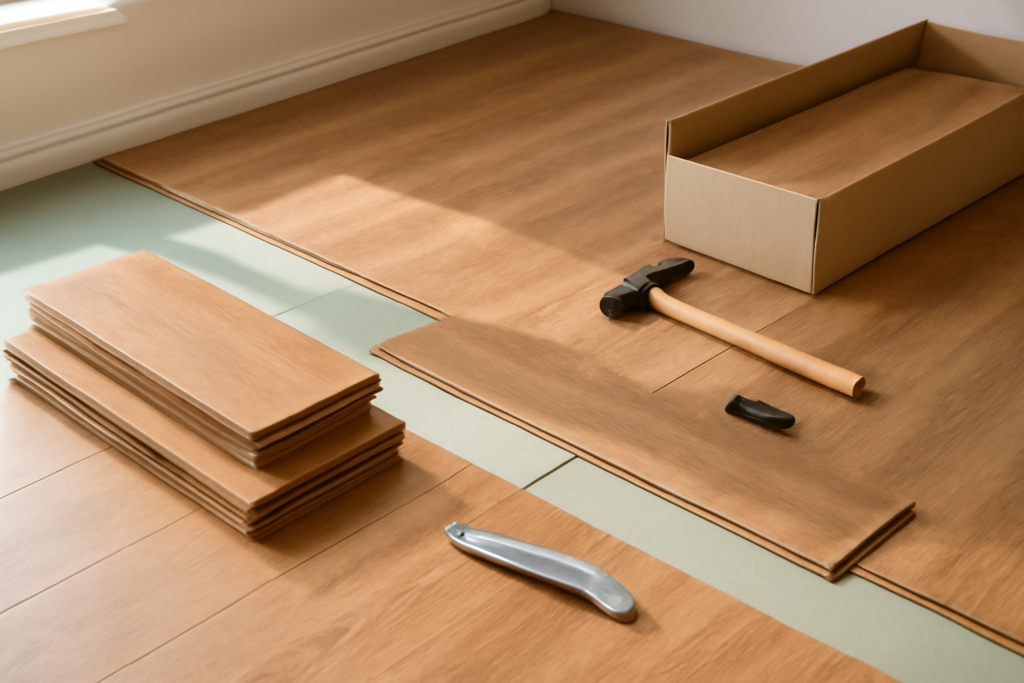
When you start searching for laminate flooring nearby, you quickly discover there are more options than you expected, from big-box home centers to dedicated flooring showrooms to online retailers that ship straight to your door. Finding the right source matters just as much as picking the right product, because price, selection, and service vary widely between sellers. This guide shows you how to locate quality laminate close to home, what to weigh before you buy, and how to avoid the common pitfalls that catch first-time buyers.
Laminate remains one of the most popular flooring choices for good reason. It delivers the look of hardwood or stone at a fraction of the cost, installs without specialized tools, and stands up well to daily life. Knowing where to shop and what to ask turns a confusing search into a confident purchase.
Where to Find Laminate Flooring Locally
You have several types of suppliers to consider, and each comes with trade-offs in price, selection, and expertise.
- Big-box home improvement stores: Wide availability, competitive pricing, and the convenience of seeing products in person. Selection tends to focus on popular styles.
- Dedicated flooring showrooms: Specialty retailers usually carry a deeper range, offer expert advice, and can connect you with installers. Prices may run higher, but so does service.
- Local flooring contractors: Many installers sell and supply the laminate they install, often sourcing materials at trade pricing.
- Online retailers with local pickup: Some web sellers let you order online and collect from a regional warehouse, blending convenience with the chance to inspect before you commit.
- Outlet and clearance centers: Discontinued lines and overstock can offer real savings if you can find enough of a single batch.
How to Search Effectively
A quick online search for laminate flooring in your area will surface nearby stores, but a few habits make the results more useful. Read recent customer reviews to gauge service and product quality, and pay attention to comments about delivery times and how returns are handled. Map out a handful of showrooms within a reasonable drive so you can compare in one trip.
Call ahead to confirm a store stocks the style and quantity you need. Laminate is sold in cartons covering a set number of square feet, and you want enough from the same production batch to avoid slight color variations. Asking about current promotions before you visit can also reveal seasonal sales worth timing your purchase around.
The Pros of Laminate Flooring
Laminate earns its popularity through a strong list of advantages. Cost is the headline: it typically runs from around $1 to $4 per square foot for the material, well below solid hardwood. Installation is approachable for a confident do-it-yourselfer thanks to click-lock planks that float over the subfloor without nails or glue.
Durability is another draw. A tough wear layer resists scratches, scuffs, and fading, which makes laminate a smart pick for busy households with kids and pets. Modern printing gives convincing wood and stone visuals, and the surface wipes clean with a damp mop. For many homeowners, laminate hits the sweet spot between looks, performance, and price.
The Cons You Should Know
No floor is perfect, and laminate has real limitations. Moisture is its biggest weakness; standing water can seep into seams and cause the core to swell, so it is a poor choice for bathrooms or basements prone to dampness unless you buy a water-resistant product. Once a plank is damaged, you generally replace it rather than refinish it, since the printed surface cannot be sanded like real wood.
Some people find laminate sounds hollow underfoot, though a quality underlayment reduces that. It also does not add the resale value that genuine hardwood can. Weighing these drawbacks against your budget and the room’s conditions helps you decide whether laminate fits.
What to Compare Before You Buy
Once you have a few local sources, compare on more than just sticker price.
- AC rating: This abrasion-class number indicates durability. Look for AC3 or higher for residential use, and higher still for heavy traffic.
- Thickness: Thicker planks, often 8mm to 12mm, feel more solid and dampen sound better.
- Water resistance: Standard versus water-resistant versus waterproof products differ significantly in performance and price.
- Warranty: Read the terms closely, since coverage varies and often depends on proper installation.
- Underlayment: Check whether it is attached or sold separately, as that affects total cost.
Estimating Your Total Cost
The plank price is only part of the picture. Budget for underlayment if it is not pre-attached, transition strips and moldings, and any subfloor prep. If you hire an installer, labor commonly adds a few dollars per square foot, so getting two or three quotes from local pros is worth the effort.
Always buy extra material, generally 5 to 10 percent more than your measured square footage, to cover cuts, mistakes, and future repairs. Keeping a few spare planks from the same batch means you can swap out a damaged board years later without a visible mismatch.
Delivery and pickup costs can add up too, so factor them in when you compare suppliers. Heavy cartons add up fast, and a store close to home may save you a delivery fee that erases a small price difference elsewhere. Ask whether a seller offers free local delivery above a certain order size, since that perk often tips the math in favor of one supplier over another.
Questions to Ask a Local Supplier
A short conversation reveals a lot about whether a supplier is worth your business. Ask how long the product has been in their lineup and whether it is being discontinued, because a phased-out line can be impossible to match later. Find out their return policy on unopened cartons, since most projects end with leftovers you may want to send back.
Confirm the AC rating, thickness, and warranty in writing, and ask whether the price you are quoted includes underlayment and trim or only the planks. If you plan to hire the store’s recommended installer, ask who is responsible for the warranty if an installation problem arises. Clear answers up front prevent costly surprises after the floor is down.
Making Your Final Decision
Bringing home samples is the smartest last step before you buy laminate flooring nearby. Lay them in the actual room and look at them in daylight and under your evening lighting, since color reads differently as the light changes. Walk on a display sample in the store to judge how the surface feels and sounds.
Trust a supplier who answers your questions clearly, stands behind the product, and does not pressure you. Whether you choose a big-box store for price, a showroom for guidance, or a contractor for a turnkey job, the right local source plus a little homework gets you a floor that looks great and lasts for years.
Prefer to explore on your own?
See how new flooring looks in your actual room in seconds — free, no signup.
Try the free Floor Studio →

