San Antonio homeowners love a floor that looks like hardwood, survives a busy household, and does not break the budget, and that is exactly the niche laminate flooring in San Antonio fills. From historic homes near downtown to sprawling new builds in the suburbs, laminate is one of the most popular flooring upgrades in the region. It delivers convincing wood looks, strong durability against South Texas heat and grit, and a price point well under genuine hardwood. Here is what to know before you buy.
- Why Laminate Works for the San Antonio Climate
- The Pros of Laminate Flooring
- The Cons Worth Knowing
- Picking the Right Product
- What It Costs in San Antonio
- DIY or Professional Installation?
- How to Vet Local Installers
- Acclimation and Moisture Protection
- Laminate Versus Other Flooring Choices
- Caring for Laminate in South Texas
- Final Thoughts
Why Laminate Works for the San Antonio Climate
South Texas brings long, hot summers, high humidity, and the occasional sharp cold snap. Solid hardwood reacts to those swings by expanding and shrinking, but laminate’s dense fiberboard core is far more dimensionally stable. The tough wear layer also resists the fine dust and sandy grit common in our area, which would scratch softer surfaces. For families with kids, pets, and a lot of indoor-outdoor traffic, laminate stands up to daily life with minimal fuss.
The Pros of Laminate Flooring
- Budget-friendly: Materials commonly run $1 to $3 per square foot.
- Scratch and dent resistant: The melamine wear layer handles pets, furniture, and traffic.
- Authentic appearance: Modern printing replicates oak, hickory, and weathered wood textures convincingly.
- Floating installation: Click-lock planks install over most existing subfloors without glue or nails.
- Simple upkeep: Routine sweeping and damp mopping keep it looking sharp.
The Cons Worth Knowing
Standard laminate is water-resistant at best, not waterproof. In a region where summer humidity is high and spills happen, that matters. Water sitting in the seams can swell the core and ruin planks, so kitchens, bathrooms, and laundry rooms call for either a waterproof laminate line or luxury vinyl plank. Laminate also cannot be refinished, so a deeply damaged plank gets swapped out rather than sanded. And without a good underlayment, it can sound hollow and feel hard underfoot, especially over the concrete slabs typical of San Antonio construction.
Picking the Right Product
The label tells you most of what you need to know:
- AC rating: AC3 suits typical homes; AC4 is better for high-traffic households with pets.
- Plank thickness: 10mm to 12mm boards feel solid and dampen sound better than thin planks.
- Water resistance: Choose a water-resistant or waterproof core for any moisture-prone room.
- Attached underlayment: Built-in pad helps over slab foundations and speeds installation.
- Finish: Matte and embossed textures hide dust and minor scuffs better than glossy finishes.
What It Costs in San Antonio
As a general market range, installed laminate flooring in San Antonio runs about $3 to $7 per square foot, with labor typically $2 to $4 of that total. Higher-end waterproof lines and intricate layouts land at the upper end, while basic builder-grade installs sit lower. A 600-square-foot project often falls somewhere between $1,800 and $4,200 depending on product and prep work. Ask for itemized estimates that break out materials, labor, underlayment, and removal of any existing flooring.
DIY or Professional Installation?
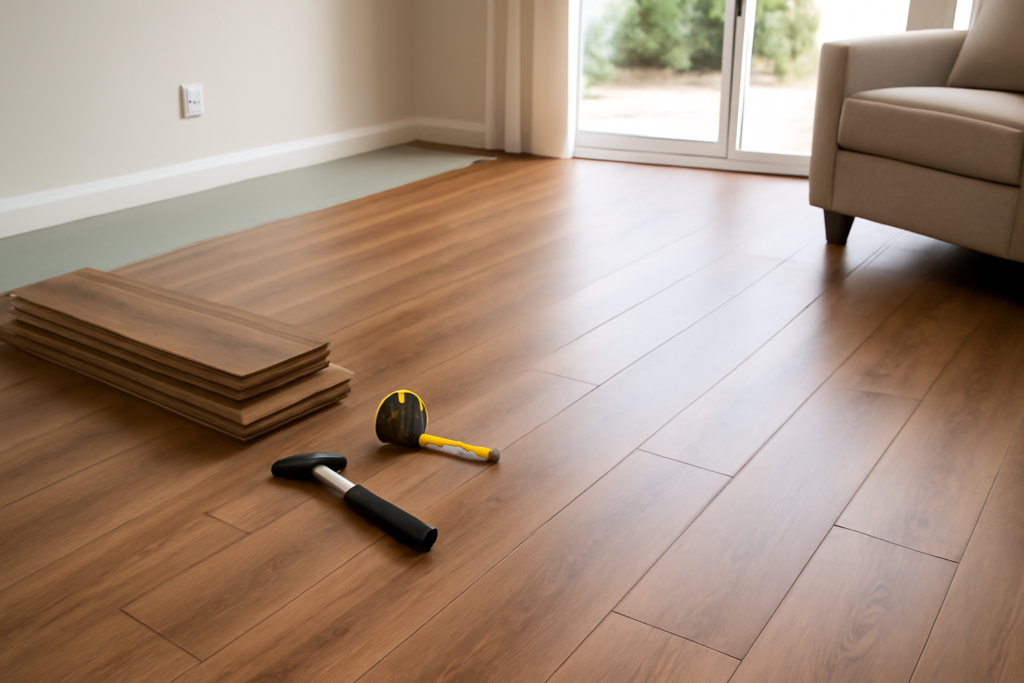
Laminate is among the most DIY-accessible floors, and a careful homeowner can complete a simple room in a weekend. The catch is the subfloor. Many San Antonio homes sit on slab foundations that can have dips, high spots, or moisture, all of which need correcting first. Professionals also handle transitions, door undercuts, and stairs cleanly. If your slab is uneven or you are tackling a large connected area, a pro will likely save you headaches and produce a flatter, longer-lasting result.
How to Vet Local Installers
San Antonio has a deep pool of flooring retailers and independent crews. Choose carefully:
- Verify insurance and require a written, detailed contract.
- Ask for local references and photos of recent jobs.
- Collect at least three itemized bids to compare fairly.
- Ask specifically how they assess and level slab subfloors.
- Check recent reviews and Better Business Bureau standing.
- Separate the installer’s workmanship warranty from the product warranty.
Acclimation and Moisture Protection
In the South Texas climate, proper prep is everything. Let the planks acclimate in the installation room for 48 to 72 hours so they match your home’s temperature and humidity before they are locked in place. Leave a quarter-inch expansion gap around the perimeter so the floor can move with seasonal humidity instead of buckling. Over a concrete slab, always install a moisture-barrier underlayment to block ground moisture, which is a common culprit behind failed laminate floors locally.
Laminate Versus Other Flooring Choices
San Antonio buyers often weigh laminate against other materials. Here is how it stacks up:
- Versus luxury vinyl plank: LVP is fully waterproof and quieter, but good laminate often looks more like genuine wood and can cost less.
- Versus hardwood: Laminate costs far less and resists scratches better, but it cannot be refinished and lacks hardwood’s resale appeal.
- Versus tile: Tile is the better choice for wet rooms and summer heat, while laminate is warmer underfoot and simpler to install.
- Versus carpet: Laminate is easier to keep clean and friendlier for allergy sufferers, while carpet adds comfort in bedrooms.
For living rooms, hallways, and bedrooms in a typical San Antonio home, laminate delivers a strong balance of appearance, toughness, and value.
Caring for Laminate in South Texas
Laminate asks little, but a smart routine keeps it looking its best in our dusty, humid climate. Sweep or dry-mop often to clear the fine grit that scratches the wear layer. Use only a barely damp mop with a laminate-safe cleaner, never a soaking one, because standing water is the floor’s worst enemy and a real risk during humid spells. Set mats at entry doors to trap dirt, add felt pads under furniture, and wipe spills immediately, especially near plank seams. With this basic care, a quality laminate floor stays attractive for 15 to 25 years in an average household.
Final Thoughts
Laminate flooring is a practical, attractive, and affordable choice for San Antonio homeowners who want the hardwood look without the price or upkeep. Look for an AC3 or AC4 plank in the 10mm to 12mm range, choose a water-resistant line for wet rooms, and never skip acclimation or a slab moisture barrier. Whether you do it yourself or hire a vetted local installer, the right laminate will keep your floors looking great through years of South Texas living.
Prefer to explore on your own?
See how new flooring looks in your actual room in seconds — free, no signup.
Try the free Floor Studio →