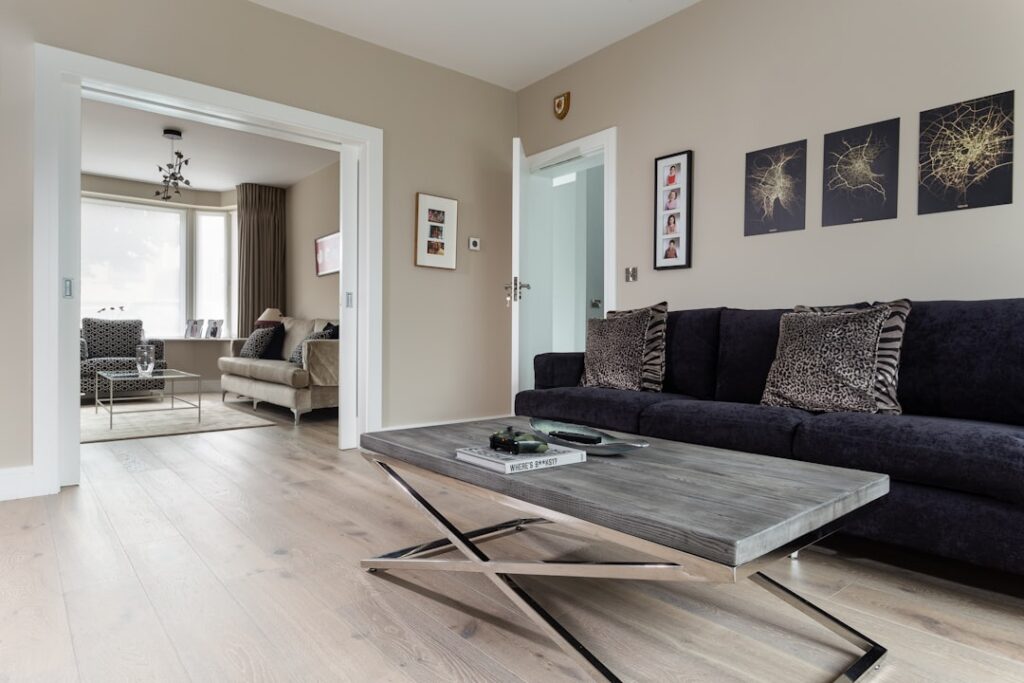
Reaching for a laminate polish seems like the obvious fix when floors look dull, streaky, or scratched, but laminate is one of the few flooring types where the wrong polish does more harm than the dirt it’s meant to remove. Laminate’s shine comes from a thin melamine wear layer bonded over a printed image layer, not from an open, porous surface the way hardwood’s finish works. Understanding that distinction changes which products are safe, how often to use them, and what actually restores luster versus what just leaves a cloudy film behind.
- Why Laminate Doesn’t Behave Like Hardwood or Tile
- What Actually Restores Shine to Dull Laminate
- Products to Avoid Entirely
- Removing Existing Wax or Polish Buildup
- Preventing Dullness Between Deep Cleans
- When Dullness Signals Real Wear, Not Just Dirt
- Choosing a Laminate Cleaner Off the Shelf
- Quick Reference for Maintenance Routine
Why Laminate Doesn’t Behave Like Hardwood or Tile
Hardwood floors have finish that can be screened and recoated, and stone or tile can be buffed with actual polishing compounds because the surface is a solid, uniform material. Laminate is a photographic layer sealed under a hard, clear melamine or aluminum oxide wear layer. There’s no material to buff into a shine — the glossiness you see is baked into that top layer at the factory. Any product marketed as a laminate polish is really doing one of two things: cleaning away the grime that’s dulling the existing shine, or depositing a thin acrylic or silicone coating on top that temporarily looks glossy.
That second category causes most of the horror stories homeowners share about laminate floors turning hazy or streaky over time. Wax-based and oil-soap polishes — the kind long recommended for hardwood — leave a residue on laminate’s smooth, non-porous surface because there’s nothing for the product to absorb into. Each subsequent application builds another layer on top of the last, and within a few months the floor develops a cloudy, footprint-prone film that’s difficult to strip back off.
What Actually Restores Shine to Dull Laminate
In the vast majority of cases, a dull laminate floor isn’t under-polished — it’s under-cleaned or over-polished. Fine dust, cooking grease residue, and mineral deposits from mopping with hard water build up in a thin haze that scatters light instead of reflecting it. The fix is a proper strip-and-clean rather than adding more product.
- Diluted white vinegar solution: roughly 1/2 cup distilled white vinegar to a gallon of warm water, applied with a well-wrung microfiber mop, cuts through soap and wax residue without leaving a film.
- Manufacturer-specific laminate cleaner: brands like Bona and Weiman make pH-neutral, no-residue formulas designed specifically for laminate’s melamine surface — these are the safest bet for regular maintenance.
- Isopropyl alcohol spot treatment: a 70% isopropyl alcohol and water mix removes stubborn wax buildup from prior polish use; test in a closet corner first since alcohol can dull some low-gloss finishes with repeated use.
After a thorough residue-stripping clean, most laminate floors regain 80-90% of their original shine simply because light is reflecting off a clean surface again rather than through a hazy film.
Products to Avoid Entirely
Certain categories of cleaner and polish reliably cause problems on laminate and should stay off the floor regardless of how the label markets itself.
- Wax-based floor polish: designed for hardwood and vinyl composition tile; builds a cloudy film on laminate’s sealed surface and is difficult to remove without professional stripping chemicals.
- Oil soaps: leave a greasy residue that attracts dust and dulls the wear layer within weeks.
- Steam mops: heat and moisture forced into seams cause swelling and edge-lifting; laminate’s core is compressed wood fiber that reacts poorly to sustained moisture and heat.
- Abrasive powders or scouring pads: micro-scratch the melamine wear layer, creating a permanently duller, scratch-hazed patch that no cleaning will reverse.
- Ammonia-based glass or all-purpose cleaners: can degrade the wear layer’s surface chemistry over repeated use, leading to premature dulling.
Removing Existing Wax or Polish Buildup
If a floor already has a cloudy film from years of wax-based products, a dedicated stripping step is usually needed before regular cleaning will look effective again. Mix a stronger vinegar solution — roughly 1 cup white vinegar per gallon of warm water — and mop in small sections, going over each area two to three times with a clean microfiber pad, wringing frequently so you’re lifting residue rather than redistributing it. For heavy buildup, a specifically labeled laminate wax remover, available at most hardware stores, dissolves the film more thoroughly than vinegar alone. Rinse with a barely-damp mop afterward to prevent moisture pooling in the seams, and allow the floor to air dry fully — typically 30-60 minutes — before walking on it.
Preventing Dullness Between Deep Cleans
Daily dust and grit are what dull laminate fastest, acting like fine sandpaper under foot traffic and furniture legs. A dry microfiber dust mop two to three times a week catches this before it grinds into the surface. Felt pads under furniture legs and a low-pile entry mat at exterior doors cut down on the sand and gravel that causes the most visible scratching.
Damp mopping, not wet mopping, is the standard for regular maintenance — a mop that’s wrung until it’s barely moist, using a pH-neutral laminate cleaner or the diluted vinegar solution, then dried immediately with a dry towel or microfiber cloth if any standing moisture remains. Standing water is laminate’s biggest long-term enemy; even small amounts sitting in seams for extended periods can cause swelling that no amount of polish or cleaner will fix.
When Dullness Signals Real Wear, Not Just Dirt
Occasionally a laminate floor looks permanently dull in high-traffic paths — the hallway, in front of the sink, the route from the front door to the kitchen — even after a deep clean. This usually means the wear layer itself has been micro-scratched by years of grit, and no cleaning product will restore that shine because the damage is physical, not a residue problem. At that point, options are limited: laminate can’t be sanded or refinished like hardwood. Area rugs or runners in those paths going forward help slow further wear, but full replacement of the affected planks — or the whole floor if the wear is widespread — is typically the only real fix.
Choosing a Laminate Cleaner Off the Shelf
Reading labels carefully saves a lot of trial and error. Look for cleaners explicitly labeled “no-wax” or “residue-free,” and check that the formula is pH-neutral rather than alkaline or acidic, since both extremes can dull or discolor the wear layer over repeated use. Spray-and-mop formulas that require no rinsing tend to work better on laminate than pour-and-mop bucket solutions, since less liquid ends up sitting on the surface or pooling at seams. A microfiber flat-head mop, rather than a traditional string mop or sponge mop, gives better control over how much moisture actually touches the floor and picks up more fine dust in the process.
It’s also worth testing any new product in an inconspicuous spot — inside a closet or under a rug’s edge — before mopping an entire room. Laminate finishes vary by manufacturer, and a cleaner that works perfectly on one brand’s satin finish can leave faint streaking on another brand’s higher-gloss line.
Quick Reference for Maintenance Routine
For most households, a sustainable laminate maintenance routine looks like this: dry dust-mop two to three times weekly, damp-mop with a pH-neutral or vinegar solution weekly to biweekly, wipe spills immediately rather than letting them sit, and skip wax, oil soap, and steam entirely. Following that routine consistently does more for long-term shine than any laminate polish product on the shelf, and it avoids the buildup problems that send so many homeowners searching for a fix in the first place. A little consistency each week beats an occasional deep-clean scramble, and it keeps the wear layer looking close to factory-fresh for the life of the floor.
Prefer to explore on your own?
See how new flooring looks in your actual room in seconds — free, no signup.
Try the free Floor Studio →