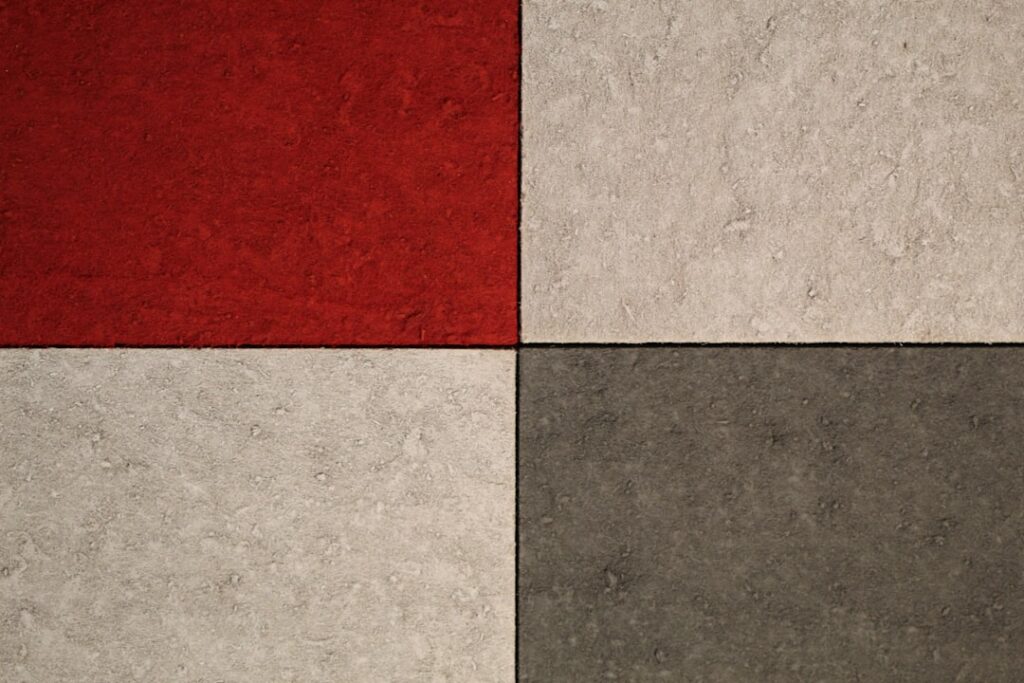
They sound similar, they’re both affordable, and they both get pitched as practical alternatives to pricier flooring — but the laminate vs linoleum decision comes down to two genuinely different materials that behave in different ways. Laminate is a layered, wood-look product built around a fiberboard core. Linoleum is a natural, resilient floor made from linseed oil and other plant-based ingredients. One mimics hardwood and prioritizes a realistic look; the other is a durable, eco-friendly workhorse that’s been around for over a century. Picking between them depends on where you’re installing, how much water the room sees, and what you care about most. Here’s the honest breakdown.
What Each Material Is Made Of
Start with the construction, because everything else flows from it. Laminate is a multi-layer product: a clear, tough wear layer on top, a high-resolution photographic image layer that creates the wood or stone look, a dense fiberboard (HDF) core, and a backing layer for stability. It’s essentially a printed picture of wood protected under a melamine coating.
Linoleum is something else entirely. It’s made from natural raw materials — linseed oil (from flax), cork dust, wood flour, pine resin, and mineral pigments pressed onto a jute backing. The color and pattern run all the way through the material rather than sitting on the surface as a print. That single difference has big consequences for durability and repairability.
Durability and Lifespan
Both floors are tough, but they wear differently. Laminate resists scratches and dents well thanks to its hard wear layer, and a quality laminate lasts roughly 15 to 25 years. Its weakness is that damage usually means replacing planks, because the decorative image is only on the surface — once you scratch through it, the look is gone.
Linoleum is famously durable and can last 20 to 40 years or more when maintained. Because its color goes all the way through, minor scratches and wear don’t expose a different-looking layer underneath, and surface scuffs can often be buffed out. Linoleum is also softer and more resilient underfoot, giving a little when you step on it, which some people find more comfortable for standing.
Water Resistance — A Key Divider
This is where many decisions are made. Neither material is truly waterproof, but they fail differently when wet.
- Laminate — the HDF core is the enemy of water. If moisture seeps into the seams and reaches the fiberboard, it swells, the edges peel, and the damage is permanent. Standing water and laminate don’t mix. Water-resistant laminates exist, but they buy you time, not immunity.
- Linoleum — more naturally moisture-tolerant and a longtime favorite for kitchens, but it can still be damaged by standing water and needs periodic sealing to keep moisture out at the seams.
For a full bathroom or a basement prone to dampness, honestly, neither is the ideal pick — waterproof vinyl or tile makes more sense. But between the two, linoleum generally handles incidental moisture and humidity with a bit more grace.
Appearance and Style
Laminate wins on realism. Today’s high-definition print layers produce convincing hardwood, hand-scraped, and stone looks, and embossed textures add real surface depth. If you want a floor that passes for oak or hickory at a glance, laminate delivers it cheaply.
Linoleum has a different aesthetic. It comes in solid colors, marbled patterns, and sheet or tile formats, often with a retro or commercial-clean look. It’s having a design comeback for its matte, organic appearance and its color range, but it won’t fool anyone into thinking it’s wood. Choose laminate if you want the wood look; choose linoleum if you want solid colors, patterns, or a vintage vibe.
Eco-Friendliness
For environmentally conscious buyers, this category isn’t close. Linoleum is made from renewable, natural materials, is biodegradable at the end of its life, and contains no PVC. It’s one of the greenest hard-surface floors you can buy. Laminate is a synthetic product whose core and surface are man-made, and some laminates have used adhesives and resins that off-gas, though low-VOC and certified options are now common. If sustainability is a priority, linoleum has the clear edge.
Cost Comparison
Both are mid-budget floors, but the numbers differ.
- Laminate — material commonly $1 to $5 per square foot, with installed costs often landing around $3 to $8 per square foot. Click-lock systems make it very DIY-friendly.
- Linoleum — material typically $2 to $7 per square foot, with installed costs frequently $5 to $10 per square foot. Sheet linoleum in particular is usually a professional installation for clean, sealed seams.
Laminate tends to be the cheaper, easier DIY job; linoleum often costs a little more, especially installed.
Installation and Maintenance
Most laminate uses a floating click-lock system that snaps together over an underlayment with no glue, which is why it’s a weekend DIY favorite. Linoleum comes in glue-down sheets and tiles or, sometimes, click-together planks; the sheet version is best left to a pro for tight, sealed seams. On upkeep, both are low-maintenance — sweep and damp-mop, avoiding excess water on laminate and harsh abrasives on either. Linoleum benefits from periodic resealing to protect its surface and seams; laminate just needs you to keep standing water away from it.
Comfort, Sound, and Feel Underfoot
How a floor feels matters more than the spec sheets suggest, especially in rooms where you stand a lot. Linoleum is a resilient floor, meaning it has a little natural give, so it’s softer and warmer underfoot than laminate and easier on your legs during a long stretch at the kitchen sink. That resilience also makes it a touch quieter. Laminate, built around a rigid fiberboard core, feels harder and can sound hollow or clicky underfoot if it’s installed over a poor underlayment — though a good quality underlayment cuts the noise and adds comfort considerably. If a soft, quiet, warm feel ranks high for you and you spend hours on your feet in the space, linoleum has the edge; if you’re carpeting over it with rugs or it’s a low-stand area, the difference matters less.
Which Rooms Suit Each Floor
Putting it all together, the rooms tell you which to pick. Laminate is excellent for living rooms, bedrooms, hallways, and home offices — dry spaces where you want a convincing wood look on a budget. Keep it out of full bathrooms and damp basements. Linoleum suits kitchens, mudrooms, playrooms, and commercial-style spaces where durability, easy cleaning, and a softer feel matter more than mimicking wood, and where its moisture tolerance and through-body color earn their keep. Neither belongs in a space with standing water; for that, look to waterproof vinyl or tile. Map your rooms to these strengths and the choice often makes itself.
The Bottom Line
Choose laminate if you want a convincing wood look, the easiest DIY install, and the lowest upfront cost. Choose linoleum if you want a natural, eco-friendly floor with through-body color, a longer lifespan, and a softer feel underfoot, and you don’t mind paying a bit more. For dry living areas and bedrooms where a wood look matters, laminate is hard to beat. For a durable, sustainable kitchen or commercial-style space, linoleum earns its keep. Match the material to the room and your priorities, and either one will serve you well for years.
Prefer to explore on your own?
See how new flooring looks in your actual room in seconds — free, no signup.
Try the free Floor Studio →