More laminate floors are ruined by mop water than by foot traffic, pets, and dropped pans combined. Picking the right laminate wood floor cleaner matters less than most homeowners think, and controlling moisture matters far more, because laminate’s fiberboard core swells permanently the moment water works into the seams. The good news: once you understand the one non-negotiable rule, keeping laminate spotless is cheaper and faster than caring for almost any other floor. Here is what actually works, which bottles are worth buying, and which popular home remedies quietly damage the finish.
- Why Laminate Needs Its Own Cleaner
- The No-Excess-Water Rule
- Store-Bought Cleaners Worth Buying
- Bona Hard-Surface / Laminate Floor Cleaner
- Black Diamond Stoneworks Wood & Laminate Cleaner
- Zep or Rejuvenate for heavy soil
- Homemade Laminate Cleaner: The Vinegar Question
- A Weekly Routine That Takes Ten Minutes
- Fixing Streaks, Haze, and Residue Buildup
- Stains, Scuffs, and Special Cases
- The Bottom Line
Why Laminate Needs Its Own Cleaner
Laminate is a photograph of wood fused to a high-density fiberboard (HDF) core under a clear aluminum-oxide wear layer. That wear layer is harder than any hardwood finish, which is why laminate resists scratches so well, but the core underneath is essentially compressed wood fiber and glue. Water that seeps through seams or edges makes the core swell, and swollen edges never flatten back out. Peaked seams and puffy plank edges are permanent.
The wear layer also dictates chemistry. Oil soaps, wax-based polishes, and “shine restorer” products designed for hardwood leave a film on laminate that smears, shows footprints, and builds up into a dull haze that is miserable to strip. Steam mops are worse: manufacturers including Pergo and Mohawk specifically exclude steam damage from their warranties because pressurized vapor drives moisture straight into the joints. The right cleaner is a near-neutral, film-free formula applied in the smallest quantity that gets the floor clean.
The No-Excess-Water Rule
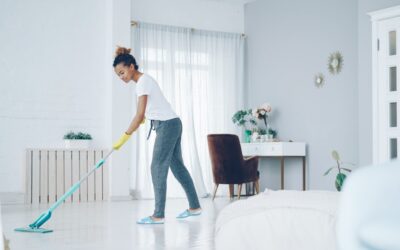
Every laminate cleaning method comes down to one discipline: damp, never wet. A correctly wrung mop or a light spray mist should leave a moisture trail that evaporates within 60 seconds. If you can see standing droplets or streaks that linger for two minutes, you are using too much liquid.
- Use a spray bottle or spray mop and mist the floor, not soak it. One or two trigger pulls per 10 sq ft is plenty.
- Choose a microfiber flat mop over a string mop. String mops hold ounces of water; microfiber holds a film.
- Never pour cleaner directly onto the floor.
- Wipe spills within minutes, especially at plank ends where the cut edges are most absorbent.
- Skip the steam mop entirely, regardless of what the mop’s marketing says.
Store-Bought Cleaners Worth Buying
Dedicated laminate formulas are water-based, near-neutral pH, and designed to flash off fast without residue. Three earn their shelf space.
Bona Hard-Surface / Laminate Floor Cleaner
Bona’s laminate and hard-surface formula is the default recommendation from flooring installers for a reason: it dries fast, leaves zero film, and is Greenguard Gold certified for indoor air quality. A 32 oz spray bottle runs about $9 to $11, and the 128 oz refill (around $20 to $25) drops the cost per cleaning to pennies. Pair it with Bona’s microfiber spray mop or any flat mop you already own.
Black Diamond Stoneworks Wood & Laminate Cleaner
Black Diamond is the value pick, typically $10 to $15 for 32 oz with a quart refill often bundled. It is a hypoallergenic, streak-free formula that performs nearly identically to Bona in side-by-side use. If you have pets that lick the floor, its plant-derived surfactant base is a comfortable choice.
Zep or Rejuvenate for heavy soil
For kitchens that see real grease, a slightly stronger cleaner like Zep Hardwood & Laminate (about $6 to $8 per quart) cuts oily film better than the gentler formulas. Use it for periodic deep cleans rather than weekly maintenance, and follow with a lightly damp plain-water pass to remove any trace residue.
Homemade Laminate Cleaner: The Vinegar Question
The classic DIY mix works, with caveats. Combine one cup of white vinegar with one gallon of warm water, or for a spray bottle, one tablespoon of vinegar per 16 oz of water with an optional single drop of dish soap. Applied as a fine mist and buffed dry, this cleans light soil and costs almost nothing.
The caveats matter. Vinegar is acetic acid, and repeated use at strong concentrations can slowly dull some wear layers and, more importantly, void certain manufacturer warranties; Shaw and several others instruct owners to avoid vinegar-based solutions. Keep the dilution weak, never use it hot, and skip it entirely if your floor is under warranty and the care guide prohibits it. Also skip ammonia, bleach, abrasive powders, and anything labeled “polish,” “shine,” or “wax.” Those either etch the wear layer or leave the film you will later fight to remove.
A Weekly Routine That Takes Ten Minutes
- Dry clean first. Vacuum with the beater bar off, or dust mop. Grit is the main scratch source on laminate, and mopping over grit grinds it into the finish.
- Mist a working section. Spray a 4×4 ft area with your cleaner of choice.
- Mop with the grain. Wipe parallel to the plank direction so any faint streaks hide in the wood pattern.
- Check the trail. The floor should be dry within a minute. Adjust your spray hand if not.
- Spot-buff. Hit scuffs and dried drips with a barely damp microfiber cloth or a melamine sponge used gently.
Entry mats at exterior doors and felt pads under chair legs will do more for the floor’s ten-year appearance than any product in a bottle.
Fixing Streaks, Haze, and Residue Buildup
Streaky laminate almost always traces back to residue, either from an oil-soap product, too much cleaner, or hard-water minerals in the mop water. To reset a hazy floor, mop with a mix of one cup white vinegar per gallon of warm water (this is the one job where vinegar earns its keep), working in small sections and drying each with a towel as you go. Stubborn wax or polish buildup may need two or three passes, or a purpose-made residue remover like Bona Power Plus. Once the film is gone, switch to a proper laminate wood floor cleaner and light application, and the streaks will not return.
Stains, Scuffs, and Special Cases
- Grease and food: Dedicated cleaner plus a microfiber cloth. For dried-on messes, lay a damp cloth over the spot for one minute to soften, then wipe.
- Ink, marker, nail polish: Acetone or rubbing alcohol on a cloth, applied to the cloth not the floor, rubbed only on the mark. The wear layer tolerates brief solvent contact.
- Heel marks and scuffs: A dry melamine eraser sponge with light pressure. Heavy scrubbing can dull the sheen in one spot.
- Candle wax or gum: Harden with a bag of ice, then flick off with a plastic scraper. Never a metal blade.
- Pet accidents: Speed is everything; urine that sits at a seam overnight can swell the core. Blot, clean, dry.
The Bottom Line
Buy a purpose-made laminate wood floor cleaner in the $8 to $15 range, apply it as a mist with a microfiber flat mop, and keep every drop of excess water off the floor. Bona and Black Diamond cover routine cleaning; a weak vinegar solution handles residue resets if your warranty allows it. Avoid steam, oil soaps, and shine products, and your laminate’s wear layer will keep doing its job for 15 to 25 years with the cheapest maintenance routine in flooring.
Prefer to explore on your own?
See how new flooring looks in your actual room in seconds — free, no signup.
Try the free Floor Studio →