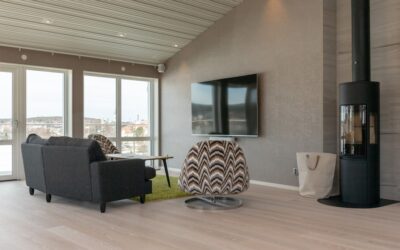
Walk through any new home built in 2026 and you will find one product on more square footage than any other: laminate. The reasons are practical — durability per dollar, photo-realistic prints that fool the eye, and click-lock systems any DIYer can install. Laminating flooring has come a long way since the warped, plastic-feeling boards of the early 2000s, and today’s premium lines hold their own against engineered hardwood at 40 percent of the price. The trick is knowing how to spot the products that earn that reputation versus the budget lines that disappoint within five years.
- What Laminate Actually Is
- The Pros: Why Laminate Wins So Many Floor Choices
- The Cons: What Laminate Does Not Do Well
- Reading the AC Rating
- Cost Per Square Foot in 2026
- Where Laminate Beats Alternatives
- Installation Best Practices
- Subfloor Prep That Pays Back
- Cleaning and Long-Term Care
- Best Brands for 2026
- Buying Like a Pro
What Laminate Actually Is
Modern laminate is a four-layer composite. The bottom is a stabilizing balance layer that resists moisture from below. Above that sits a high-density fiberboard (HDF) core that gives the plank its strength. Next is the printed decor film showing the wood, stone, or tile pattern. Finally, an aluminum oxide wear layer protects the surface from scratches, dents, and UV fade.
Premium laminating flooring adds two refinements: embossed-in-register (EIR) texture that lines up bumps with the printed grain, and a moisture-resistant or fully-waterproof core that lets the plank survive splashes without swelling.
The Pros: Why Laminate Wins So Many Floor Choices
Three advantages drive the category’s growth. First, durability per dollar — premium AC4 and AC5-rated laminate handles heavy residential traffic for 20 to 25 years at a quarter to half the cost of hardwood. Second, the visual is excellent. The 2026 generation of laminating flooring uses 4K-resolution decor films with random pattern repetition every 30 to 60 boards, eliminating the look-alike syndrome that plagued earlier products.
Third, install is genuinely DIY-friendly. Click-lock systems require no glue, no nails, and no special tools beyond a tapping block ($14), pull bar ($18), and an inexpensive saw. A 200-square-foot room takes a competent first-timer one weekend.
The Cons: What Laminate Does Not Do Well
Three honest weaknesses. First, even waterproof laminate has limits. Water that sits at edges or seams penetrates over time, and full bathrooms with showers should use SPC vinyl or tile instead. Second, sound. Without quality underlayment, footfall sound on laminate is noticeably louder than on carpet or vinyl. A 2 to 3mm cork or IXPE underlayment ($0.40 to $0.85 per foot) makes a significant difference.
Third, repair is harder than vinyl plank. Damaged boards can be replaced, but matching a 5-year-old discontinued color is often impossible. Always buy 8 to 10 percent overage and store one extra box for future patches.
Reading the AC Rating
The AC (Abrasion Class) rating is the single most important spec on a laminate box. Match it to the room:
- AC1: Light residential. Bedrooms only. Skip for any other use.
- AC2: Moderate residential. Adult bedrooms, light-use spaces.
- AC3: General residential. Living rooms, dining rooms, kids’ bedrooms.
- AC4: Heavy residential, light commercial. Kitchens, hallways, entries.
- AC5: Heavy commercial. Overkill for most homes but bulletproof.
For most active households, AC4 is the sweet spot. The price premium over AC3 is typically $0.40 to $0.80 per square foot — money well spent for double the abrasion life.
Cost Per Square Foot in 2026
Material runs $1.49 to $4.99 at big-box retailers. Premium specialty lines (Pergo Outlast+, Mohawk RevWood Plus, Quick-Step NatureTEK) hit $4.50 to $7.50. Underlayment adds $0.30 to $0.85 depending on density and acoustic rating. Installation labor is $1.50 to $3 per square foot, the cheapest of any hard-surface flooring.
For a 200-square-foot bedroom, total installed cost runs $700 to $1,800. For a 1,500-square-foot main floor, $4,500 to $11,500. The lower end of those ranges represents AC3 product on flat subfloors with no transitions; the upper end is AC4 to AC5 with full underlayment and trim work.
Where Laminate Beats Alternatives
Laminating flooring outperforms several alternatives in specific use cases. Versus engineered hardwood: better scratch resistance and lower cost, with photo-realistic visual quality the eye accepts. Versus LVP: better warmth underfoot and a more authentic wood feel, with comparable durability for non-wet rooms. Versus tile: significantly warmer in cold climates (12 to 18 degrees Fahrenheit warmer at floor surface) and faster to install.
The category where laminate falls short: full bathrooms, mudrooms with constant standing water, and basements with active moisture issues. There, vinyl wins.
Installation Best Practices
Three rules separate installs that last 25 years from those that fail in three. First, acclimate planks 48 to 72 hours in the room at 60 to 80 degrees Fahrenheit and 35 to 65 percent humidity. Skip this step and your seasonal expansion will exceed the gap allowance. Second, leave 5/16-inch expansion gaps at every wall, post, and pipe — peaking is the number-one failure mode of laminating flooring.
Third, never run a single uninterrupted floor longer than 40 feet without a transition strip. Climate cycling buckles long runs in 2 to 4 years. Use T-mold transitions at room boundaries and reducer strips where laminate meets carpet or tile.
Subfloor Prep That Pays Back
Laminate is a floating floor, so the subfloor must be flat within 3/16 inch over 10 feet. Use self-leveling compound on dips deeper than that — a $35 bag covers about 50 square feet at 1/8-inch thickness. Sand or shave high spots with a belt sander.
Over concrete slabs, install a 6-mil polyethylene vapor barrier with overlapping seams sealed in moisture-resistant tape. Skipping this step produces cupped boards within 18 months in slab-on-grade homes.
Cleaning and Long-Term Care
Laminate is the lowest-maintenance hard surface in most homes. Sweep or dry-mop daily with a microfiber pad. Damp-mop weekly using a pH-neutral cleaner like Bona Stone, Tile and Laminate ($16 per quart). Skip steam mops — heat and moisture penetrate seams and warp the HDF core within 12 to 24 months, voiding most warranties.
Felt pads under furniture legs and a quality entry mat catch most of the grit that scratches the wear layer. Replace pads every 6 to 9 months because they accumulate abrasive debris.
Best Brands for 2026
Five brands consistently top reviewer rankings. Pergo Outlast+ at $2.99 to $4.99 per square foot offers AC4 wear layer plus waterproof core with a lifetime residential warranty. Mohawk RevWood Plus at $3.49 to $5.50 delivers premium visuals and excellent warranty support. Quick-Step NatureTEK at $4 to $6.99 stays the value-luxury pick. Shaw Repel at $2.79 to $4.50 covers waterproof basics. AquaGuard at Floor & Decor delivers AC4 waterproof at $2.29 to $3.79.
Buying Like a Pro
Buy 8 to 10 percent overage to cover cuts and waste. Verify the AC rating, plank thickness (12mm is the sweet spot), and warranty length on the actual box, not the marketing brochure. Pull three quotes from independent retailers because pricing on identical SKUs varies 15 to 25 percent across stores. Schedule installations for January to March or July to August when demand is lower and lead times shorter.
The right laminating flooring, installed correctly with proper underlayment and acclimation, lasts 20 to 25 years and looks as good in year 18 as it did on day one.
Prefer to explore on your own?
See how new flooring looks in your actual room in seconds — free, no signup.
Try the free Floor Studio →