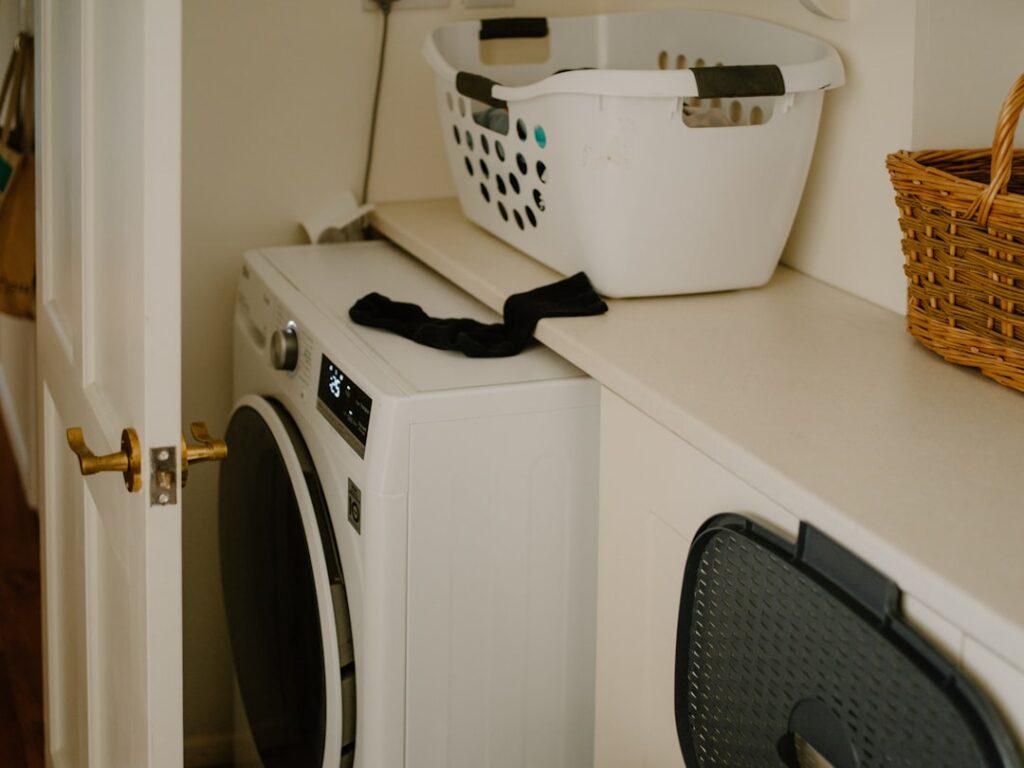
Your laundry room takes a beating. Between washing machine leaks, dryer humidity, detergent spills, and constant foot traffic, the floor in this hardworking space needs to be tough, waterproof, and easy to clean. Choosing the right laundry room flooring protects your subfloor from water damage and keeps the space looking great for years.
- What Makes Good Laundry Room Flooring?
- Best Laundry Room Flooring Options
- 1. Luxury Vinyl Plank (LVP)
- 2. Ceramic and Porcelain Tile
- 3. Sheet Vinyl
- 4. Concrete (Sealed or Polished)
- Laundry Room Flooring Comparison Table
- Washer Vibration and Your Floor
- Drain Considerations
- Flooring to Avoid in Your Laundry Room
- Cost Breakdown
- Installation Tips for Laundry Room Flooring
- Our Recommendation
- Frequently Asked Questions
In this guide, we break down the best flooring materials for laundry rooms, what to avoid, and how to choose the right option for your home and budget.
What Makes Good Laundry Room Flooring?
Before comparing materials, it is important to understand what qualities matter most in a laundry room environment:
- Waterproof or highly water-resistant: Washing machines can leak, hoses can burst, and condensation is constant. Your floor must handle standing water without warping or growing mold.
- Slip resistance: Wet floors are slippery floors. A textured surface helps prevent falls.
- Durability: Heavy appliances, laundry baskets, and foot traffic demand a floor that resists dents, scratches, and wear.
- Easy maintenance: Detergent drips, bleach splashes, and lint accumulation mean you need a floor that cleans up quickly.
- Vibration tolerance: Washing machines vibrate during spin cycles. Your flooring should handle this without cracking or shifting.
Best Laundry Room Flooring Options
1. Luxury Vinyl Plank (LVP)
Luxury vinyl plank flooring has become the top choice for laundry rooms, and for good reason. Modern SPC and WPC vinyl planks are 100% waterproof, meaning they will not swell, warp, or buckle when exposed to water. The rigid core construction handles the vibrations from washing machines without issue.
LVP installs quickly with a click-lock system, often right over existing flooring. It is comfortable underfoot, reduces noise, and comes in realistic wood and stone looks that elevate the appearance of your laundry room. With wear layers ranging from 12 mil to 22 mil, you get excellent scratch and stain resistance.
For laundry rooms specifically, choose an SPC (stone polymer composite) vinyl plank. Its rigid mineral core is denser and more dimensionally stable than WPC, making it better suited to temperature fluctuations and heavy appliance loads.
2. Ceramic and Porcelain Tile
Ceramic and porcelain tile is a classic laundry room flooring choice. Porcelain tile in particular is nearly impervious to water, extremely durable, and available in countless styles. It handles bleach, detergent, and cleaning chemicals without staining or discoloring.
Tile is an excellent choice if your laundry room has a floor drain, as it can be sloped during installation to direct water toward the drain. Choose tiles with a textured or matte finish for better slip resistance. Porcelain tile rated for floor use (PEI rating 3 or higher) will stand up to decades of heavy use.
The downsides are that tile is hard and cold underfoot, and grout lines require periodic sealing to remain waterproof. Installation is more labor-intensive and costly than vinyl options.
3. Sheet Vinyl
Sheet vinyl flooring is one of the most practical and affordable laundry room flooring options available. Because it comes in large continuous rolls, sheet vinyl has very few seams, which means fewer entry points for water. When installed properly with sealed edges, it creates a nearly waterproof barrier over your subfloor.
Sheet vinyl is soft and warm underfoot, easy to clean, and highly resistant to moisture, stains, and chemicals. It also absorbs some of the vibration and noise from washing machines. Modern sheet vinyl comes in attractive patterns that mimic tile, stone, and wood.
The tradeoff is that sheet vinyl can be punctured by sharp objects and may show dents from heavy appliances over time. It is also more difficult to install in oddly shaped rooms because the material must be cut to fit precisely.
4. Concrete (Sealed or Polished)
If your laundry room has a concrete slab foundation, sealing or polishing the existing concrete is an extremely durable and budget-friendly option. Sealed concrete is completely waterproof, handles any chemical spill imaginable, and will never warp, crack from moisture, or grow mold.
Polished concrete gives a modern, industrial look. You can also apply decorative stains or epoxy coatings for color and visual interest. This option is especially popular in basement laundry rooms where concrete is already the subfloor.
The main drawback is that concrete is very hard and cold, which can be uncomfortable if you spend a lot of time in your laundry room. Anti-fatigue mats near work areas solve this issue easily.
Laundry Room Flooring Comparison Table
| Flooring Type | Waterproof | Cost per Sq Ft | Durability | Comfort | DIY Friendly |
|---|---|---|---|---|---|
| Luxury Vinyl Plank (LVP) | Yes (SPC/WPC) | $2.50 – $6.00 | High | High | Yes |
| Ceramic / Porcelain Tile | Yes (with sealed grout) | $3.00 – $10.00 | Very High | Low | Moderate |
| Sheet Vinyl | Yes (minimal seams) | $1.00 – $4.00 | Moderate | High | Moderate |
| Sealed Concrete | Yes | $2.00 – $6.00 | Very High | Low | Moderate |
Washer Vibration and Your Floor
One concern unique to laundry rooms is the vibration produced by washing machines, especially during high-speed spin cycles. This constant vibration can cause certain types of flooring to shift, crack, or separate at the seams over time.
LVP and sheet vinyl handle vibration well because they have some flexibility and are installed as floating floors (in the case of LVP) or glued down (sheet vinyl). Tile handles vibration well too, as long as it is properly installed over a stable subfloor with the correct thinset mortar. Concrete is unaffected.
To minimize vibration impact on any floor, use vibration-dampening pads under your washing machine. These inexpensive rubber or foam pads absorb much of the movement before it reaches the floor.
Drain Considerations
Many laundry rooms include a floor drain as a safety measure in case of appliance leaks or hose failures. If your laundry room has a floor drain, your flooring choice and installation method must accommodate it.
Tile is the best option for rooms with floor drains because it can be installed with a slight slope toward the drain. LVP and sheet vinyl can also work, but the flooring must be cut precisely around the drain, and the edges sealed to prevent water from seeping underneath.
If your laundry room does not have a floor drain, waterproof flooring becomes even more critical. Any water that pools on the surface needs to stay on top of the flooring until you can clean it up.
Flooring to Avoid in Your Laundry Room
Not all flooring materials are suited for the moisture-heavy environment of a laundry room. Here is what to steer clear of:
Hardwood
Solid hardwood and even most engineered hardwood floors are poor choices for laundry rooms. Wood absorbs moisture, which causes warping, cupping, buckling, and eventually rot. Even a single unnoticed leak can cause hundreds of dollars in damage to a hardwood floor. The constant humidity in a laundry room accelerates this deterioration.
Carpet
Carpet in a laundry room is a recipe for mold and mildew. Carpet absorbs water and traps moisture beneath its fibers and padding, creating an ideal environment for mold growth. It is also nearly impossible to fully clean detergent spills, bleach stains, and lint buildup from carpet fibers.
Standard Laminate
Traditional laminate flooring has an HDF (high-density fiberboard) core that swells and warps when exposed to moisture. While some newer water-resistant laminate products exist, they still cannot match the waterproof performance of LVP or tile in a laundry room setting. The risk of damage simply is not worth the savings.
Cost Breakdown
Your total laundry room flooring cost depends on the material, room size, and whether you hire a professional or do it yourself. Most laundry rooms range from 30 to 80 square feet.
- Sheet vinyl: $50 – $320 for materials in a typical laundry room. The most budget-friendly option.
- LVP: $100 – $480 for materials. Mid-range pricing with excellent performance.
- Ceramic/porcelain tile: $120 – $800 for materials. Higher cost, especially with professional installation.
- Sealed concrete: $80 – $480 if the concrete subfloor is already in place. Additional cost if prep work is needed.
Professional installation adds $3 to $10 per square foot depending on the material and your region. For a small laundry room, many homeowners opt for DIY installation with LVP or sheet vinyl to keep costs low.
Installation Tips for Laundry Room Flooring
Regardless of which material you choose, these installation practices help ensure your laundry room floor performs at its best:
- Level the subfloor: Use self-leveling compound to address any low spots or unevenness before installing new flooring.
- Seal the perimeter: Apply silicone caulk where the flooring meets walls, cabinets, and around the drain to prevent water from seeping underneath.
- Use the right underlayment: For LVP, choose a moisture-barrier underlayment. For tile, use an uncoupling membrane like Ditra to prevent cracks.
- Leave expansion gaps: Floating floors like LVP need a small gap around the perimeter to allow for natural expansion and contraction.
- Install a drip pan: Place a drip pan under your washing machine as an extra layer of protection for your new floor.
Our Recommendation
For most homeowners, luxury vinyl plank flooring offers the best combination of waterproof performance, comfort, style, and value for laundry rooms. It handles the unique challenges of the space, including moisture, vibration, and heavy appliances, while looking great and being easy to maintain.
If budget is your top priority, sheet vinyl is hard to beat. If you want the most durable, long-lasting option and do not mind the extra cost, porcelain tile is the premium choice.
Frequently Asked Questions
What is the best flooring for a laundry room?
Luxury vinyl plank (LVP) is the best overall choice for laundry rooms. It is 100% waterproof, durable, comfortable underfoot, easy to install, and available in a wide range of styles. Porcelain tile and sheet vinyl are also excellent options depending on your budget and preferences.
Can I put laminate flooring in my laundry room?
Standard laminate flooring is not recommended for laundry rooms because its fiberboard core swells when exposed to moisture. If you want a plank-style floor, choose waterproof LVP instead. It offers a similar look with far better water resistance.
Is LVP waterproof enough for a laundry room?
Yes. SPC and WPC luxury vinyl planks are 100% waterproof at the plank level. Water will not damage the planks themselves. However, you must seal the perimeter and any seams near drains to prevent water from reaching the subfloor underneath.
How much does it cost to floor a laundry room?
For a typical 50-square-foot laundry room, materials cost between $50 (sheet vinyl) and $500 (porcelain tile). Professional installation adds $150 to $500 depending on the material. DIY installation with LVP or sheet vinyl can save significantly on labor costs.
Should I put tile or vinyl in my laundry room?
Both are excellent choices. Tile is more durable and works better with floor drains, but it is harder, colder, and more expensive. Vinyl (LVP or sheet) is warmer, softer, more affordable, and easier to install. For most homeowners, vinyl is the practical choice. For a premium, long-lasting floor, go with porcelain tile.
Do I need waterproof flooring in a laundry room?
Yes. Laundry rooms are high-moisture environments with a constant risk of leaks, spills, and condensation. Waterproof flooring protects your subfloor from water damage and prevents mold growth. Avoid any flooring that absorbs water, including hardwood, carpet, and standard laminate.
Prefer to explore on your own?
See how new flooring looks in your actual room in seconds — free, no signup.
Try the free Floor Studio →