The fastest way to make a room feel collected rather than catalog-bought is to stop treating rugs as single objects. A layered jute rug — a large natural-fiber base with a smaller decorative rug set on top — is the trick designers reach for when a space feels flat, and it works precisely because it adds two things at once: raw, tactile texture from the jute and a hit of color or pattern from the top layer. Better still, it lets you use a rug that’s technically too small by anchoring it on a generous neutral foundation.
Done well, it looks intentional and layered with age. Done carelessly, it looks like two rugs that happened to overlap. The difference is mostly sizing and proportion, so let’s get those right first.
Why Jute Makes the Perfect Base Layer
Jute is a plant fiber woven into a chunky, ropey weave that reads warm and organic under almost any style — modern, coastal, farmhouse, boho, or traditional. Its neutral oatmeal-to-caramel tone plays background to whatever you set on top, which is exactly what a base layer should do. The coarse weave also adds visual weight, grounding a lighter or busier top rug so the pairing feels balanced.
Practically, jute is affordable, which matters when you’re buying a large base. A natural fiber 8-by-10 costs far less than a comparable wool or synthetic piece, so you can go big on the foundation and spend your budget on the smaller statement rug up top. Keep in mind jute is not moisture-friendly — it belongs in living rooms, bedrooms, and dry entryways, not bathrooms or covered patios that get damp.
Getting the Sizing Right
Layering only looks deliberate when the base is clearly larger than the top rug. Aim for the jute base to extend at least 8 to 12 inches beyond the top rug on all sides so a consistent border of jute frames the piece. If the reveal is uneven or too thin, the eye reads it as a mistake.
Here’s how the common sizes pair up:
- 5×8 top on an 8×10 jute base: The most popular living-room combination, giving roughly 12 to 18 inches of jute border.
- 4×6 top on a 6×9 jute base: A good fit for smaller living rooms or a bedroom seating area.
- 3×5 top on a 5×8 jute base: Ideal at the foot of a bed, in an entry, or under a reading chair.
- 6×9 top on a 9×12 jute base: For large open-plan rooms where the seating group needs to feel substantial.
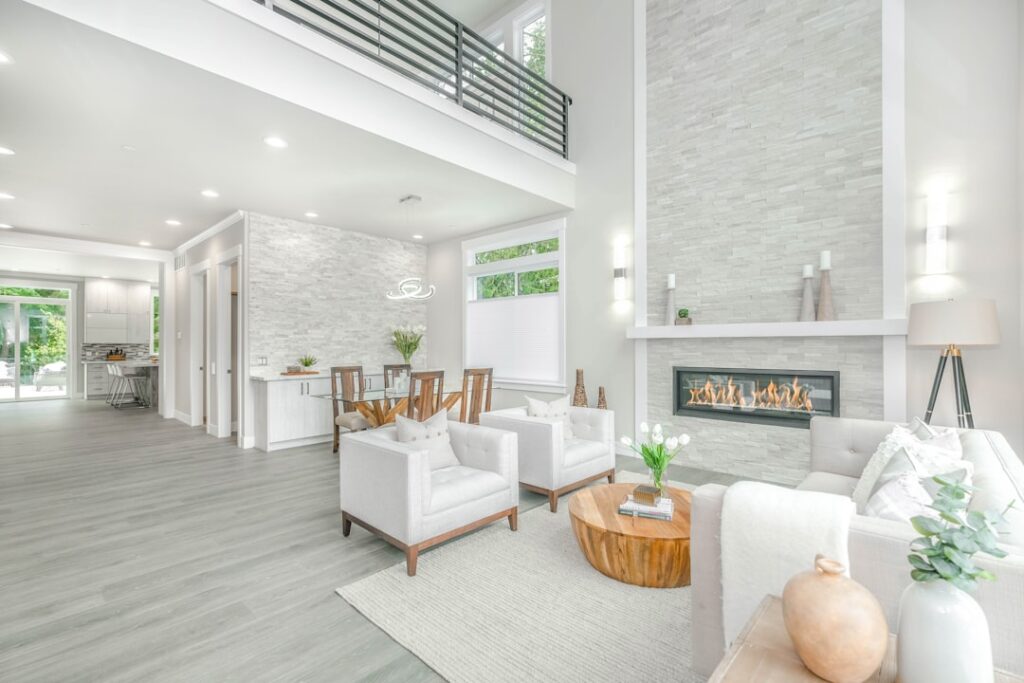
Whatever the room, size the base by the standard rule first: in a living room, the front legs of the sofa and chairs should sit on the base rug, with the whole arrangement visually contained. Leave about 18 inches of bare floor between the jute edge and the walls so the layered stack doesn’t crowd the room’s perimeter, and keep at least 24 to 30 inches of walkway around the main traffic paths.
Choosing the Top Rug
The top layer is where personality lives, so choose it for contrast. Because jute brings the texture, your top rug can lean into color, pattern, or softness. Popular pairings include a vintage-style Persian or Turkish rug for lived-in character, a flatweave kilim for graphic pattern, a plush shag or wool piece for underfoot comfort, or a simple cowhide for organic shape.
Contrast in at least one dimension. If the jute is coarse and matte, a smoother or softer top rug reads richer against it. If your room is very neutral, let the top rug carry the color — faded reds, indigos, and rusts sit beautifully against jute’s tan. Keep pile height in mind too: a low-pile top rug lies flatter and is less of a trip hazard, while a thicker rug adds cozy dimension but needs a firmer base to sit evenly.
Placement and Styling Ideas
Beyond the living room, a layered jute rug earns its keep in several spots. At the foot of a bed, run a small patterned rug across a jute base for a boutique-hotel look. In an entryway, layer a durable washable runner over jute to catch grit while adding warmth. Under a round dining table, a round jute base with a smaller top rug softens a hard-floored kitchen — though in high-spill dining zones, choose a washable top layer.
For visual harmony, angle the top rug slightly off-parallel for a relaxed, unstudied feel, or align it perfectly centered for a tailored look — pick one and commit. Echo a color from the top rug elsewhere in the room, in a pillow or throw, so the pairing feels tied to the space rather than dropped in.
Keeping a Layered Rug in Place
Two rugs stacked will slide unless you address grip. Put a natural rubber or felt-and-rubber rug pad under the jute base to anchor the whole stack to the floor. Between the layers, a thin rug-to-rug gripper or a few strips of low-tack rug tape keeps the top piece from creeping and curling at the corners. Curled corners are the number-one thing that makes a layered look feel sloppy, so flatten and secure them.
Jute sheds fine fibers when new — vacuum gently with suction only (skip the beater bar, which pulls the weave) for the first few weeks and it settles down. Blot spills immediately since jute stains and can develop water rings; never soak it.
Room-by-Room Layering Ideas
The living room is the obvious home for this look, but the technique translates across the house once you understand the proportion rule. In a home office, layer a small vintage rug over a jute base beneath the desk chair to add warmth to an otherwise utilitarian room — just make sure the chair casters roll on the flatter, low-pile top rug rather than catching on the chunky jute edge.
In a bedroom, a runner-width top rug across a jute base at the foot of the bed frames the space and gives a designer finish. Nurseries benefit from a soft, washable top layer over jute so you get a wipeable play surface with texture underneath. Even a large entry or mudroom can carry the look if you keep the jute in the dry zone and use a durable, washable top rug to trap the grit that comes through the door. Wherever you place it, the base should always be the larger, quieter layer.
Budget and Where to Spend
One of the reasons this pairing is so popular is that it stretches a decorating budget. A natural fiber 8-by-10 base often costs a fraction of a comparable wool rug, which frees up money for a smaller, higher-quality statement rug on top. Because the top rug is small, you can afford a genuine vintage piece or a nicer hand-knotted wool that would be out of reach at full room size.
If you’re phasing purchases, buy the jute base first — it’s useful on its own as a neutral anchor while you hunt for the right top rug at the right price. Watch clearance and secondhand listings for the top layer, since a 3×5 or 4×6 in a great pattern turns up far more often and far cheaper than a room-size rug. Add a proper rug pad and rug-to-rug gripper to the budget from the start; skimping there is what makes an otherwise nice pairing look sloppy.
Bringing It All Together
A layered jute rug is one of the highest-impact, lowest-risk styling moves available to a homeowner. You get texture, warmth, and a custom-looking floor for less than a single large designer rug would cost, and you can swap the top layer seasonally to refresh the room without buying a new foundation. Nail the sizing so the jute frames the top rug on all sides, choose a top rug that contrasts in color or pile, and secure both layers with the right pad — and your layered jute rug will look like the deliberate work of a stylist rather than a happy accident.