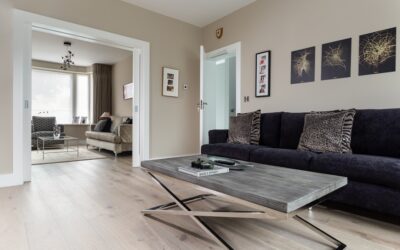
If gray ruled the 2010s, light beige is what designers are quietly pivoting back to. Light beige flooring reads warm, brightens north-facing rooms, hides crumbs better than any darker neutral, and resists the cold blue-gray fatigue setting in across the industry. Done right, it pairs with everything from cream cabinets to navy accents and ages out of trend cycles. Done wrong, it reads “rental builder grade” or, worse, yellow.
Reading Undertones Before You Buy
Beige is never just beige. Every light beige flooring product carries one of four undertones: pink (more terracotta and red), yellow (golden, leans honey oak), green (drifts olive in certain light), and gray (the “greige” that dominated 2018-2022). The undertone determines whether the floor feels harmonious or jarring against your existing walls, cabinets, and trim.
Hold a sample against a pure-white sheet of printer paper. The undertone jumps out instantly. Then hold it against your warm-white wall paint (Benjamin Moore White Dove, Sherwin-Williams Alabaster, Behr Swiss Coffee) to confirm compatibility.
Hardwood and Engineered Wood Options
White oak with a natural or wire-brushed bleach finish is the gold standard. Mirage’s Hard Maple Natural, Mohawk Ultrawood in Sand Castle Oak, and Hallmark Floors’ Alta Vista in Tahoe deliver true light beige tones without the yellow shift that plagues pine and red oak. Engineered planks at 7/16-inch to 5/8-inch thick with a 4 mm wear layer run $5.50 to $8.50 per square foot in material; solid hardwood in similar shades runs $6.50 to $9.50.
European white oak takes the cake for color stability. Brands like Lauzon Designer, Provenza Heirloom, and Hallmark Hardwoods source FSC-certified planks 7 to 10 inches wide with reactive lye-and-soap finishes that lock in the pale neutral look for decades.
Luxury Vinyl in Beige Tones
LVP and SPC have exploded the beige category because the printed visuals can mimic bleached oak, limewashed pine, and travertine without the price tag. COREtec Pro Plus in Aldwin Oak, Karndean Korlok in Baltic Limed Oak, Mannington Adura Max Apex in Lakeview Sand, and Shaw Paragon Mix Plus in Lasso are the go-to specifications. Wear layers of 12 mil for residential and 20 to 22 mil for high-traffic homes with pets and kids.
Budget options like LifeProof’s Shadow Hickory and Pergo Extreme’s Wandering Path run $2.99 to $3.99 per square foot but the visuals can read repetitive across large rooms. Premium 20-mil products cost $4.50 to $6.00 and the variation pattern is far better.
Tile Choices That Stay Warm
Porcelain tile in light beige looks runs from honed limestone visuals (Daltile Marble Attache in Crema, Florida Tile Crystallized Stone in Champagne) to micro-cement and concrete looks (Florim Industrial Ivory, Atlas Concorde Mark Sand). Sizes have grown — 24-by-48-inch and 12-by-24-inch planks dominate showrooms. Pricing $4.50 to $9 per square foot.
For wet zones, confirm a DCOF wet rating of at least 0.42. Honed light beige porcelain often falls below 0.40 wet, which is a slip hazard in bathrooms and entries. Many manufacturers offer matte or textured versions of the same color specifically for floor applications.
Where Light Beige Wins
Three room types benefit most. Small spaces feel bigger because light beige reflects 50 to 65 percent of incident light versus 18 to 30 percent for charcoal floors. North-facing rooms gain warmth where gray turns dingy. Open floor plans get visual cohesion without the heaviness of dark wood. Light beige also pairs effortlessly with both warm metals (brass, copper, brushed gold) and cool metals (chrome, matte black) — a flexibility darker floors don’t offer.
It also forgives uneven subfloors better than charcoal. Subtle dips and lippage don’t catch light the same way on a pale neutral.
The Honest Drawbacks
Pet stains show. Red wine shows. Coffee shows. Anything dropped that contains pigment will leave a mark on light beige flooring far more readily than on a deeper tone. Plan on immediate cleanup with pH-neutral cleaner (Bona Pro for hardwood, Shaw R2X for LVP) within 5 to 10 minutes of any spill.
Yellowing under UV is the other risk. Cheaper aluminum-oxide finishes on prefinished hardwood and some 6-mil builder-grade LVP can shift yellow within 3 to 5 years in sun-exposed rooms. Look for UV-cured polyurethane finishes with at least seven coats on hardwood and a UV-stable urethane top layer on LVP.
Installation Notes That Save Headaches
For floating LVP, use a 1.5 mm IXPE attached pad or a separate underlayment like QuietWalk Plus that includes a vapor barrier on slab applications. ASTM F2170 in-situ RH probe testing should read under 85 percent before install. For glue-down on slab, Bostik Best or Mapei Ultrabond ECO 360 are the industry standards.
Hardwood installations on slab require an engineered product over a moisture-rated underlayment, never solid. For nail-down on plywood, a Powernail 50P cleat gun with 1 1/2-inch nails at 8 to 10 inches on center is the spec. Acclimate hardwood for 5 to 7 days at room temperature and humidity before install.
Care That Keeps the Color Honest
Vacuum twice a week with a hard-floor head — not the carpet beater bar, which will dull the finish. Damp-mop with a microfiber pad and pH-neutral cleaner once a week in high-traffic zones. Reseal solid oak floors every 7 to 10 years with two coats of Bona Traffic HD waterborne polyurethane to maintain the original pale tone.
Felt pads on every chair and table leg. Walk-off mats at every exterior door, minimum 4 feet long. Direct sun control with sheer curtains or low-E window film prevents the gradual yellow shift that takes light beige floors out of their best look.
Is It the Right Pick
Light beige flooring rewards homeowners who want warmth without commitment to a strong color, who clean spills promptly, and whose lifestyle doesn’t include muddy paws sprinting through every afternoon. Sample at least three contenders against your specific lighting and finishes. Done thoughtfully, it’s the rare neutral that still looks current 15 years out.
Prefer to explore on your own?
See how new flooring looks in your actual room in seconds — free, no signup.
Try the free Floor Studio →