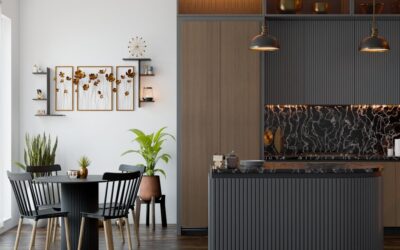
Walk into any showroom and you’ll see at least one room painted Agreeable Gray. It’s beautiful in the demo, then mysteriously turns lavender in your own dining room. A light gray color combination only works when you account for undertone, light direction, and the two or three accents you’ll layer in. Get the pairing wrong and the whole room reads cold, hospital-flat, or oddly purple by 4 p.m. Get it right and you have a backdrop that flatters wood, tile, brass, and oil-rubbed bronze in equal measure.
Why Most Gray Schemes Fail Before the First Coat
Light grays carry one of three undertones: blue, green, or warm taupe. Sherwin-Williams Repose Gray (SW 7015) leans slightly warm. Benjamin Moore Stonington Gray (HC-170) reads cool blue. Behr Silver Drop is an in-between neutral. Pair a cool gray with a cool white trim like Decorator’s White and the room looks like an empty office. Pair the same gray with a creamy Swiss Coffee and you get a charming, livable space.
Light direction matters just as much. North-facing rooms intensify cool undertones. South-facing rooms wash out warmth and can push grays toward beige. Always paint a 2×2 foot sample on two walls and check it at 9 a.m., noon, and 6 p.m. before committing the full $55 gallon of Aura matte.
The Five Combinations That Reliably Work
- Light gray + warm white + walnut: Repose Gray walls, Alabaster trim, and walnut shelving. Reads expensive without effort.
- Light gray + navy + brass: Classic transitional. Use Hale Navy on an island or accent wall, unlacquered brass cabinet pulls.
- Light gray + sage + linen: Soft, organic palette. Pair with Saybrook Sage cabinets and natural linen drapery in oatmeal.
- Light gray + black + white oak: Modern, high-contrast. Matte black hardware, 7-inch wide white oak plank floors.
- Light gray + blush + matte black: Works in primary bedrooms and powder rooms. Keep blush to one wall or upholstered piece.
Matching Gray to Flooring You Already Own
If you have honey oak floors finished in the early 2000s, skip cool grays entirely. They’ll fight the yellow-orange tones. Reach for greige hybrids instead: Edgecomb Gray (HC-173) or Accessible Beige (SW 7036). For gray-stained or whitewashed white oak, almost any light gray works, though slightly warmer choices read more upscale.
Cherry and red oak need warm taupes, not true grays. Pure white oak and maple are the most forgiving, accepting nearly any neutral. Tile floors in porcelain that mimics concrete pair beautifully with Classic Gray (OC-23) and a creamy white ceiling.
Trim, Ceiling, and Door Pairings
Trim should be lighter than the wall, period. The safest pairing is a soft warm white like Benjamin Moore White Dove (OC-17) at 75 to 100 percent of formula, applied in a satin or semi-gloss finish. Ceilings can match trim or go one shade lighter than the wall for a subtle drop in saturation.
Interior doors look striking painted out the same color as the trim, but in a hectic open floor plan, painting them two shades darker than the walls grounds the room. Wrought Iron (SW 7069) or Cracked Pepper (BM 2130-40) make excellent moody door colors against light gray walls.
Bringing in Furniture and Textiles
A light gray color combination breathes when you add texture and warm materials. Avoid making every piece gray. The biggest mistake is matching a gray sofa, gray rug, gray drapes, and gray walls. The eye has nowhere to rest. Layer in:
- Natural fiber rugs in jute or wool, sized at least 8×10 in a living room
- One large piece of art with a warm color you can echo in a pillow or throw
- Leather, either tan saddle or cognac, on an accent chair or ottoman
- Live plants — pothos, fiddle leaf fig, or olive tree depending on light levels
Hardware, Lighting, and Metal Finishes
Mixed metals are not just permitted, they’re encouraged. Pick one dominant metal (typically brass or matte black) and one secondary (often polished nickel or oil-rubbed bronze). Avoid more than three finishes in a single room or it starts to look like a hardware showroom. Light gray walls handle aged brass especially well because the gray cools down the warmth of the brass without clashing.
For lighting, layered warmth is key. Use 2700K bulbs in living spaces and bedrooms. Cooler 3000K to 3500K bulbs in kitchens are fine over a gray backdrop, but keep them dimmable. A single dimmer on a $35 Lutron Caseta switch transforms how a gray room feels at night.
Paint Sheen and Finish Choices
Sheen affects how gray reads almost as much as the color itself. Flat and matte finishes absorb light, deepening the gray and hiding wall imperfections. Eggshell reflects slightly more and is the most common bedroom and living room finish. Satin and semi-gloss highlight every dent and trowel mark in the drywall but clean easily — best reserved for trim, doors, and bathrooms.
For a light gray color combination on a feature wall, Benjamin Moore Aura Matte ($82 per gallon) gives a soft chalky look that complements warm woods and brass beautifully. For high-traffic hallways with kids and pets, step up to Aura Eggshell or Sherwin-Williams Emerald Urethane Trim Enamel ($95) on trim for genuinely washable surfaces. Skip flat finishes in kitchens — splatter never comes off cleanly.
Sample, Test, Then Commit
Before painting an entire room, buy three Samplize peel-and-stick swatches at around $7 each. Stick one on each major wall and live with them for at least 48 hours. Hold a piece of your flooring, your sofa fabric, and your cabinet door against each sample. The right light gray color combination should make all three feel intentional. If anything reads off, swap the sample, not the floor or the sofa. This $21 of pre-work saves the $400 mistake of repainting a 12×14 bedroom two coats deep.