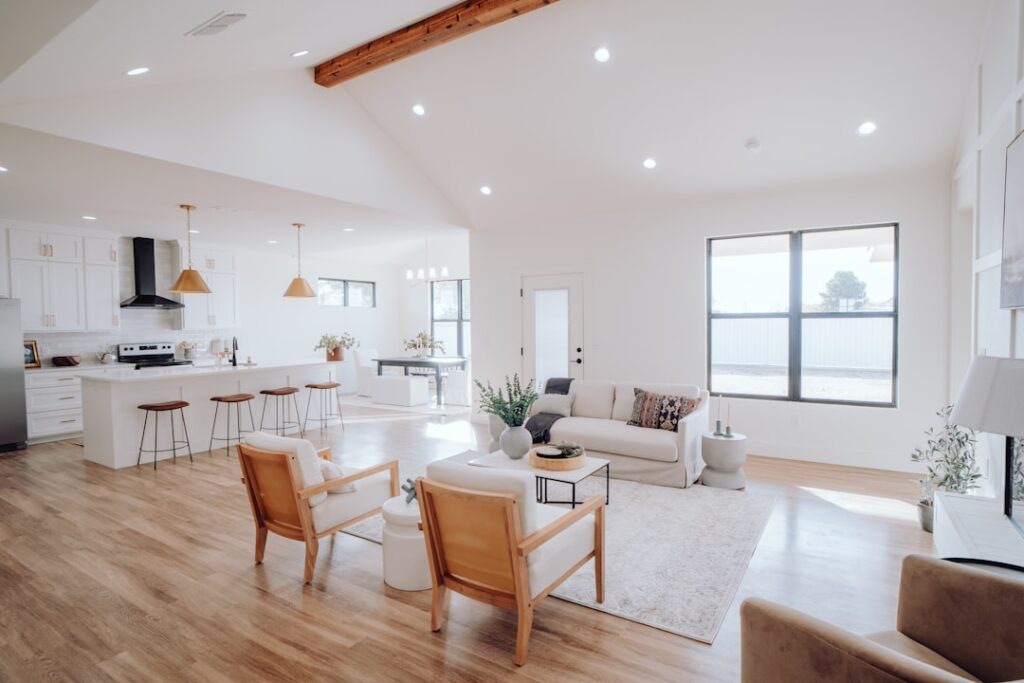
If you want a genuinely natural floor that snaps together without glue, linoleum click flooring deserves a hard look. Built from linseed oil, cork dust, wood flour, pine rosin, and a jute backing, this product gives you the eco credentials of traditional sheet linoleum in a floating, DIY-friendly plank or tile. I’ve installed both the sheet version and the click version over the years, and the click format solves the biggest headache homeowners face with old-school lino: the messy, unforgiving wet adhesive.
Marmoleum Click is the name most people recognize, but the category as a whole is worth understanding before you buy. Done right, a click linoleum floor lasts 20 to 40 years and stays comfortable underfoot the whole time.
What Linoleum Click Flooring Actually Is
Real linoleum is not vinyl, and that distinction matters. Vinyl is a petroleum-based plastic (PVC). Linoleum is made from renewable raw materials oxidized and pressed onto a natural fiber backing. The click version laminates that linoleum wear layer to a high-density fiberboard (HDF) core with a tongue-and-groove locking edge, then adds a cork underlayer on the bottom for warmth and acoustic dampening.
Each plank floats over your subfloor. Nothing is nailed or glued down, so the floor expands and contracts as a unit with temperature and humidity swings. Panels typically run around 12 x 36 inches for planks and 12 x 12 or 24 x 24 inches for square tiles, with a total thickness near 9.8 mm including the cork backing.
The Look and Feel
Linoleum has a distinctive marbled, slightly matte appearance you won’t get from a printed vinyl photo layer. Color runs all the way through the wear layer, so a scratch shows the same tone rather than a white scuff. You’ll find solid colors, subtle marble patterns, and concrete-look neutrals. It feels warmer and softer than tile or laminate because the cork backing gives a slight cushion underfoot, which your knees and back will appreciate in a kitchen.
Installation Notes From the Field
This is one of the more forgiving floating floors to install, but a few rules keep you out of trouble:
- Acclimate the boxes flat in the room for 24 to 48 hours at 65 to 75 degrees F before you start.
- Leave a 5/16 inch expansion gap around every wall and fixed object. Floating floors must move.
- Use a flat subfloor within 3/16 inch over 10 feet. Self-level any dips first.
- Add a moisture barrier (6-mil poly) over any concrete slab. The HDF core swells if it gets wet from below.
A handy DIYer can floor a 200-square-foot room in a weekend. Cuts are made with a sharp utility knife scoring the wear layer and snapping, or a fine-tooth jigsaw blade for tricky shapes.
Durability and Maintenance
Linoleum is tough. The surface naturally hardens over the first few months as the linseed oil continues to oxidize, which actually increases scratch resistance with age. A factory finish (Topshield or similar) resists scuffs and makes day-to-day cleaning simple: dry sweep, then damp mop with a pH-neutral cleaner.
Avoid soaking the floor. Standing water at the seams is the one real enemy of an HDF-core click product. Wipe spills promptly, use felt pads under furniture, and put a mat at exterior doors to catch grit. Treated this way, the floor will outlast most laminates by a decade or more.
Linoleum Click Flooring Cost
Expect to pay roughly $4 to $7 per square foot for the material itself, with premium colors and patterns near the top of that range. Professional installation adds about $2 to $4 per square foot. For a 250-square-foot kitchen, budget somewhere between $1,500 and $2,750 installed, or around $1,000 to $1,750 if you do the labor yourself.
That puts click linoleum above basic laminate and most luxury vinyl plank, but the 20-to-40-year lifespan and natural composition justify the premium for buyers who value sustainability.
Pros and Cons
Pros
- Made from renewable, biodegradable materials; low VOC and naturally antibacterial.
- Glue-free floating install that a DIYer can handle in a weekend.
- Color runs through the wear layer, so scratches stay hidden.
- Warm and slightly cushioned underfoot thanks to the cork backing.
- Long service life of 20 to 40 years with basic care.
- Gets harder and more scratch-resistant as it ages.
Cons
- HDF core is vulnerable to standing water and edge moisture, so it is not ideal for full bathrooms or basements with damp slabs.
- Higher upfront cost than laminate or standard LVP.
- Fewer color and style options than printed vinyl.
- Can develop a temporary yellow “ambering” cast in dark rooms that fades once exposed to light.
- Not suitable for high-moisture commercial wet areas.
Buying Guide: How to Choose
Match the product to the room. For kitchens, hallways, living rooms, and bedrooms, click linoleum is an excellent fit. For full bathrooms, laundry rooms, or below-grade basements, choose glue-down sheet linoleum or a waterproof product instead, since the floating HDF core can’t tolerate persistent moisture.
Run through this checklist before you order:
- Wear layer: genuine linoleum throughout, not a vinyl print layer marketed as “lino.”
- Core: high-density fiberboard with a pre-attached cork underlayer saves you a separate underlayment purchase.
- Locking system: a proven angle-tap or drop-lock mechanism installs faster and seals tighter.
- Warranty: look for 15 years residential or better; commercial-rated products carry heavier warranties.
- Waste factor: order 7 to 10 percent extra for cuts, and keep a few planks for future repairs since colors get discontinued.
Order one box first and live with a sample on your floor for a few days. Linoleum’s matte, organic look reads differently under natural and artificial light, and you want to be sure before you commit a whole room.
Is It Right for You?
Choose linoleum click flooring if you want a natural, low-emission floor with real longevity and you’re willing to keep moisture in check. It rewards homeowners who care about indoor air quality and sustainability and who don’t need a fully waterproof surface. If your space stays wet or floods, or if budget is the deciding factor, a waterproof vinyl plank may serve you better. For everywhere else in the house, this is one of the most honest, durable floors you can put down.
Prefer to explore on your own?
See how new flooring looks in your actual room in seconds — free, no signup.
Try the free Floor Studio →