
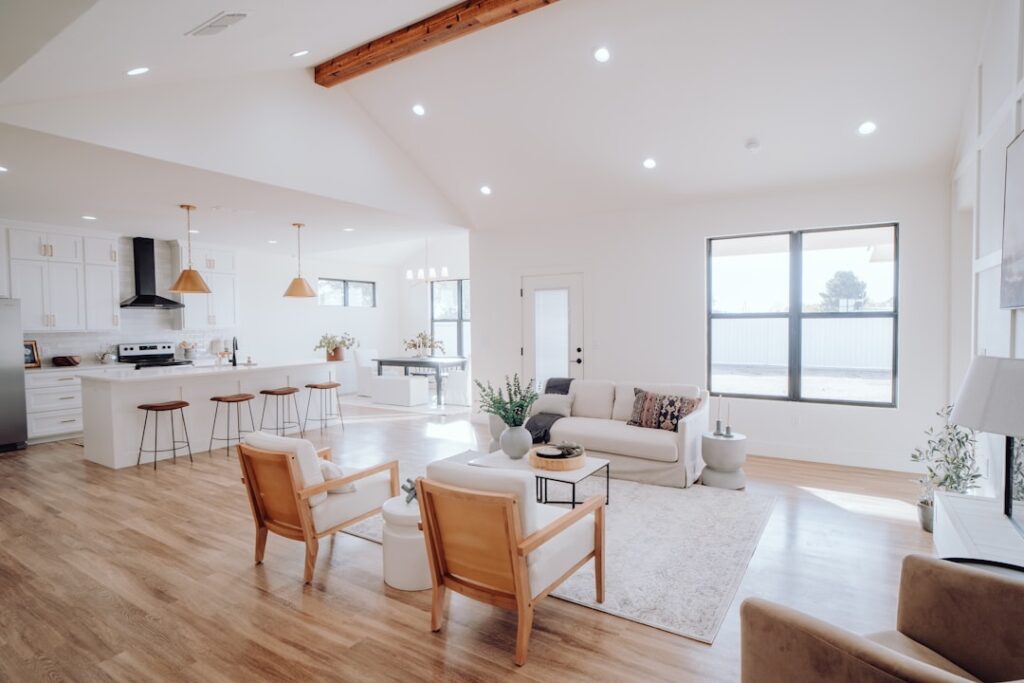
Long dismissed as your grandmother’s kitchen floor, linoleum squares are back in style, and for good reason. Made from linseed oil, cork dust, wood flour, and natural pigments pressed onto a jute backing, real linoleum is one of the most durable and genuinely eco-friendly flooring materials you can buy. Sold as individual tiles rather than sheet goods, linoleum squares give you design flexibility, easier installation, and simple repairs, since a damaged tile can be swapped without redoing the whole floor. Here is what you need to know before you buy.
Linoleum Is Not Vinyl
The single most important thing to understand is that linoleum and vinyl are completely different products, even though people use the names interchangeably. Vinyl is a petroleum-based plastic (PVC). Linoleum is made from natural, renewable materials and is biodegradable at the end of its life. That distinction affects everything: linoleum is more eco-friendly, has color that runs all the way through the tile rather than sitting in a printed layer, and lasts longer, often 20 to 40 years. Vinyl is cheaper and more waterproof. If a “linoleum” product is suspiciously inexpensive, it is almost certainly vinyl.
Types of Linoleum Squares
Linoleum tiles come in a few formats to suit different projects and skill levels.
- Click-lock linoleum tiles: Rigid tiles with an interlocking edge that float over the subfloor, no adhesive needed. The easiest DIY option.
- Glue-down tiles: Bonded to the subfloor with adhesive for a permanent, seamless-feeling install. Common in commercial settings.
- Self-adhesive (peel-and-stick): Backed with adhesive you expose and press down. Fast, but bond quality varies and edges can lift over time.
Tiles typically come in 12×12 inch and larger squares, in a wide range of solid colors and marbled patterns that let you create checkerboards, borders, and custom layouts hard to achieve with sheet flooring.
Cost of Linoleum Squares
Linoleum sits in the mid-range of flooring prices. Expect to pay roughly $3 to $7 per square foot for the tiles themselves, with premium designer lines running higher. Professional installation adds about $3 to $5 per square foot, though glue-down and self-adhesive tiles are well within reach for a confident DIYer, cutting that labor cost entirely. For a 200-square-foot kitchen, materials alone run somewhere between $600 and $1,400. It costs more than basic vinyl upfront, but its longer lifespan often makes it cheaper over the decades you own the floor.
Where Linoleum Squares Work Best
Durability and warmth make linoleum a strong fit for kitchens, entryways, hallways, and playrooms. It has a naturally warmer, slightly softer feel underfoot than tile or vinyl, and it holds up to heavy foot traffic for decades. Linoleum also has a naturally antimicrobial quality thanks to the linseed oil, which appeals to hospitals and schools and makes it a solid choice for family homes. It is best avoided in bathrooms and other constantly wet areas, though, because linoleum is water-resistant but not waterproof, and standing moisture can damage the jute backing.
How to Install Linoleum Squares
Click-lock and self-adhesive tiles are approachable weekend projects. Glue-down installs are best left to those comfortable working with adhesive and a notched trowel.
- Acclimate the tiles in the room for 24 to 48 hours so they adjust to temperature and humidity.
- Prep the subfloor so it is clean, dry, and flat. Any bumps or debris will show through or prevent tiles from seating.
- Find your center. Snap chalk lines to locate the room’s center and dry-lay tiles outward so you avoid thin slivers at the walls.
- Set the tiles. Click-lock tiles snap together; adhesive tiles press into troweled glue or peel-and-stick directly. Work from the center out.
- Cut edge and corner pieces with a sharp utility knife and a straightedge, warming stubborn tiles slightly to ease cutting.
- Roll the floor with a flooring roller on glue-down installs to ensure full contact, then let the adhesive cure per the label before heavy use.
Caring for Linoleum Floors
Linoleum is low-maintenance but not maintenance-free. Sweep or vacuum regularly to keep grit from scratching the surface, and damp-mop with a pH-neutral cleaner made for linoleum. Avoid harsh alkaline cleaners and excessive water, both of which degrade the material over time. Because the surface can dry out, many manufacturers recommend applying a protective floor finish or polish every year or two to maintain the sheen and add a wear layer. Wipe up spills promptly, and use felt pads under furniture legs to prevent dents and scuffs.
One quirk worth knowing about is “bloom,” a temporary yellowish cast that fresh linoleum can develop, especially in low light or under packaging. It is not a defect or permanent stain; it is a natural reaction of the linseed oil, and it fades within a few hours to days once the floor is exposed to daylight. If a newly installed linoleum floor looks slightly off-color at first, give it a week of normal light before worrying. This natural curing behavior is one more sign that you are dealing with a genuine linoleum product rather than a printed vinyl imitation.
Pros and Cons at a Glance
- Pros: Eco-friendly and biodegradable, 20 to 40 year lifespan, color runs through the full tile, warm and comfortable underfoot, naturally antimicrobial, easy tile-by-tile repair.
- Cons: Higher upfront cost than vinyl, not fully waterproof, needs periodic sealing or polishing, can yellow slightly under direct sunlight (a temporary effect called “bloom” that fades with light exposure).
Design Ideas With Linoleum Tiles
Selling linoleum by the tile rather than the roll unlocks patterns that sheet flooring simply cannot match. The classic move is a two-color checkerboard, which reads as retro-modern in a kitchen and hides everyday crumbs better than a single solid color. You can also run a contrasting border tile around the perimeter of a room to frame the space, or set the field on a 45-degree diagonal to make a small room feel wider. Because linoleum comes in dozens of saturated hues and marbled patterns, some homeowners inlay a simple medallion or stripe at an entryway for a custom, high-end look at a fraction of what cut stone would cost. Just plan the layout on graph paper first and dry-lay the tiles before committing, since through-body color means every cut is permanent.
Frequently Asked Questions
Are linoleum squares the same as vinyl tiles?
No. Linoleum is made from natural materials like linseed oil and cork, while vinyl is petroleum-based plastic. Linoleum is more eco-friendly and longer-lasting; vinyl is cheaper and more waterproof.
Can I install linoleum squares in a bathroom?
It is not recommended. Linoleum is water-resistant but not waterproof, and standing moisture can damage the jute backing. Choose vinyl or tile for full bathrooms.
How long do linoleum floors last?
With proper care, real linoleum lasts 20 to 40 years, outlasting most vinyl. Its through-body color also means wear does not expose a different-colored layer.
Do linoleum squares need sealing?
Many benefit from a protective finish or polish applied every one to two years to maintain the sheen and add a wear layer, though some modern tiles come pre-finished.
Can linoleum squares go over an existing floor?
Sometimes. Click-lock tiles can float over a sound, flat existing floor, while glue-down and peel-and-stick tiles need a clean, smooth, fully bonded substrate. Never install over a cushioned or uneven surface, and address any loose or damaged flooring first so the new tiles seat properly.
The Bottom Line
Linoleum squares deliver a rare combination of durability, eco-friendliness, and design flexibility that keeps this classic material relevant. Just remember it is not vinyl: it costs more upfront, needs occasional sealing, and should stay out of soaking-wet rooms. In a kitchen, hallway, or playroom, though, a well-installed linoleum tile floor can outlast nearly everything else in the house while staying warm and comfortable underfoot the whole time.


