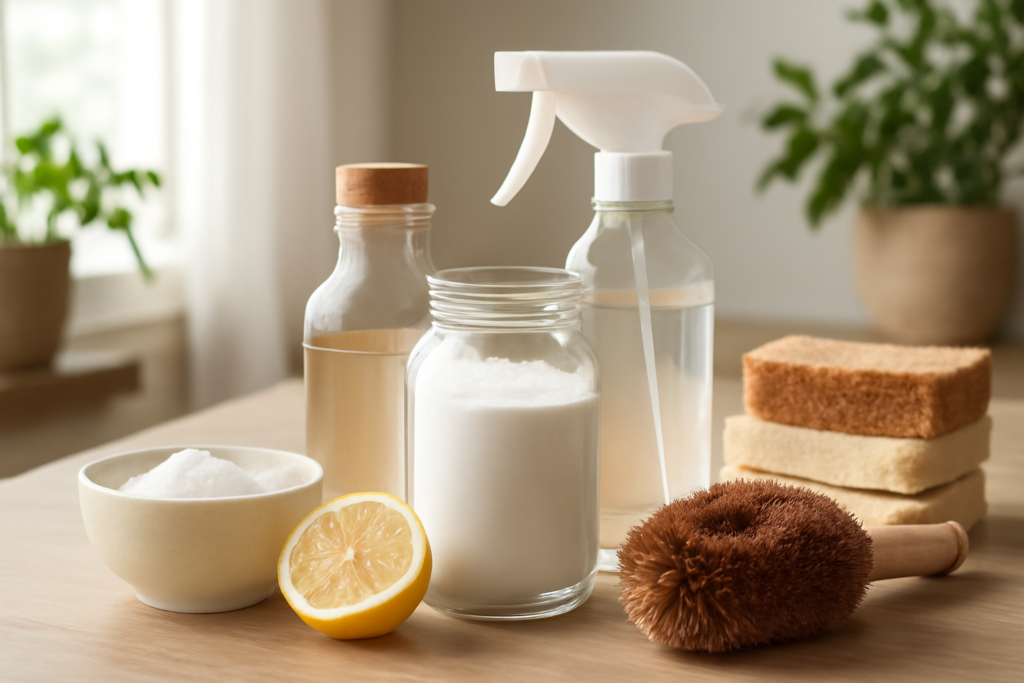
A septic tank is a living system, and the cleaners you pour down the drain can either leave it alone or wipe out the bacteria that make it work. That is why every homeowner on a septic system needs a practical list of cleaning products safe for septic systems before stocking the cleaning cabinet. Get it wrong and you risk a sluggish tank, foul odors, and a drain field failure that costs $5,000 to $20,000 to replace.
- How Septic Systems Actually Work
- What Makes a Cleaner Septic-Safe
- The List of Septic-Safe Cleaning Products
- All-Purpose and Surface Cleaners
- Toilet Bowl and Bathroom Cleaners
- Dish and Laundry Detergents
- Drain Maintenance
- Products and Ingredients to Avoid
- Smart Habits That Protect the Tank
- Do You Need Septic Additives?
- Frequently Asked Questions
The good news is that keeping a septic tank healthy does not mean scrubbing with vinegar and a prayer. Plenty of effective, store-bought products are perfectly compatible with the anaerobic bacteria that break down waste. Below is a room-by-room breakdown of what to buy, what to skip, and why the chemistry matters.
How Septic Systems Actually Work
Wastewater flows from your house into a buried concrete or plastic tank. Inside, solids settle to the bottom and form sludge, grease floats to the top as scum, and a colony of naturally occurring bacteria digests the organic material. The partially treated liquid then drains into a leach field where soil finishes the job.
Those bacteria are the whole point. Anything that kills them in large quantities, such as disinfectants, chlorine bleach, and antibacterial agents, slows digestion. When solids stop breaking down, they build up faster, the tank needs pumping sooner, and untreated waste can migrate into the drain field. A typical tank should be pumped every three to five years, but chemical abuse can shorten that dramatically.
What Makes a Cleaner Septic-Safe
A product earns a spot on a septic-safe list when it breaks down without harming bacteria or clogging the tank. Look for these traits:
- Biodegradable surfactants that microbes can digest rather than persist in the tank.
- No or low chlorine bleach. An occasional splash is fine; daily heavy use is not.
- Free of quaternary ammonium compounds (listed as benzalkonium chloride or “quats”) in large amounts, since these are antimicrobial by design.
- Phosphate-free formulas, which are gentler on the drain field and downstream water.
- Water-based rather than solvent-heavy ingredients.
Many mainstream products now carry the EPA “Safer Choice” label, which is a reliable shortcut. If a bottle wears that logo, it has been vetted for both the environment and, in practice, septic compatibility.
The List of Septic-Safe Cleaning Products
Here is a working list of cleaning products safe for septic systems, organized by task. Product formulas change, so always glance at the label, but these categories and examples are reliable starting points.
All-Purpose and Surface Cleaners
- Seventh Generation Multi-Surface Cleaner and disinfecting sprays labeled plant-based
- Method All-Purpose Cleaner
- Mrs. Meyer’s Clean Day Multi-Surface Everyday Cleaner
- Simple Green (the standard biodegradable formula, diluted per label)
- Plain distilled white vinegar diluted 1:1 with water for glass and counters
Toilet Bowl and Bathroom Cleaners
- Seventh Generation Toilet Bowl Cleaner
- Ecover Toilet Bowl Cleaner
- Baking soda plus a splash of vinegar for a weekly scrub
- Bon Ami powder cleanser for tubs and sinks (non-chlorinated)
Dish and Laundry Detergents
- Liquid laundry detergents labeled low-suds and phosphate-free, such as Seventh Generation, ECOS, and Charlie’s Soap
- Liquid or pod dishwasher detergents that are phosphate-free (powders can clog older systems)
- Dawn and other liquid dish soaps in normal amounts are generally fine
Drain Maintenance
- Enzyme-based drain treatments like Bio-Clean or Green Gobbler enzyme formulas
- Monthly bacterial additives (RID-X) if you want extra insurance, though a healthy tank rarely needs them
Notice a pattern: liquids beat powders, plant-based beats disinfectant, and less is more. Even a “safe” cleaner becomes a problem if you use ten times the recommended dose.
Products and Ingredients to Avoid
Some items belong nowhere near a septic drain. Keep these off your shopping list or reserve them for surfaces you can wipe and rinse into the trash rather than the sink.
- Chlorine bleach in quantity. A cup once in a while dissipates, but pouring it daily into toilets or drains sterilizes the tank.
- Antibacterial and disinfecting wipes. They are loaded with quats and, worse, people flush them, causing clogs.
- Drain openers like Drano and Liquid-Plumr. The lye and sulfuric acid kill bacteria and can corrode pipes and tank components.
- Automatic toilet bowl tablets that release bleach into every flush around the clock.
- Powdered cleansers with chlorine such as chlorinated scouring powders.
- Solvent-based degreasers, paint thinners, and pesticides poured down any drain.
Also avoid dumping cooking grease, coffee grounds, or “flushable” wipes. None of these break down well and all shorten the interval between pump-outs.
Smart Habits That Protect the Tank
Product choice is only half the equation. How you clean matters just as much.
- Dilute and dose correctly. Follow label amounts; more cleaner does not mean cleaner surfaces.
- Space out your loads. Running five laundry loads in one day floods the tank and pushes solids into the drain field. Spread washing across the week.
- Fix leaky fixtures. A running toilet can add hundreds of gallons a day, overwhelming the system.
- Keep bleach occasional. If you must disinfect, do it, then avoid heavy chemical use for a few days so bacteria can recover.
- Pump on schedule. Budget $300 to $600 every three to five years for professional pumping. It is far cheaper than a new drain field.
Do You Need Septic Additives?
Store shelves are full of monthly “septic treatments” promising to boost bacteria. For most homes with normal use and reasonable cleaners, the tank generates plenty of bacteria on its own from everyday waste. Additives are not a substitute for pumping, and no product can “eliminate the need to pump,” despite marketing claims.
Enzyme and bacterial additives can help after a round of antibiotics, heavy cleaning, or a period of vacancy when the tank sat unused. Treat them as an occasional tune-up, not a monthly requirement, and be skeptical of any brand claiming miracle results.
Frequently Asked Questions
Can I ever use bleach with a septic system?
Yes, in moderation. A small amount, roughly a cup or less, gets diluted by the water in the tank and does little lasting harm. The danger is chronic heavy use, like automatic bleach tablets or pouring bleach down drains every day, which keeps the bacteria population suppressed.
Are vinegar and baking soda safe for septic tanks?
Both are excellent septic-safe choices. Vinegar is a mild acid that rinses away without harming bacteria, and baking soda is a gentle abrasive and deodorizer. Together they handle most bathroom and kitchen jobs with zero risk to the tank.
Is dish soap safe to put down a septic drain?
Ordinary liquid dish soap in normal amounts is fine. Choose phosphate-free brands when you can, avoid antibacterial versions, and never pour grease down the drain alongside it, since fat is what actually causes buildup.
What is the single worst product for a septic system?
Chemical drain openers top the list. A single bottle of lye- or acid-based cleaner can kill a large share of the tank’s bacteria and corrode the system. Reach for a drain snake or an enzyme drain product instead.
How do I know if a product is septic-safe?
Read the label for “septic safe,” “biodegradable,” or the EPA Safer Choice logo. Favor liquids over powders and plant-based formulas over disinfectants. When in doubt, less product and more dilution is always the safer route for your tank.
Stick to this list of cleaning products safe for septic systems, keep bleach occasional, and pump on schedule. Do that and your tank will quietly do its job for decades without an expensive surprise.