
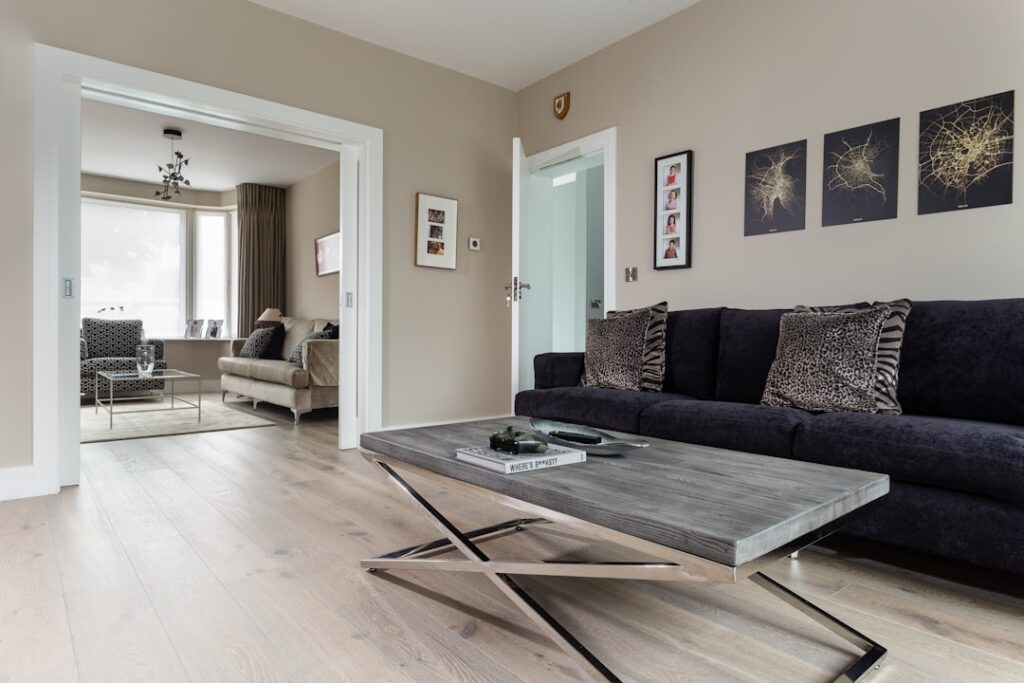
The living room is where your flooring choice gets the most attention from guests, family, and anyone scrolling your real estate listing someday. Living room laminate flooring has evolved dramatically from the shiny, fake-looking planks of the early 2000s into products with realistic textures, matte finishes, and wide-plank formats that genuinely fool people into thinking they are walking on real hardwood. Choosing the right style, color, and quality tier makes all the difference between a living room that feels elevated and one that falls flat.
Why Laminate Works Well in Living Rooms
Living rooms see a unique combination of demands. Heavy foot traffic, furniture weight, direct sunlight through windows, and the occasional spilled drink all test your flooring daily. Laminate handles these conditions well because of its high-density fiberboard (HDF) core topped with a melamine wear layer that resists scratches, fading, and dents better than most people expect.
The financial argument is compelling too. A quality laminate floor costs $3.00 to $6.00 per square foot installed, compared to $8.00 to $15.00 for equivalent hardwood. For a 300 square foot living room, that difference amounts to $1,500 to $2,700 in savings. That freed-up budget can go toward better furniture, window treatments, or other upgrades that enhance the room.
Best Wood-Look Styles for 2026
The most convincing laminate products share several design features that elevate them above budget alternatives:
Wide-plank format is the single biggest factor in achieving a realistic look. Planks 7 inches wide and 48-54 inches long mimic the proportions of premium hardwood flooring. Narrow 5-inch planks immediately read as laminate to most people because real hardwood in that width is associated with older, builder-grade installations.
Embossed-in-register (EIR) texture aligns the surface texture with the printed grain pattern underneath. When you run your fingers across the plank, you feel grooves where the grain lines are and smooth areas between them, exactly like real wood. This technology is available in mid-range and premium products starting around $2.50 per square foot.
Matte and low-sheen finishes look more natural than high-gloss options. Real hardwood floors have a subtle sheen, not a mirror-like gloss. Matte laminate also hides dust, footprints, and minor surface scratches far better than glossy alternatives, which is a practical benefit in a high-traffic living room.
Trending Colors and Tones
Color trends in living room laminate flooring have shifted decisively toward warmth. Here are the most popular tones and what they work best with:
- Natural white oak: The most popular flooring color in 2026 across all materials. Warm golden undertones, visible grain, and versatility with both modern and traditional decor. Works in any lighting condition
- Honey oak: Warmer and more amber than natural white oak. Creates a cozy, inviting atmosphere in living rooms with cooler wall colors or north-facing windows
- Warm walnut: Rich chocolate-brown tones that add drama and sophistication. Best in larger living rooms with ample natural light, as dark floors can make small spaces feel smaller
- Whitewashed and light ash: Pale, airy tones that maximize the perception of space. Popular in coastal and Scandinavian-inspired interiors. Shows dirt more than medium tones but pairs beautifully with white trim and neutral furnishings
- Smoked oak: A deep gray-brown that bridges the gap between the gray trend of recent years and the current warm-tone movement. Good transitional choice if your decor mixes cool and warm elements
Avoid very dark or very light extremes if you want a floor that hides imperfections. Medium tones between natural oak and walnut show the least amount of dust, pet hair, and minor scratches in daily life.
Top Laminate Brands for Living Rooms
These brands consistently produce the most realistic wood-look laminate products:
- Pergo (Outlast+, TimberCraft+): The company that invented laminate flooring still makes some of the best. TimberCraft+ features 10mm thickness with attached underlayment and EIR texture. Prices run $2.50 to $4.00 per sq ft at Home Depot and Lowe’s
- Quick-Step (Impressive, NatureTEK): Belgian manufacturer known for exceptional visual quality and patented Uniclic locking system. Their Impressive line at $2.00 to $3.50 per sq ft is the sweet spot for living rooms
- Mohawk (RevWood, RevWood Plus): RevWood Plus features a waterproof surface layer, which solves laminate’s traditional water weakness. Premium pricing at $3.50 to $5.50 per sq ft but worth it for open-concept living areas connected to kitchens
- Shaw (Repel, Distinction Plus): Shaw’s Repel laminate features their WaterGuard technology for spill protection up to 24 hours. Good textures and colors at $2.50 to $4.00 per sq ft
Installation Tips for Living Rooms
Living rooms present specific installation considerations that differ from bedrooms or hallways. Large picture windows mean the floor is visible from outside, so plank direction matters. Running planks parallel to the longest wall creates a sense of length. Running them perpendicular to the primary light source minimizes the visibility of seams.
For open-concept spaces where the living room connects to a kitchen or dining area, use the same laminate throughout without transition strips. This continuous flow makes the space feel larger and more cohesive. Most laminates allow runs up to 40 feet in one direction before requiring an expansion break, which is sufficient for the majority of open floor plans.
Underlayment selection affects both sound and feel. In a living room where you watch TV, host conversations, and walk barefoot, a premium underlayment with sound-dampening properties ($0.40 to $0.75 per sq ft) significantly reduces the hollow sound that laminate is sometimes criticized for. Cork underlayment provides the best sound reduction, while foam options are more affordable.
Handling Furniture and Heavy Traffic
Living rooms contain heavy furniture that can damage laminate if not managed properly. Sofas, entertainment centers, and bookshelves concentrate hundreds of pounds through small contact points. Always use felt or rubber furniture pads under every leg and base. Replace these pads annually because they compress and lose effectiveness.
Rearranging furniture creates the highest risk of scratching. Never drag a sofa, coffee table, or chair across laminate. Lift or use furniture sliders designed for hard flooring surfaces. Area rugs in high-traffic zones like the path between the front door and the couch protect the wear layer in the areas that see the most footsteps.
Direct sunlight through living room windows can cause laminate to fade unevenly over time. If your living room gets strong afternoon sun, use curtains, blinds, or UV-filtering window film to reduce direct exposure. Move area rugs and furniture periodically to ensure the floor ages evenly and does not develop visible tan lines.
Laminate vs LVP for Living Rooms
The biggest competitor to laminate in living rooms is luxury vinyl plank. Both offer wood-look aesthetics at similar price points, but they have distinct strengths. Laminate generally provides a more rigid, solid feel underfoot that some people prefer for living spaces. It also resists scratching and fading slightly better than most LVP products at the same price point.
LVP wins on water resistance, which matters if your living room connects to a kitchen or if spills are frequent. LVP is also quieter underfoot without premium underlayment, thanks to its inherent flexibility. For living rooms with no moisture concerns, laminate with good underlayment provides a slightly more authentic hardwood feel. For open-concept spaces that include a kitchen, LVP’s waterproof advantage tips the scale. Both are excellent choices, and either will serve a living room well for 15-20 years.
Prefer to explore on your own?
See how new flooring looks in your actual room in seconds — free, no signup.
Try the free Floor Studio →

