A luxury bedroom is not defined by how much you spend but by how intentional every choice feels. Five-star hotels achieve that enveloping, high-end atmosphere through specific techniques: layered bedding, controlled lighting, quality materials, and deliberate restraint. You can replicate most of those techniques at home for a fraction of a hotel renovation budget, and the result is a room that genuinely improves how you sleep and feel every morning.
Start With the Bed as the Focal Point
In any high-end bedroom, the bed commands at least 60% of the visual attention. An upholstered headboard in performance velvet or linen ($300 to $800 for a queen) instantly elevates the room compared to a basic metal or wood frame. Choose a headboard that reaches at least 48 inches from the floor to create a sense of scale and importance against the wall.
Platform beds with clean lines suit modern aesthetics, while a four-poster or canopy frame adds drama in traditional spaces. The Restoration Hardware Cloud Bed ($3,000 to $5,000) is the aspirational benchmark, but brands like Article and Castlery offer similar silhouettes at $800 to $1,500. Whatever frame you choose, invest in a quality mattress first. A Saatva Classic ($1,200 to $1,800) or Tempur-Pedic Adapt ($1,700 to $2,400) outperforms most budget mattresses in durability and sleep quality.
Hotel-Quality Bedding Layering
Luxury hotels use a specific layering formula: fitted sheet, flat sheet, lightweight blanket, duvet, and at least four pillows plus decorative shams. Start with 400-thread-count long-staple cotton sheets minimum. Anything above 600 thread count with single-ply yarns delivers a noticeably smoother hand feel. Brooklinen Luxe Sateen ($150 to $180 for a set) and Boll and Branch Signature ($200 to $250) consistently rank among the best.
A white duvet cover is the single most luxurious-looking choice. It photographs beautifully, washes easily, and creates that crisp hotel aesthetic instantly. Layer a textured throw blanket at the foot of the bed in a complementary tone, such as charcoal, camel, or sage, for visual warmth. Euro shams (26-by-26-inch squares) propped against the headboard add depth and dimension that standard pillows alone cannot achieve.
Lighting That Sets the Mood
Overhead fixtures with dimmer switches give you full control over bedroom ambiance. Replace any boob light (the dome-shaped ceiling fixture in most builder-grade homes) with a semi-flush drum shade ($80 to $200) or a statement chandelier ($150 to $500) that serves as a design element. Install a dimmer ($15 to $25 for the switch) on every overhead light in the bedroom.
Bedside lighting matters equally. Matching table lamps on nightstands with linen or fabric shades create warm, diffused light for reading. Mount swing-arm wall sconces ($60 to $150 each) to free up nightstand surface area and add a boutique-hotel touch. LED strip lighting behind the headboard or under the bed frame ($15 to $30 for a 16-foot strip) provides subtle ambient glow that makes the room feel like a retreat.
Color Palettes That Read as Luxurious
Muted, saturated tones consistently read as more expensive than bright or pastel colors. Deep navy, charcoal, forest green, warm taupe, and rich burgundy create cocoon-like bedrooms that feel intimate and sophisticated. Paint the walls in a matte or eggshell finish; flat paint hides imperfections while high gloss belongs in bathrooms and trim work.
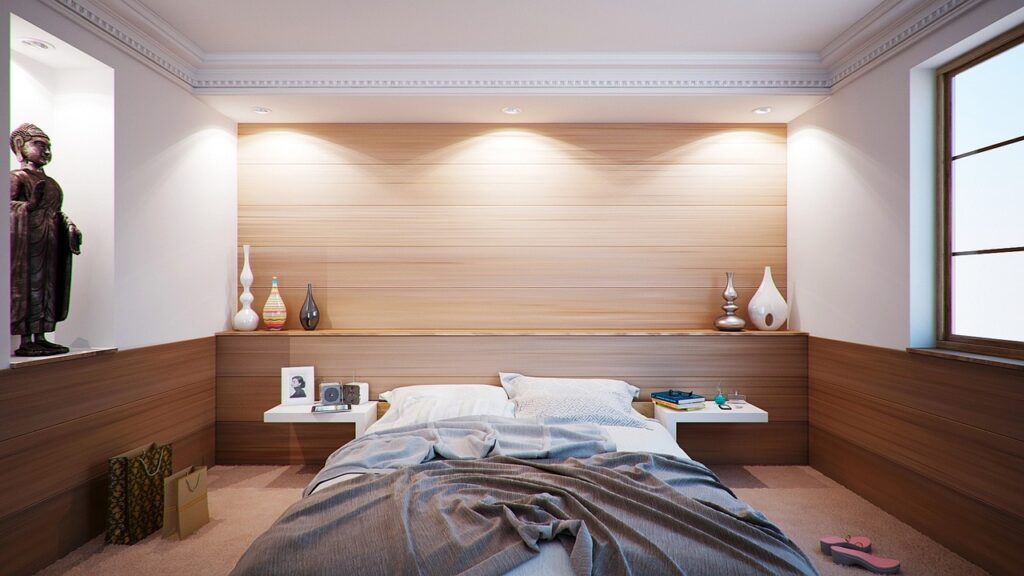
Monochromatic schemes work exceptionally well in bedrooms. Layer different shades and textures of the same color family, such as cream walls with ivory bedding, a camel throw, and walnut furniture. The variation in texture prevents monotony while the unified palette feels curated rather than matched. Accent with metallics sparingly: brushed brass drawer pulls, a gold-framed mirror, or a bronze table lamp base.
Furniture Placement and Proportions
A well-designed bedroom feels spacious even when it is not large. Nightstands should be within 2 to 4 inches of the headboard height for visual balance. A bench or ottoman at the foot of the bed adds functionality and frames the bed like a piece of art. Leave at least 24 inches of walking space on each side of the bed; anything less feels cramped.
One statement piece of furniture, like an accent chair in the corner with a floor lamp and small side table, creates a reading nook that makes the room feel like a suite rather than just a sleeping space. Skip the dresser if closet space allows; fewer pieces of larger-scale furniture look more expensive than many small pieces crowding the room.
Window Treatments That Complete the Look
Floor-to-ceiling curtains are non-negotiable in a luxury bedroom. Mount the rod 4 to 6 inches below the ceiling and let panels puddle or break at the floor. Choose lined curtain panels that block light for sleeping and insulate against temperature swings. Velvet curtains ($40 to $100 per panel) add weight and richness, while Belgian linen panels ($60 to $150 per panel) suit a more relaxed aesthetic.
Blackout cellular shades ($80 to $200 per window) installed behind decorative curtains give you complete light control without sacrificing style. The combination of a functional shade plus a decorative curtain panel is the same approach used in high-end hotel rooms and designer show homes.
Finishing Details That Make the Difference
Small details separate a nice bedroom from a truly elevated space. A large area rug (at least 8-by-10 feet for a queen bed) grounds the space and adds warmth underfoot. Position it so that 18 to 24 inches extends beyond each side of the bed. A quality wool or wool-blend rug ($300 to $800) feels noticeably better than synthetic alternatives.
Fresh flowers or a potted orchid on the nightstand, a scented candle or diffuser in a subtle fragrance, and a stack of two or three hardcover books add personality without clutter. Keep surfaces edited: each nightstand should hold a lamp, one or two small items, and nothing else. That visual discipline is what separates a luxury bedroom from a decorated one, and it costs nothing except the willingness to put things away.