Luxury vinyl tile in bathroom applications has surged in popularity — and for good reason. Modern LVT delivers the look of natural stone or ceramic at a fraction of the cost, installs faster, feels warmer and softer underfoot, and in its SPC (stone polymer composite) form is 100% waterproof. For homeowners who want beautiful bathroom floors without the expense and complexity of traditional tile, LVT is a compelling solution.
This guide explains why luxury vinyl tile works so well in bathrooms, which product types to choose, how to install it properly in wet environments, how LVT compares to ceramic tile, and what maintenance looks like in a high-moisture space.
Why LVT Works in Bathrooms
Bathrooms present the most demanding moisture conditions in a home — splashing water, steam from showers, high humidity, and the ever-present risk of a toilet overflow or tub leak. Luxury vinyl tile handles all of these challenges effectively for several reasons.
Waterproof core construction. Modern SPC (stone polymer composite) luxury vinyl tile has a rigid core made from a blend of limestone powder and PVC stabilizers. This core absorbs zero moisture — even if water sits on the surface for hours or seeps between seams, the material will not swell, warp, or degrade. This is a significant advantage over laminate flooring and even some hardwoods, which can be ruined by prolonged water exposure.
Comfortable underfoot. Unlike ceramic or stone tile, LVT has a slight give that is easier on joints and warmer to the touch. For a room where you frequently stand barefoot — stepping out of a shower, brushing teeth, bathing kids — this comfort factor matters more than people expect.
Easy installation. Most LVT tiles use click-lock systems that float over the existing subfloor without adhesive, thin-set, or grout. A bathroom floor can be installed in 3 to 5 hours by an experienced DIYer. This contrasts sharply with ceramic tile, which requires thinset, grout, curing time, and often backer board installation.
Design versatility. LVT is available in stone-look tiles that convincingly mimic marble, travertine, slate, and concrete. The printing technology has become so advanced that even up close, quality LVT is difficult to distinguish from real stone. For a full overview of LVT products, visit our LVT flooring guide.
Waterproof SPC Options
For bathroom use, SPC luxury vinyl tile is the recommended product type. SPC stands for stone polymer composite (also called rigid core vinyl), and it represents the latest generation of LVT technology.
| Feature | SPC Luxury Vinyl Tile | WPC Luxury Vinyl Tile | Flexible/Glue-Down LVT |
|---|---|---|---|
| Core material | Limestone + PVC (rigid) | Wood plastic composite (rigid) | Flexible PVC layers |
| Waterproof | 100% waterproof | 100% waterproof | Water-resistant (seams vulnerable) |
| Thickness | 4mm – 7mm | 5mm – 8mm | 2mm – 5mm |
| Dent resistance | Excellent (rigid core) | Good | Fair |
| Comfort underfoot | Firm | Slightly softer | Depends on subfloor |
| Installation | Click-lock floating | Click-lock floating | Full-spread adhesive |
| Bathroom suitability | Excellent | Good | Good (when properly sealed) |
| Price per sq ft | $3 – $7 | $4 – $8 | $2 – $5 |
SPC is preferred for bathrooms because its rigid limestone core is completely inert to water — it will not expand even 0.01% when submerged. WPC works too but has slightly more expansion potential in prolonged water exposure. Flexible glue-down LVT can work in bathrooms when installed by a professional with fully sealed seams, but click-lock SPC is easier and more reliable for most homeowners. For more on waterproof flooring options, see our waterproof flooring guide.
Stone-Look LVT for Bathrooms
The most popular luxury vinyl tile styles for bathrooms replicate natural stone appearances.
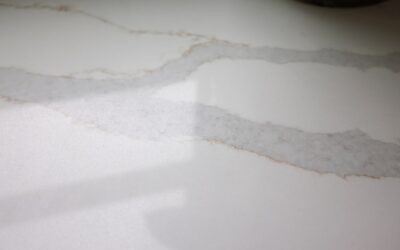
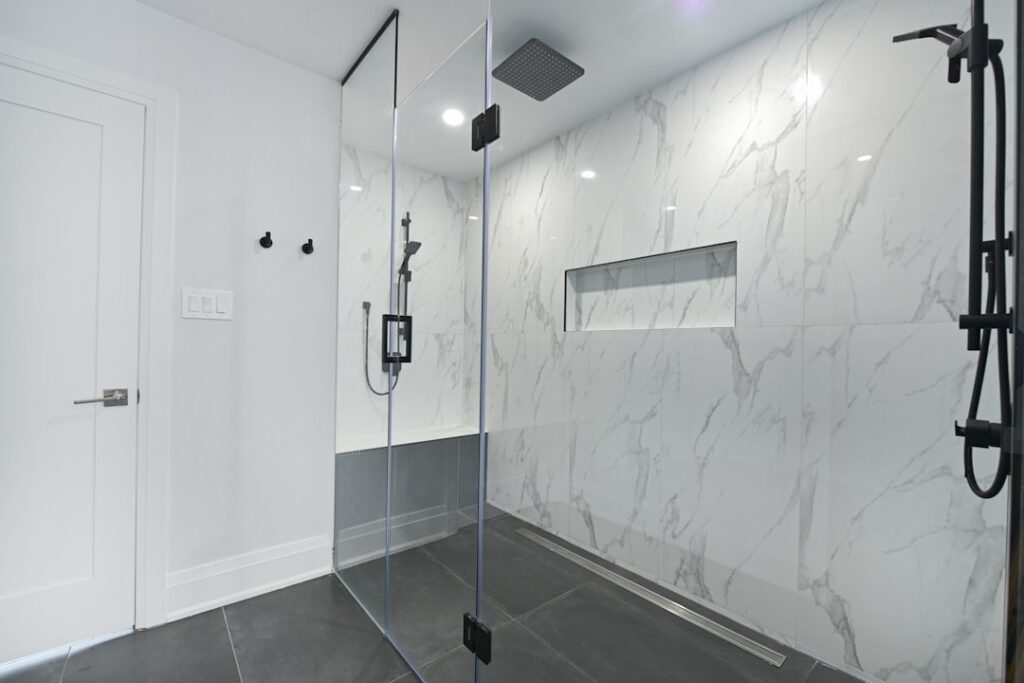
- Marble-look LVT — Carrara, Calacatta, and Statuario marble patterns are the most requested. White-based tiles with grey or gold veining create a luxury spa feel without marble’s porosity, etching risk, or high cost.
- Travertine-look LVT — Warm beige and ivory tones with the characteristic pitting texture of natural travertine. Popular for traditional and Mediterranean-style bathrooms.
- Concrete-look LVT — Smooth grey tones in matte finishes for modern, minimalist, and industrial-inspired bathrooms. Growing rapidly in popularity.
- Slate-look LVT — Dark grey and charcoal tones with natural cleft texture. Excellent for creating dramatic, moody bathroom designs.
Tile-format LVT (square or rectangular tiles rather than planks) is most authentic for bathroom stone looks. Common sizes include 12″ x 24″, 12″ x 12″, and 18″ x 18″ — the same dimensions as real stone or ceramic tile. Check out our bathroom flooring guide for more design options.
Installation Tips for Wet Areas
While SPC luxury vinyl tile is waterproof, proper installation in a bathroom ensures long-term performance and prevents moisture issues beneath the floor.
Step-by-step bathroom LVT installation:
- Remove the toilet. Never cut LVT around a toilet base — remove the toilet, install the flooring, then reinstall with a new wax ring.
- Check subfloor condition. The subfloor must be flat (within 3/16″ per 10 feet), dry, and structurally sound. Repair any soft spots or water damage before installing new flooring.
- Apply moisture barrier if needed. Over concrete subfloors, use a 6-mil polyethylene moisture barrier or a product with an attached vapor barrier. Over plywood subfloors in upper-floor bathrooms, this is usually unnecessary.
- Maintain expansion gaps. Leave a 1/4″ gap around all walls, fixtures, and transitions. LVT expands and contracts slightly with temperature changes — without expansion gaps, the floor can buckle.
- Click and lock tiles. Follow the manufacturer’s recommended starting wall and installation direction. Stagger end joints by at least 6 inches between rows.
- Apply 100% silicone sealant around fixtures. Where the floor meets the toilet flange, tub/shower base, and vanity base, apply a bead of 100% silicone caulk (color-matched to the flooring). This prevents water from seeping under the flooring at the most vulnerable points.
- Reinstall the toilet with a new wax ring, ensuring the bolts are tight and the base is sealed.
- Install baseboards and transition strips to cover expansion gaps.
Critical detail: silicone around fixtures. The single most important installation step for bathroom LVT is sealing around the toilet, tub, and shower with silicone. While the LVT tiles themselves are waterproof, water can travel through click-lock seams if it pools at a fixture base. Silicone creates a watertight perimeter that prevents this. For additional installation guidance, see our LVP in bathroom guide.
LVT vs Ceramic Tile in Bathrooms
| Factor | Luxury Vinyl Tile (SPC) | Ceramic/Porcelain Tile |
|---|---|---|
| Waterproof | Yes (core and surface) | Yes (surface — grout needs sealing) |
| Material cost | $2 – $7 per sq ft | $3 – $15 per sq ft |
| Installation cost | $2 – $5 per sq ft | $5 – $12 per sq ft |
| Total installed | $4 – $12 per sq ft | $8 – $27 per sq ft |
| Comfort underfoot | Warm, slight give | Cold, hard |
| Durability | 15 – 25 years | 30 – 75+ years |
| DIY difficulty | Easy (click-lock) | Moderate to hard (thin-set, grout, cuts) |
| Maintenance | Sweep and mop — no grout | Sweep, mop, plus grout cleaning/sealing |
| Resale value | Neutral to positive | Positive (tile is expected in bathrooms) |
| Design options | Stone and wood looks | Unlimited (stone, mosaic, patterns, custom) |
| Repair | Individual tile replacement easy | Difficult (risk of cracking adjacent tiles) |
Choose LVT when: Budget is a priority, you want a DIY-friendly installation, comfort underfoot matters, or you plan to update the bathroom again within 15 to 20 years.
Choose ceramic/porcelain tile when: You want maximum longevity (30+ years), resale value is critical, you prefer the authentic feel of real stone, or you are investing in a forever home.
Cost Comparison
The cost advantage of luxury vinyl tile in bathroom installations is significant, especially when including labor.
| Scenario (40 sq ft bathroom) | LVT (SPC) | Porcelain Tile | Savings with LVT |
|---|---|---|---|
| Material | $160 – $280 | $200 – $600 | $40 – $320 |
| Installation labor | $80 – $200 | $200 – $480 | $120 – $280 |
| Supplies (underlayment, grout, etc.) | $20 – $40 | $40 – $80 | $20 – $40 |
| Total | $260 – $520 | $440 – $1,160 | $180 – $640 |
For a typical 40 square foot bathroom, LVT saves $180 to $640 compared to porcelain tile. If you are renovating multiple bathrooms, the savings multiply quickly.
Maintenance in High-Moisture Areas
Maintaining luxury vinyl tile in bathroom spaces is straightforward, but the high-moisture environment requires a few specific habits.
- Wipe up standing water promptly. While SPC is waterproof, standing water at seam edges can eventually work underneath the flooring. Use a bath mat near the tub/shower and wipe up puddles after bathing.
- Run the bathroom exhaust fan. High humidity over time can affect the subfloor beneath the LVT. Run the fan during and for 20 minutes after showers to reduce ambient moisture.
- Clean weekly with a damp mop and a pH-neutral vinyl floor cleaner. Avoid abrasive cleaners, steel wool, or harsh chemicals like acetone.
- Inspect silicone seals annually. Check the silicone caulk around the toilet base, tub/shower base, and vanity. Recaulk if you see cracking, peeling, or gaps — this is your primary defense against water intrusion.
- Avoid rubber-backed bath mats. Rubber and latex can stain or discolor vinyl flooring. Use cloth or PVC-backed mats instead.
Frequently Asked Questions
Is luxury vinyl tile waterproof enough for bathrooms?
Yes. SPC luxury vinyl tile is 100% waterproof — the rigid limestone-polymer core absorbs zero moisture. It handles splashes, spills, puddles, and high humidity without swelling, warping, or delaminating. It is one of the best waterproof flooring options available for bathrooms.
Can I install LVT in a bathroom myself?
Yes. Click-lock SPC tiles are one of the most DIY-friendly flooring options. The key bathroom-specific steps are removing and reinstalling the toilet, maintaining expansion gaps, and applying silicone sealant around fixtures. Most homeowners with basic tool skills can complete a bathroom in 3 to 5 hours.
Will LVT look cheap in a bathroom?
Not if you choose a quality product. Mid-range and premium LVT ($4 to $7 per square foot) features realistic stone textures with embossed surfaces, authentic color variation, and beveled edges that are difficult to distinguish from real stone at a normal viewing distance. Budget LVT (under $2 per square foot) can look artificial.
Can I put LVT over existing bathroom tile?
Yes, as long as the existing tile is level, firmly bonded, and the grout lines are not too deep (more than 1/4 inch). Deep grout lines may telegraph through the LVT over time. In some cases, applying a skim coat of self-leveling compound over the old tile creates a smoother surface for the new LVT.
How long does LVT last in a bathroom?
Quality SPC luxury vinyl tile lasts 15 to 25 years in a bathroom with normal use and proper maintenance. This is shorter than ceramic tile (30 to 75+ years) but longer than laminate (5 to 15 years in wet conditions) and comparable to or better than sheet vinyl.
Does LVT increase or decrease bathroom resale value?
Quality LVT is resale-neutral to slightly positive. While ceramic and porcelain tile are still considered the premium standard in bathrooms, modern LVT is widely accepted by buyers. In budget and mid-range homes, LVT can actually increase appeal because it looks updated and is low-maintenance.
Prefer to explore on your own?
See how new flooring looks in your actual room in seconds — free, no signup.
Try the free Floor Studio →