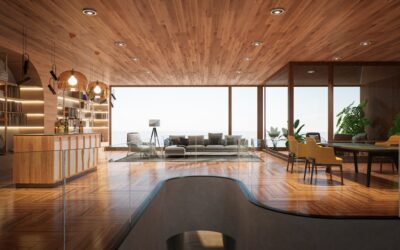
The flooring aisle throws a wall of acronyms at you, LVT, LVP, SPC, WPC, and it’s easy to walk out more confused than when you arrived. Luxury vinyl tile plank flooring is really one family of products in two shapes: planks that mimic wood and tiles that mimic stone or ceramic. Both are waterproof, both are tough, and both install faster than the materials they imitate. This guide cuts through the jargon so you buy the right one the first time.
LVT vs. LVP: What’s the Difference?
The core construction is identical; the shape and print are what change. Luxury vinyl plank (LVP) comes in long, narrow boards printed to look like hardwood, oak, hickory, walnut. Luxury vinyl tile (LVT) comes in squares or rectangles printed to look like ceramic, porcelain, marble, or slate, often with a textured surface and the option for grout lines.
Choose LVP where you’d want a wood look: living rooms, bedrooms, hallways. Choose LVT where you’d want a stone or tile look: bathrooms, entryways, laundry rooms. Functionally they perform the same, so the decision comes down to aesthetics and the room.
Many homeowners actually mix the two in a single home to match each room’s ideal look while keeping the same underlying performance and installation method. You might run wood-look LVP through the living areas and bedrooms, then switch to stone-look LVT in the bathrooms and mudroom, using color-matched transition strips at the doorways. Because both formats share the same rigid core technology and waterproof rating, they wear and clean identically, so the only real difference the eye picks up is the printed surface. That flexibility, one product family that can imitate both hardwood and natural stone, is a large part of why luxury vinyl has taken over so much of the flooring market.
Understanding the Core: SPC vs. WPC
Underneath the printed layer sits the core, and this is where performance is decided.
- SPC (stone plastic composite): A rigid, dense core of limestone powder and PVC. Extremely dent-resistant, dimensionally stable in heat, and forgiving over slightly uneven subfloors. Best for high-traffic areas, commercial use, and sunrooms.
- WPC (wood plastic composite): A softer, foamed core that feels warmer and quieter underfoot but dents more easily. Best for comfort-focused residential spaces.
- Flexible glue-down: Thin, non-rigid tiles and planks that adhere directly to the subfloor, common in commercial settings for durability under rolling loads.
For most homes with kids and pets, SPC is the safer all-around pick. If barefoot comfort in a bedroom is the priority, WPC wins.
The Wear Layer Is Everything
The clear top coat, the wear layer, determines how long the floor keeps its looks. It’s measured in mils (thousandths of an inch):
- 6 to 8 mil: Light residential, low-traffic bedrooms and closets only.
- 12 mil: Standard homes with moderate traffic.
- 20 mil: Busy households with pets and kids, the residential sweet spot.
- 28 to 40 mil: Commercial spaces and the heaviest home use.
Don’t confuse wear layer with overall thickness. A 5mm plank can have a thin wear layer; a 4mm plank can have a thick one. The wear layer, not the total thickness, predicts scratch and scuff resistance.
Key Advantages
- 100 percent waterproof: Rigid-core LVT and LVP handle spills, humidity, and full bathrooms.
- Realistic looks: High-definition printing plus embossed texture convincingly mimics wood and stone.
- Comfort: Warmer and softer underfoot than ceramic or stone, and quieter too.
- DIY-friendly: Click-lock floating systems need no glue and no special tools.
- Low maintenance: No sealing, waxing, or refinishing, just sweep and damp-mop.
The Downsides to Know
Luxury vinyl won’t boost home value the way hardwood or real tile can, and it can’t be refinished, when the wear layer wears through, you replace planks. Cheaper products fade in direct sun and can show a repeating print pattern. There are also indoor-air-quality considerations: look for FloorScore or GREENGUARD Gold certification to ensure low VOC emissions. And while rigid cores tolerate minor subfloor flaws, big dips and ridges will still telegraph through.
Installation Methods
You have three realistic options depending on the product and subfloor:
Floating Click-Lock
The most popular DIY method. Planks snap together and float over the subfloor with no adhesive. Acclimate the material 48 hours, keep a 1/4-inch expansion gap at the walls, and stagger seams at least 6 inches. A two-person team can floor a bedroom in an afternoon.
Glue-Down
Thin flexible tiles bond directly to a clean, flat subfloor with adhesive. It’s more labor and less forgiving of subfloor flaws, but it handles heavy rolling loads and large commercial spans without gapping.
Loose-Lay
Heavier planks with a high-friction backing that stay put by weight and friction, held only at the perimeter. Easy to lift and replace individual pieces, ideal for spaces where you might reconfigure later.
What It Costs
Pricing spans a wide range by quality:
- Budget LVT/LVP: $1.50 to $3 per square foot.
- Mid-grade (20 mil, SPC): $3 to $5 per square foot.
- Premium (thick wear layer, realistic texture): $5 to $8 per square foot.
- Professional installation: $2 to $6 per square foot on top.
For a 500-square-foot area, a mid-grade DIY job typically runs $1,500 to $2,800 all in. That’s well below comparable hardwood or porcelain, with waterproofing built in.
When you compare those numbers to the materials luxury vinyl imitates, the value gap widens. Real hardwood runs $8 to $15 per square foot installed and can’t go in wet areas; genuine porcelain or natural stone tile runs $10 to $30 installed once you factor in mortar, grout, and skilled labor. Luxury vinyl delivers a convincing version of either look, waterproof, at a fraction of the cost and with a DIY-friendly installation that saves the labor entirely. That combination of low price, realistic looks, and true water resistance is the whole reason LVT and LVP have become the default choice in remodels across the country.
Maintenance and Longevity
Luxury vinyl earns its reputation on low upkeep, but a little routine care extends its life considerably. Sweep or vacuum (with the beater bar off) regularly to keep grit from grinding the wear layer, and damp-mop with a pH-neutral cleaner made for vinyl. Skip abrasive scrubbers, wax, and oil-based soaps, which leave a dulling film. Most manufacturers also advise against traditional steam mops, since forced steam can work moisture into the seams over time.
Protect against the failure points that actually shorten a vinyl floor’s life. Felt pads under furniture prevent gouges; wide protectors under appliances stop dents; and walk-off mats at exterior doors catch the sand and grit that does the most damage. In sunny rooms, a UV-stable product and window treatments prevent fading. With those habits, a mid-grade SPC floor easily reaches 20 years, and a premium one can approach 30.
Common Installation Mistakes
- Skipping acclimation: Installing straight from a cold truck leads to gapping or buckling as the planks adjust later.
- Ignoring subfloor flatness: Even rigid cores telegraph big dips and ridges; flatten to within 3/16 inch over 10 feet.
- No expansion gap: Butting planks tight to the wall causes buckling in summer heat, always leave 1/4 inch.
- Poor seam stagger: Lining up end joints creates weak points and an artificial look.
- Doubling underlayment: Adding pad under an attached-pad plank overflexes the joints until they fail.
How to Choose the Right Product
Match the specs to the room. For a busy kitchen or entry, pick an SPC core with a 20-mil wear layer and a FloorScore certification. For a quiet bedroom, a WPC core at 12 mil feels great and saves money. Always order 10 percent extra for cuts and future repairs, and buy from a single production run so colors match. Get the core and wear layer right, and luxury vinyl tile plank flooring gives you a waterproof, realistic, low-maintenance floor that holds up for 15 to 25 years.
Prefer to explore on your own?
See how new flooring looks in your actual room in seconds — free, no signup.
Try the free Floor Studio →