
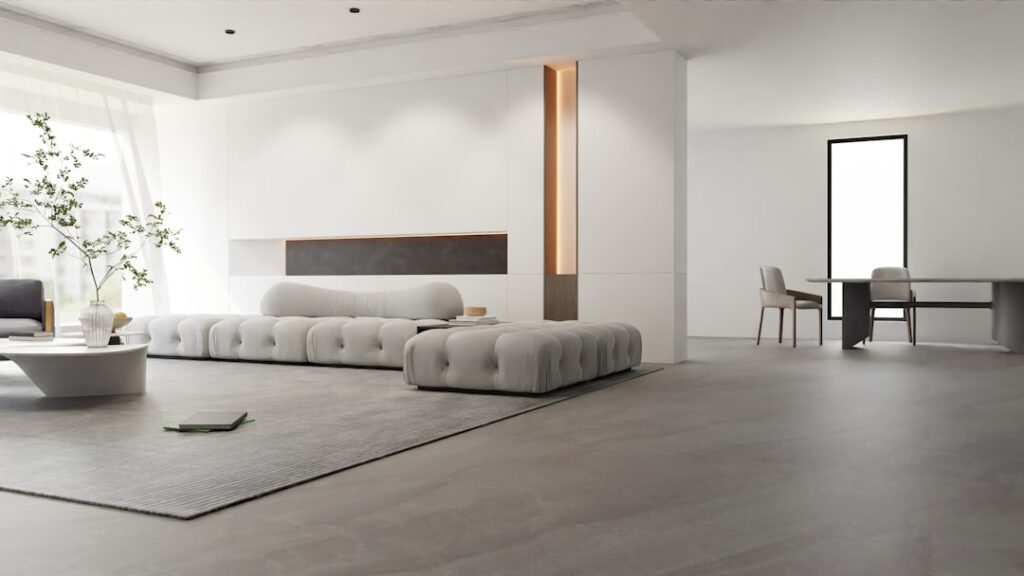
A plank that looks rich and warm under a showroom’s halogen track lighting often reads cold and plastic under a homeowner’s LED kitchen recessed cans. LVT samples exist to bridge that gap — getting a real piece of the actual product into the actual room before committing $4,000 to a full installation. Most homeowners under-use the sample process. Two or three small chips compared on a kitchen counter are not enough to predict how a 500 sq ft floor will read. Ordering, laying out, and evaluating samples properly is the cheapest insurance available against a floor you regret.
- How LVT Sample Sizes Vary
- How to Order LVT Samples
- The Most Common Sample Mistake
- Comparing Samples Against Existing Materials
- Evaluating Texture and Embossing
- Pattern Repeat Detection
- The Wear Layer Visibility Test
- Comparing Samples From Multiple Brands
- The Order Process After Samples
- Final Sample Workflow
How LVT Sample Sizes Vary
Sample sizes range from postage-stamp chips to full-length planks, and the right size depends on the decision you are trying to make.
- 2 in by 2 in chips: useful only for narrowing the field. Cannot show pattern repeat or grain detail.
- 4 in by 6 in samples: the standard mail-out size from most retailers. Adequate for color and texture evaluation, insufficient for pattern.
- 12 in by 12 in samples: available from premium brands like Karndean and Amtico. Show pattern detail well.
- Full-length plank (typically 9 in by 60 in): the only sample that reveals the full grain, the actual click joint, and how the plank repeats across a room.
How to Order LVT Samples
Most major LVT manufacturers offer free or low-cost samples directly through their websites. Mohawk, Shaw, Karndean, and COREtec all ship 4 by 6 inch samples free with a $2-$5 shipping charge in most cases. Premium brands like Amtico, Marmoleum, and Forbo will send larger samples but may charge $10-$25 per piece, refunded if you place an order.
Big-box retailers handle samples differently. Home Depot and Lowe’s both stock 4 in samples in their flooring aisles that customers can take home for free. Floor & Decor offers smaller chips on-site and full planks for $5-$10 each on their website.
The Most Common Sample Mistake
The single largest mistake homeowners make is evaluating LVT samples in showroom lighting and then assuming the floor will look the same at home. Showroom lighting is engineered to flatter materials — color temperature around 3000K, high CRI bulbs, controlled ambient light. Your kitchen lighting is rarely the same.
Always take samples home before committing. Lay them on the floor of the actual room at multiple times of day — morning, midday, evening with artificial lighting on. The color shift across those three conditions is often dramatic enough to change which product you choose.
Comparing Samples Against Existing Materials
LVT does not exist in a vacuum. The floor will sit next to existing trim, cabinets, countertops, and wall paint. A plank that looks great in isolation may clash with the rest of the room.
- Place the sample directly against the cabinets, not on top of them.
- Compare to wall paint chips, not painted walls (paint reads different on a chip).
- Check against the largest piece of furniture that will stay in the room.
- Compare to the trim color at floor level, where transitions will be visible.
- If the room has multiple natural light sources, check the sample under all of them.
Evaluating Texture and Embossing
Sight is only half the LVT evaluation. The plank also needs to feel right underfoot, particularly if you walk barefoot or have pets that slip on smooth surfaces.
Premium LVT samples carry embossed-in-register (EIR) texture, where the surface feel matches the printed grain pattern visually. Run your fingertips across the sample diagonal to the grain — you should feel the same ridges and valleys you see. Mid-tier samples have generic embossing that does not align with the print. Budget samples may be smooth or have a basic wood-grain emboss that feels uniform regardless of the print.
Pattern Repeat Detection
One of the realities of LVT that small samples cannot reveal is pattern repeat. Most LVT products use 6 to 20 unique plank designs that cycle through the room. In small rooms, the same plank can appear twice within a few feet, breaking the illusion of natural variation.
Ask the manufacturer or retailer how many unique planks are in the SKU. Premium lines from Karndean and Mannington often have 30+ unique designs. Budget lines may have 8 or fewer. For rooms over 300 sq ft, prioritize products with at least 16 unique planks.
The Wear Layer Visibility Test
The wear layer is technically invisible, but the way it interacts with light tells you something about the product quality. Hold the sample at a low angle to a light source. Cheap wear layers show a slight haze or orange-peel texture. Premium wear layers are optically clear with no surface distortion.
A 6 mil wear layer feels noticeably thinner than a 20 mil layer when you flex the sample. Run your fingernail across the surface — premium wear layers resist marking, cheap ones show a faint white line that takes minutes to fade.
Comparing Samples From Multiple Brands
Brand-to-brand comparison is where most homeowners save real money. Two products with similar specs and similar prices can look dramatically different in your room. Ordering 6-12 samples across 3-4 brands costs $20-$50 and prevents a $4,000 wrong-product decision.
Lay all samples out on a single surface in your room. Take photos at 8 am, noon, 5 pm, and 9 pm. Compare the photos rather than relying on memory — the eye adapts to changing light and forgets how a sample looked under different conditions.
The Order Process After Samples
Once you have selected a product, the sample box you ordered is the reference for the production order. Confirm the SKU on the sample matches the SKU on the order. Check that the manufacturer has not run a color or pattern revision since the sample was made — major LVT brands occasionally tweak SKUs without changing the part number.
Keep the sample even after the floor is installed. It serves as the reference for future repairs, replacement orders, and warranty claims. Manufacturers occasionally request the original sample alongside a defect claim to verify color drift.
Final Sample Workflow
The right LVT samples process runs in three stages. First, narrow the field — order 10-15 small samples from 3-5 brands based on online photos. Compare in your room, eliminate the obvious misses. Second, order full-plank samples of the top 3 candidates. Lay multiple planks together to see pattern repeat and joint detail. Third, place the final order from the brand whose full-plank sample reads best at all times of day under all your room’s lighting. Three weeks of sample evaluation prevents the most expensive flooring mistake homeowners make — choosing the wrong floor before they have seen the right one.
Prefer to explore on your own?
See how new flooring looks in your actual room in seconds — free, no signup.
Try the free Floor Studio →

